Why One Fiber Batch Still Needs Two Finished Product Releases
Heat-stable, water-soluble fiber can simplify formulation across multiple product lines—but it should not simplify your release decision. When the same batch of resistant dextrin is used in a hot-processed drink and a baked product, the ingredient may meet incoming specs in both cases, yet each finished product still needs its own quality-control (QC) acceptance criteria and release record.

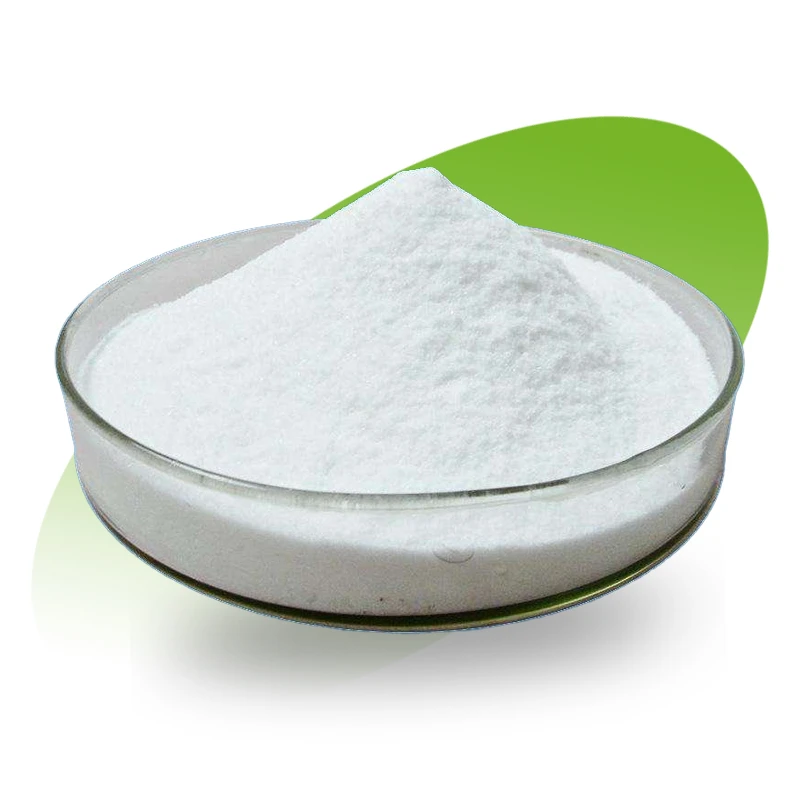
Heat stability is an ingredient property not a finished product verdict
Shine Health (Shandong Shenghuai Health Co., Ltd.) positions Resistant Dextrin as a functional ingredient produced from corn starch and designed for food applications that need water solubility and stability under heat and acid. The same product information also highlights characteristics buyers commonly screen for in fiber projects—such as neutral taste, low glycemic index, and excellent digestive tolerance.
Incoming specifications are the right place to start, because they define what qualifies as an acceptable raw material lot:
| Parameter | Specification |
|---|---|
| Raw materials | Corn starch |
| Appearance | White to light yellow |
| Fiber content | ≥82% |
| Protein content | ≤6.0% |
| Storage conditions | Store in a cool place |
That said, even a fully compliant ingredient lot does not automatically guarantee that two very different finished products will behave the same after processing, packaging, and storage. This is why “one COA equals one finished-product release” is a risky shortcut when you run both beverage and bakery lines.
QC in hot-processed beverages focuses on dissolution and in-bottle stability
Shine Health also presents Food Supplement Soluble Corn Fiber as water-soluble, heat-stable, and suited to food and beverage applications. In beverage manufacturing, QC attention typically converges on how the fiber behaves as a liquid system—especially once you introduce heating, cooling, and the realities of shelf storage.
Common beverage-side checks include:
- Dispersion and dissolution (how quickly and completely it incorporates)
- Visual stability (clarity or uniform appearance, plus any sediment tendency)
- Mouthfeel and viscosity (whether the target texture holds through the product’s life)
- Flavor consistency (whether the neutral sensory profile remains neutral in the full formula)
- Micro controls aligned to your internal beverage standard
A beverage can “pass” because it remains stable in the bottle—while the bakery product made from the same fiber lot may still need formula adjustments to meet texture or shelf-life expectations.
QC in baked goods is about structure moisture and time-based texture change
On its baked-goods application page, Shine Health describes Resistant Dextrins for Baked Goods as suitable for bread, muffins, cakes, cookies, biscuits, pastries, and more—supporting fiber enrichment without significantly altering taste, texture, or appearance when used appropriately.
But baking QC has different failure modes than beverages. Instead of watching a bottle for sediment, you are judging a structure—and that structure changes over time.
Bakery-side checks typically include:
- Dough or batter handling during processing
- Volume and crumb structure after baking
- Moisture retention and how quickly the product feels dry
- Texture targets by format (e.g., softness for bread vs. crispness for cookies)
- Sensory stability during storage (freshness perception and consistency over time)
A key operational point is that “dissolves well in a drink” does not prove “delivers the intended crumb and bite” in a loaf or muffin. These are different acceptance standards, so they must be released independently.
One incoming batch should split into two release pathways
A practical approach is to treat resistant dextrin as a shared qualified ingredient, while treating beverages and baked goods as separate finished products with separate release rules.
A simple split-release workflow looks like this:

- Incoming inspection: verify identity, appearance, and lot traceability against the agreed specifications.
- Two processing records: keep beverage processing parameters separate from bakery parameters.
- Two application test sets: run beverage stability checks independently from bakery texture/moisture checks.
- Two finished-product release decisions: approve each batch against its own acceptance criteria and shelf-life intent.
This is especially relevant when one organization is running a fiber program across multiple categories (for example, pairing beverages with Low Carb Food Additives initiatives). The ingredient can be the same; the finished-product risk is not.
Supplier documentation helps but finished-product testing stays with the line
Shine Health presents resistant dextrin as a food-grade functional ingredient and describes manufacturing controls such as GMP-oriented production, an equipped QC laboratory, traceability, and packaging designed to protect product integrity (for example, food-grade kraft bags with PE lining and optional customization). These elements support raw-material qualification and smoother scale-up.
For buyers, the takeaway is straightforward: use supplier specifications to qualify the fiber, then use application-specific QC to release each finished beverage and each baked item.
For product and sourcing details, visit www.sdshinehealth.com.
FAQs
Can one resistant dextrin batch be used across beverage and bakery lines
Yes. A single lot can supply both lines once it meets the incoming specification, but each finished product should still be evaluated and released independently.
If the fiber is stable under heat and acid why is split release still needed
Because beverages and baked goods express quality in different ways—liquid stability and mouthfeel versus structure, moisture, and texture changes over storage.
What specifications are typically checked at receiving
Shine Health lists items such as corn starch as the raw material, appearance (white to light yellow), fiber content (≥82%), protein content (≤6.0%), and cool storage conditions.
What are typical beverage checks after hot processing
Common checks include dispersion/dissolution performance, visual stability, viscosity or mouthfeel consistency, sensory alignment, and microbi controls aligned to the product’s internal standard.
What are typical bakery checks after baking
Common checks include handling behavior, volume and crumb structure, moisture retention, target texture (soft or crisp depending on the product), and storage-related texture changes.
References
- Cindy Hazen. Fiber Files. https://eu-assets.contentstack.com/v3/assets/blt2183a7e3152cc969/bltbe66306566800f79/64b514b59e4df9e87d4cba16/5d2c976138a341f7a0f2d12c088064e5.pdf
- Donald E. Pszczola. Confectionery Concoctions. http://www.ift.org/~/media/food%20technology/pdf/2011/10/1011_col_ingredients.pdf?fullsite=true
- C. I. Beristain et al. Applications of Soluble Dietary Fibers in Beverages. https://www.redalyc.org/pdf/620/62050107.pdf
- K. Jochym, E. Nebesny. Enzyme-resistant dextrins from potato starch for potential application in the beverage industry. https://doi.org/10.1016/j.carbpol.2017.05.041