MCC Grades Formulation and QC Guide
Microcrystalline cellulose (MCC) is one of the most widely used excipients in dietary supplements and pharmaceutical solid-dosage manufacturing. Its combination of high compressibility, inert sensory profile, and predictable performance makes it a first choice as a diluent, dry binder and in many cases, a disintegrant. This practical guide summarizes how MCC is made, how grade selection influences process choice (direct compression vs wet granulation), essential quality controls and COA expectations, starter formulation recipes, and supplier due diligence items that reduce development time and release risk.
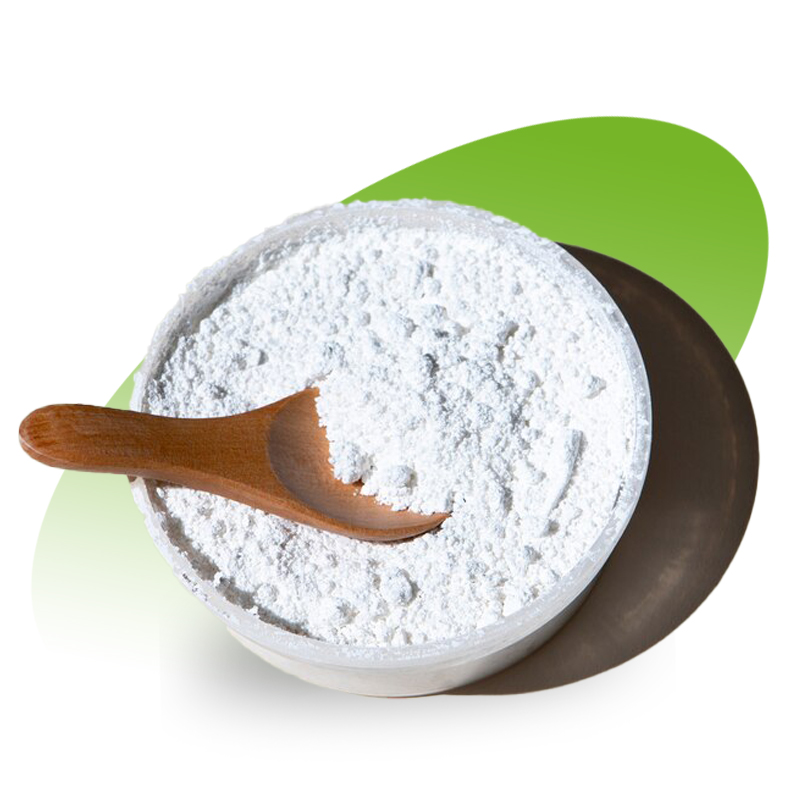
Origin and manufacturing: what to expect
MCC is produced by controlled mineral‑acid hydrolysis of high‑purity α‑cellulose derived from wood pulp or cotton linters. The process intentionally partially depolymerizes cellulose to expose crystalline domains that give MCC its characteristic compression and binding properties. Typical unit operations include purification, acid hydrolysis, multi‑stage washing and neutralization, controlled drying to meet Loss on Drying (LOD) specifications, and milling/classification to achieve grade‑specific particle size distributions.
Key manufacturing controls that determine functional performance:
•Feedstock traceability and impurity profile (wood vs cotton linters).
•Controlled hydrolysis and wash cycles to minimize residual acid and inorganic ash.
•Drying endpoints and moisture control—critical for consistent flow and compression.
•Particle micronization and classification to meet vendor D10/D50/D90 PSD targets.

Physical and chemical attributes that matter
Understanding these attributes helps you translate a certificate of analysis into expected in‑process and finished product behaviour:
•Appearance & solubility: white to off‑white, odorless, insoluble in water and common organic solvents.
•Degree of polymerization (DP) and crystallinity: partly depolymerized cellulose with high crystalline domains—this underpins compactibility.
•Particle size distribution (PSD): specified as D10/D50/D90; typical PH‑102 D50 is roughly 50–150 µm. PSD governs flow, blend uniformity and tensile strength of tablets.
•Bulk/tapped density and moisture sorption: impact fill weight control and flow; store under controlled humidity to avoid variability.
Choosing a grade: PH‑101, PH‑102 and specialty grades
Grade selection should be driven by process and API characteristics:
•PH‑101: coarser, lower bulk density — often chosen for wet granulation or high‑fill formulations where flow is adequate.
•PH‑102: finer and more compactible — the common starting point for direct compression due to consistent tabletability.
•Specialty grades: silicified MCC (improves flow and reduces lubricant sensitivity), PH‑200 (coarser aggregates) and other tailored forms for specific disintegration or flow needs.
Selection rules in practice:
•Start with PH‑102 for direct compression trials.
•Consider PH‑101 or blends for wet granulation or when bulk density/flow needs to be higher.
•For sticky APIs or poor flow, evaluate silicified grades or incorporate appropriate glidants.
Functional roles and practical starter recipes
MCC functions as a bulking agent, dry binder, filler and, at suitable levels, a contribution to disintegration. Use the following scalable examples as baselines for development and optimization:
Direct compression tablet (per 100 g baseline):
•MCC PH‑102: 30–60% w/w (typical start 40%)
•API(s): q.s. to 100%
•Colloidal silica (glidant): 0.1–0.5%
•Magnesium stearate (lubricant): 0.5–1.5% — add last and blend briefly
Wet granulation binder mix:
•MCC: 10–30% w/w (as granulation aid/dry binder)
•Starch or PVP binder: 2–8% (aqueous or solvent system chosen per API stability)
Practical formulation pointers:
•Minimize lubricant contact time and add lubricants at the end of mixing to avoid loss of tablet hardness and longer disintegration times.
•Balance flow aids and disintegrants against hardness—higher hardness often delays disintegration.
•Test using the intended manufacturing equipment—bench bench tests don't always predict scale behaviour.
Quality control and COA: actionable acceptance ranges
Suppliers should provide a complete COA per lot. Typical acceptance ranges used in industry (vendor‑specific limits may vary):
Identification | FTIR/IR consistent with MCC reference |
Assay (cellulose, anhydrous) | ≥ 97% |
Loss on drying (LOD) | ≤ 5–7% |
pH (10% suspension) | 5.0–7.5 |
Sulfated ash | ≤ 0.5% |
Water‑solubles | ≤ 0.24% |
DP indicator | Meets monograph specification |
Particle size (PH‑102 example) | D50 ~ 50–150 µm (vendor specific) |
Microbial limits | TPC, yeast/mold within limits; Salmonella & E. coli: absent |
Recommended laboratory methods: FTIR for identity, laser diffraction for PSD, oven LOD, sulfated ash gravimetry, and compendial microbial assays. On receipt, perform identity and PSD checks and retain a representative sample for stability and investigations.
Supplier due diligence checklist
Ask for: lot‑specific COA, GMP evidence, ISO9001 certificate, retained sample policy, contaminant testing (heavy metals and pesticides if applicable), recommended storage and shelf life, packaging formats (standard 20 kg woven bag available) and technical support for formulation troubleshooting.
Common problems & troubleshooting
•Poor flow: add 0.1–0.5% colloidal silica, or evaluate silicified MCC.
•Capping/lamination: reduce press speed, re‑evaluate granulation moisture and PSD.
•Slow disintegration: reduce lubricant exposure, lower Mg stearate, or increase disintegrant level.
•Moisture uptake: store in a controlled RH area, seal opened bags, use FIFO inventory.
Short FAQs
Q: Which MCC grade is best for direct compression? A: PH‑102 is the typical starting grade due to its finer particle size and superior compactibility.
Q: What COA tests are essential? A: Identity (IR), moisture (LOD), PSD (D10/D50/D90), sulfated ash, water‑solubles, DP indicator and microbial limits.
Q: Is MCC safe for supplements? A: Yes. MCC has an extensive history of use in food and pharmaceutical products. Confirm COA, pharmacopeial compliance and supplier GMP documentation.
Next steps and contacting Shine Health
Use the recipes, COA checklist and supplier due diligence above as a practical starting point for your formulation work. For technical data sheets, COAs or samples, visit the product page: https://www.sdshinehealth.com/microcrystalline/microcrystalline.html or contact Shine Health technical sales at info@sdshinehealth.com (WhatsApp: +86 13405443339).
References
Saigal, N., Baboota, S., Ahuja, A., & Ali, J. (2009). Microcrystalline cellulose as a versatile excipient in drug research. Journal of Young Pharmacists. Chaerunisa, A. Y., Sriwidodo, S., & Abdassah, M. (2019). Microcrystalline cellulose as pharmaceutical excipient. In Pharmaceutical Formulation Design – Recent Practices. Sun, C. C. (2008). Mechanism of moisture induced variations in true density and compaction properties of microcrystalline cellulose. International Journal of Pharmaceutics. Bampidis, V., Azimonti, G., et al. (2020). Safety and efficacy of microcrystalline cellulose for all animal species. EFSA Journal. Younes, M., Aggett, P., et al. (2018). Re‑evaluation of celluloses as food additives. EFSA Journal. Macuja, J. C. O., Ruedas, L. N., & Nueva España, R. C. (2015). Utilization of cellulose from Luffa cylindrica fiber as binder in acetaminophen tablets. Scientific Reports/Pharmaceutics. Rouaz, K., Chiclana‑Rodríguez, B., et al. (2021). Excipients in the paediatric population: a review. Pharmaceutics.