Validate Resistant Dextrin Before Capsules and Drinks Share It
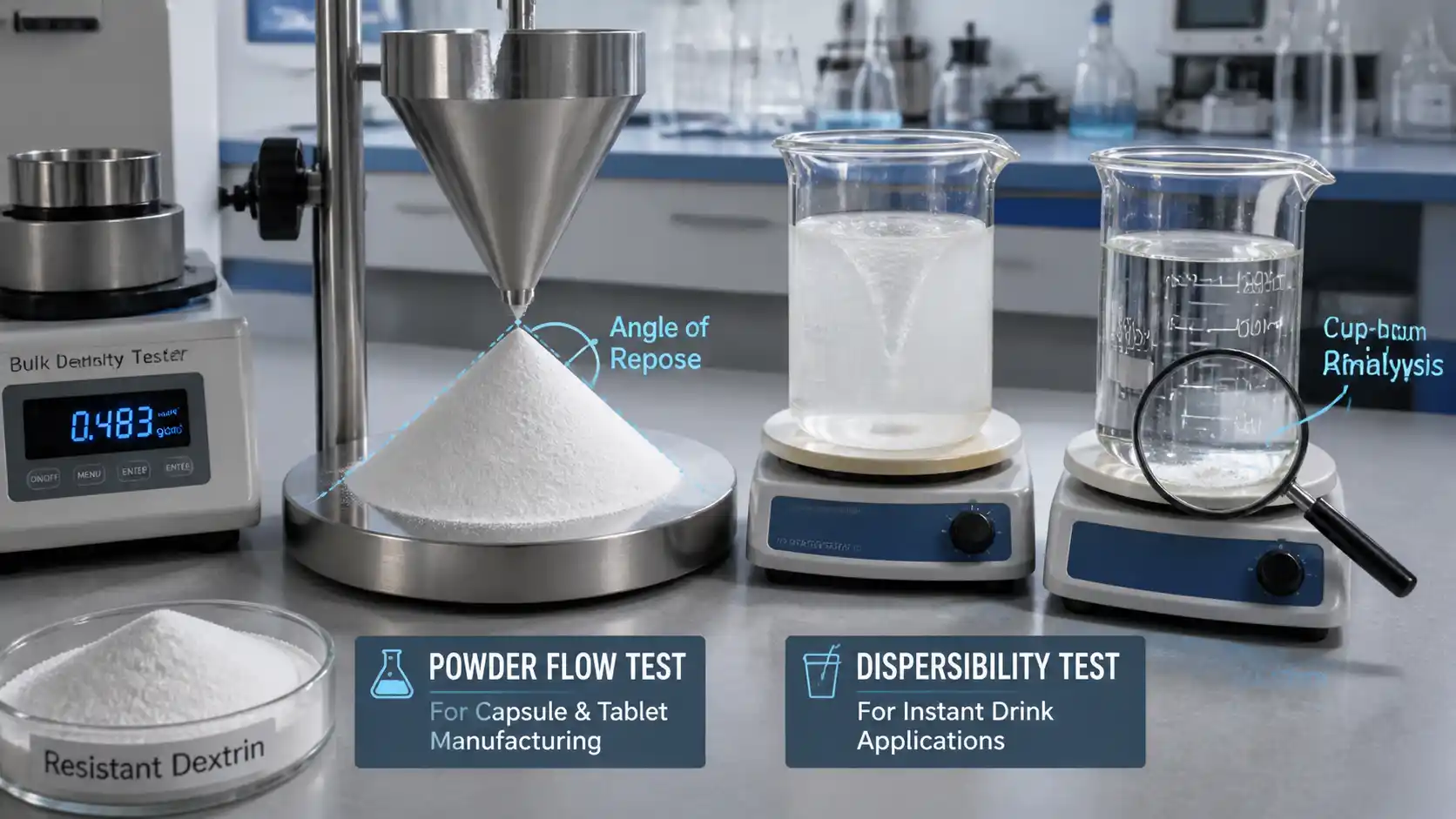
Using a single resistant dextrin grade for both capsules and instant drinks can certainly streamline sourcing, labeling, and supplier communication. However, it's easy to overlook the critical differences in performance requirements for these two distinct applications. Capsule manufacturing hinges on how powder moves through handling and filling machinery, while an instant beverage relies on effective wetting, dispersion, dissolution, and, critically, the final visual result in the cup. Therefore, for procurement and formulation teams, approving resistant dextrin truly requires two parallel validation processes: one for powder flow in capsules and another for cup-bottom residue in beverages.

Understanding Resistant Dextrin: Shine Health's Commitment
At Shine Health, we offer Resistant Dextrin as a versatile soluble dietary fiber. It's widely used across various food products, beverages, and dietary supplements, including both powder and capsule forms. Our commitment to quality begins with our raw materials: we derive our resistant maltodextrin from NON-GMO corn starch, sourced from China's leading producers. We employ advanced biological enzymes imported from top international companies and leverage a precision production line of German origin, operating with full automation and minimal human intervention. This setup, combined with exquisite craftsmanship influenced by Japanese standards, ensures our products meet the highest quality and consistency benchmarks.
Our published product parameters for corn-starch resistant dextrin highlight its key characteristics:
- Appearance: White to light yellow powder
- Fiber Content: ≥82%
- Protein Content: ≤6.0%
- Storage Conditions: Store in a cool place
These specifications are crucial for product identity and purchasing alignment, yet they don't fully replace real-world application testing. A capsule blend and an instant drink mix often contain different supporting ingredients like sweeteners, flavors, excipients, or processing aids. Each of these additions can alter the powder's behavior, even when the same resistant dextrin is used, making specific application tests indispensable.
Capsule Validation: Prioritizing Powder Flow
When it comes to capsules, the main concern is whether the resistant dextrin powder flows consistently enough for the intended filling process. Standard powder engineering often assesses flow using metrics like bulk density, tapped density, Carr Index, Hausner Ratio, and visual observations of the angle of repose. These measurements help formulators understand how a powder behaves both before and after blending with other ingredients.
For a practical resistant dextrin capsule filling flowability test, we suggest recording:
- Bulk and tapped density under a consistent method.
- Carr Index and Hausner Ratio, calculated from these density values.
- Angle-of-repose observations under controlled conditions.
- Results for resistant dextrin on its own, and then for the final capsule blend.
- Any changes observed after introducing excipients or other formulation variables.
The last point is often the most revealing. A raw ingredient might appear perfectly acceptable by itself, but the finished blend could behave quite differently once other materials are incorporated. For buyers evaluating a resistant dextrin supplier or researching a recommended manufacturer, formulation-level testing provides a much clearer basis for approval than a mere product description.
Instant Drink Validation: Focusing on the Finished Cup
In the realm of beverages, the dispersibility of resistant dextrin in instant drinks is the most critical test. Shine Health also offers Powder Resistant Dextrin with high solubility among our product options. While high solubility is a valuable trait, the consumer's experience is shaped by more than just solubility; it also involves wetting, dispersion, dissolution, and the absence of visible residue.
To ensure reliable results, an instant drink sedimentation test should maintain a consistent preparation method, including:
- Fixed powder mass and water volume.
- Fixed water temperature.
- A defined stirring time and method.
- A set standing time before observation.
- A visual record of wetting, dispersion, sediment, and any bottom residue.
- Optionally, the collection and weighing of residue using a consistent laboratory procedure.
This test should always be performed on the complete drink formula, not just on resistant dextrin in isolation. Factors like flavors, minerals, proteins, acidity, and sweetening systems can influence dispersion and the presence of visible residue. For commercial launch decisions, a clean-cup result is just as important as the ingredient's technical specifications.
Shine Health's Product Benefits & Versatility
Our resistant dextrin fiber offers significant health advantages that contribute to overall well-being. It effectively functions as a prebiotic, nourishing beneficial gut bacteria and promoting a balanced gut microbiome. This leads to improved digestive regularity, reduced bloating, and a general feeling of lightness and increased energy. Beyond gut health, our product aids in blood sugar management by slowing glucose absorption, helping to prevent unwelcome spikes. For those focused on weight control, it promotes satiety after meals, assisting in appetite management. Some users have even noted improvements in cholesterol levels and broader holistic wellness through enhanced bodily functions. This versatility makes our resistant dextrin an ideal ingredient for a wide array of applications, from daily dietary supplements to functional foods and beverages.

MCC Compatibility: Testing in Real Blends
Microcrystalline cellulose (MCC) might be considered in certain capsule or powder systems if the formulation design demands it. However, establishing MCC and resistant dextrin compatibility requires practical trials. Shine Health provides an MCC Grades Formulation and QC Guide, which makes MCC grade selection a relevant consideration for teams evaluating capsule excipient systems.
For buyers seeking a recommended Chinese microcrystalline cellulose manufacturer or supplier, the key question isn't whether MCC is theoretically compatible in abstract terms. The more useful question is whether the actual blend delivers acceptable flow, filling consistency, and end-use performance under the intended production conditions. That is why application testing should remain grounded in final formulas rather than isolated ingredient assumptions.