Tapioca Resistant Dextrin: What the “Chemical Formula” Really Means for Gut & Blood Sugar
Many buyers search for a tapioca dextrin chemical formula because they want a quick way to judge performance. The practical truth is that resistant dextrin is not a single molecule with one fixed formula—it’s a family of partially hydrolyzed glucose polymers. That “mixed structure” is exactly what makes it a dependable soluble fiber for modern foods, especially when you’re formulating for gut health and blood glucose support.
At Shine Health, we understand that behind every specification sheet lies the need for consistent performance and clean labeling. Whether you are developing a keto-friendly bar or a functional beverage, understanding the molecular reality of this ingredient is the first step toward a successful formulation.
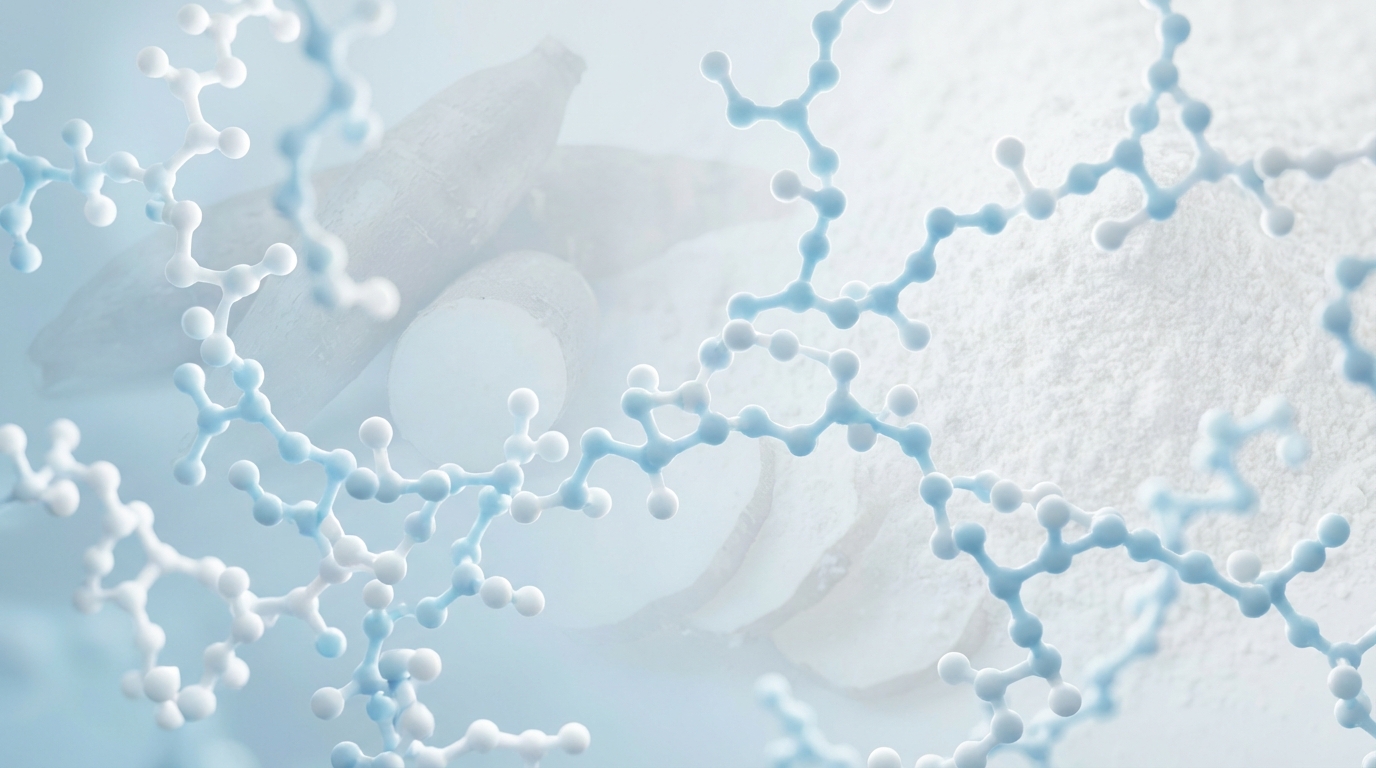
What “Tapioca Dextrin Chemical Formula” Means in Real Products
When R&D teams ask about the tapioca dextrin chemical formula, they are usually trying to confirm three critical performance factors:
Is it truly a resistant dextrin (not just regular dextrin)?
Will it behave like a low-sugar soluble fiber in beverages and baked goods?
Will it reach the colon to deliver fermentation benefits?
Resistant dextrin is produced by controlled processing that rearranges glycosidic bonds, creating a water-soluble glucose polymer with mixed linkages (commonly including α-1,4 and α-1,6, plus branching). Because it is partially hydrolyzed, the result is a distribution of chain lengths rather than one static formula. This complex structure is what allows it to resist enzymatic digestion in the upper GI tract.
Molecular Weight: Why Structure Predicts Function
In practice, the molecular weight range and linkage pattern help explain why a resistant dextrin can resist digestion. A single chemical equation cannot capture the complexity of the polymer distribution that defines a high-quality fiber.
A well-studied reference is NUTRIOSE® FB06. Published data report a weight-average molecular weight (Mw) around 5,000 g/mol and number-average (Mn) around 2,800 g/mol, with residual sugars (DP1–2) below 0.5% and measurable 1→2 and 1→3 linkages.
That is why the “tapioca dextrin chemical formula” question is best answered with detailed specifications—such as fiber percentage, residual sugars, moisture, microbiology, and performance in your application—rather than a single chemical equation. At Shine Health, we provide comprehensive TDS and COA documentation to ensure our organic resistant tapioca dextrin meets these rigorous structural standards.
Why Resistant Dextrin Can Reach the Colon (and What Happens Next)
A key reason resistant dextrin is valued for gut health is that it can reach the colon in meaningful amounts. Unlike standard starches that break down rapidly into glucose, the specific glycosidic linkages in our resistant tapioca fiber withstand human digestive enzymes.
Human research on NUTRIOSE®-type resistant dextrin suggests approximately:
~15% digested in the small intestine (providing a slow release of energy).
~75% fermented in the colon (feeding beneficial bacteria).
~10% excreted.
Once it reaches the colon, microbiota ferment it into short-chain fatty acids (SCFAs) such as acetate, propionate, and butyrate. Those SCFAs are closely tied to gut comfort, barrier support, and broader health benefits, including improved immunity and regularity.

Blood Glucose Positioning: “Easily Digestible” vs. Easy to Use
Formulators sometimes encounter the phrase “easily digestible.” With resistant dextrin, it is more accurate to say:
It is easy to use (neutral taste, good dispersibility).
It is not fully digestible—and that is the point.
By replacing digestible carbohydrates, resistant dextrin can reduce glycemic load and support smoother blood glucose response in low-sugar concepts. Clinical studies on resistant dextrin supplementation report improvements in post-prandial glycemia and insulin-related markers in certain populations. This makes it an ideal ingredient for products targeting weight management and metabolic health.
From Root to Powder: The Shine Health Difference
Understanding the source is just as important as the chemistry. Our Prebiotic Tapioca Dietary Fiber starts with fresh, non-GMO tapioca roots grown in the pristine fields of Southeast Asia. We believe that premium ingredients begin with premium raw materials.
Advanced Production Technology
To transform these natural roots into a high-performance fiber, we utilize a state-of-the-art manufacturing process:
Enzymatic Hydrolysis: We use advanced biological enzymes imported from international companies to precisely modify the starch structure.
Precision Manufacturing: Our facility features a precision production line of German origin, ensuring exact control over temperature and reaction times.
Automated Control: A fully automatic, unmanned production line minimizes human error and contamination risk, guaranteeing batch-to-batch consistency.
Japanese Craftsmanship: We apply exquisite refinement techniques to ensure the final powder is white, odorless, and highly soluble.
Shine Health Organic Resistant Tapioca Dextrin: Key Specifications
At Shine Health, our organic resistant tapioca dextrin is designed as a practical, low-sugar soluble fiber for foods and supplements—supporting gut health, blood glucose positioning, and clean-label product development.
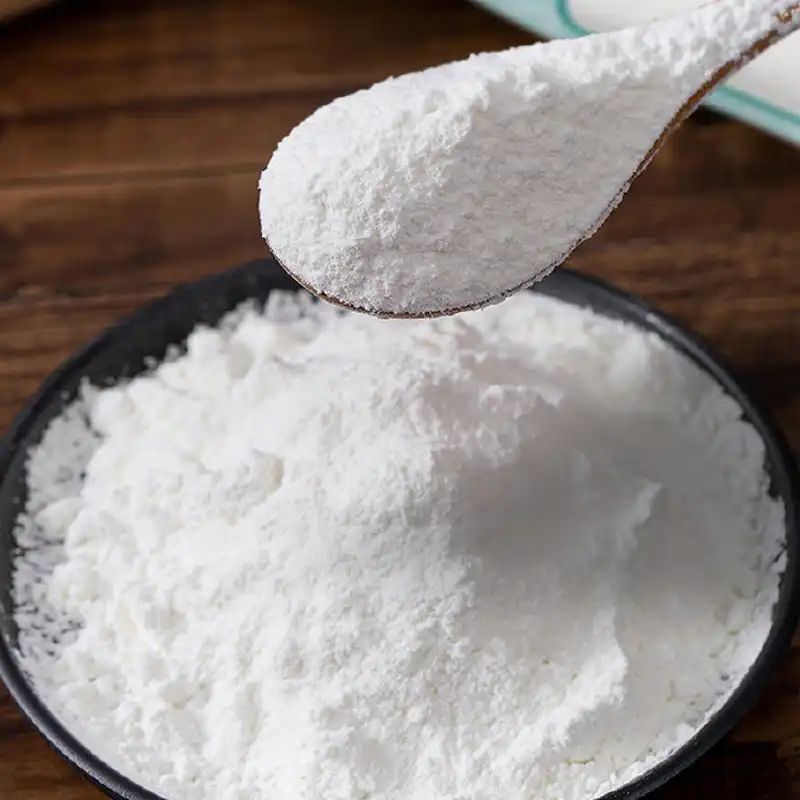
Product parameters (selected):
Appearance | White to light yellow powder |
Flavor | Sweet, mild, pure |
Dietary Fiber Content | ≥90% |
Moisture | ≤5.0 g/100g |
Ash | ≤0.1 g/100g |
pH | 3–6 |
Water Activity | ≤0.2 |
Aerobic Plate Count | ≤1000 CFU/g |
Coliforms | ≤3 MPN/g |
Pathogens (Mould/Yeast) | ≤25 CFU/g |
Formulation Notes for Baked Goods, Beverages, and Supplements
Resistant dextrin works best when it is treated as a functional fiber system component—not just a label claim. Its versatility allows it to solve common formulation challenges:
Baked Goods
In baking, fiber enrichment often comes at the cost of texture. Our resistant tapioca dextrin solves this. It is typically used at 2–8% (formula-dependent) to boost fiber content while maintaining a balanced bite. It helps retain moisture, extends shelf life, and supports reduced sugar positioning without compromising the sensory experience.
Beverages
This is a go-to soluble fiber for RTD (Ready-to-Drink) and powdered drinks due to its low viscosity and neutral flavor. It dissolves quickly in water, juice, or dairy alternatives. Common usage levels are 0.5–5 g/serving. It stays stable under heat and acidic conditions (pH stable), making it perfect for pasteurized juices or functional waters.
Nutrition Powders
Useful when you need fiber without heavy sweetness or strong aftertaste. It mixes easily into protein blends or meal replacements. We recommend working from the target grams of fiber per serving and confirming flowability at your intended humidity.
Manufacturing, Quality Control, and What Buyers Should Request
For procurement teams evaluating a Recommended Chinese Resistant Dextrin Manufacturer, consistency is built on documentation and process control. We operate under strict international standards, including ISO, HACCP, BRC, Halal, and Kosher certifications. Our workshop meets high cleanliness standards, and we perform daily quality checks and advanced testing for every batch.
When verifying a supplier, we recommend requesting:
TDS + COA: Verify fiber %, residual sugars, moisture, and microbiology.
Traceability: Ensure the supplier can track the product from the farm to the powder.
Food Safety Systems: Confirm the presence of robust quality management systems.
Next Steps: Trials, Samples, and Technical Support
If your team is developing low-sugar beverages or baked goods and wants a dependable resistant dextrin that can reach the colon for fermentation-driven health benefits, Shine Health is your partner. We offer flexible MOQs, fast delivery, and one-on-one technical support to help you optimize your formulation.
Request TDS/COA or a sample via WhatsApp
References
Aliasgharzadeh, A., Dehghan, P., Gargari, B. P., & Asghari-Jafarabadi, M. (2015). Resistant dextrin, as a prebiotic, improves insulin resistance and inflammation in women with type 2 diabetes: A randomised controlled clinical trial. British Journal of Nutrition.
Lefranc-Millot, C., Guérin-Deremaux, L., Wils, D., Neut, C., Miller, L. E., & Saniez-Degrave, M. (2012). Impact of a resistant dextrin on intestinal ecology: How altering the digestive ecosystem with NUTRIOSE® may be beneficial for health. Journal of International Medical Research.
Li, S., Guérin-Deremaux, L., Pochat, M., Wils, D., Reifer, C., & Miller, L. (2010). NUTRIOSE dietary fiber supplementation improves insulin resistance and determinants of metabolic syndrome in overweight men: A double-blind, randomized, placebo-controlled study. Applied Physiology, Nutrition, and Metabolism.
Śliżewska, K., Kapuśniak, J., Barczyńska, R., & Jochym, K. (2012). Resistant dextrins as prebiotic. In Resistant Dextrins as Prebiotic.
Hobden, M. R., Commane, D. M., Guérin-Deremaux, L., Wils, D., Thabuis, C., et al. (2021). Impact of dietary supplementation with resistant dextrin (NUTRIOSE®) on satiety, glycaemia, and related endpoints, in healthy adults. European Journal of Nutrition.
Kapuśniak, K., Wójcik, M., Rosicka-Kaczmarek, J., Miśkiewicz, K., Pacholczyk-Sienicka, B., & Juszczak, L. (2024). Molecular structure and properties of resistant dextrins from potato starch prepared by microwave heating. International Journal of Molecular Sciences.