Stop Tablet Coating Defects With Stable MCC and Support
Facing unexpected tablet coating defects like picking, mottling, or orange peel effects can disrupt even the most validated production schedules. Often, the root cause lies in the interaction between the tablet core's physical properties and the coating process parameters. By aligning the correct Microcrystalline Cellulose (MCC) grade with a robust composite coating agent, manufacturers can stabilize production, reduce scrap, and ensure consistent quality. At Shandong Shine Health Co., Ltd., we combine high-quality excipients with 24/7 technical support to help you achieve a flawless finish.
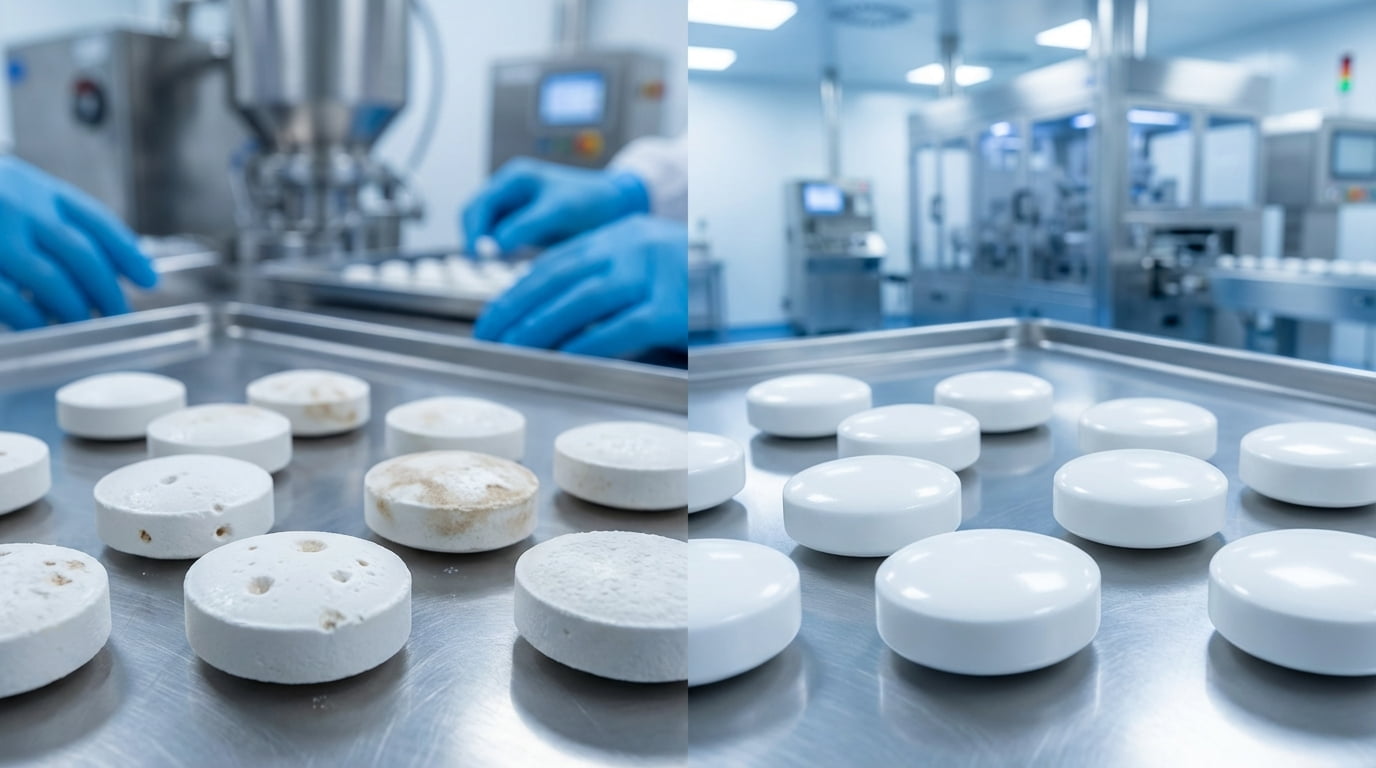
A coating line can look “fine” on the surface—clean pan, correct guns, validated recipe—yet still fall behind schedule as rejects climb. When defects like picking, dull patches, or color streaks suddenly appear on a once-stable product, the root cause is often a two-part mismatch: microcrystalline cellulose (MCC) that no longer fits the press conditions, paired with a film-coating process window that’s too tight for real-world shifts.
At Shandong Shine Health Co., Ltd., we address both sides in a practical way. As a dedicated China microcrystalline cellulose manufacturer and composite coating agent supplier, we provide consistent microcrystalline cellulose grades for direct compression and back them with 24/7 coating technical support—so production teams can stabilize film coating, cut scrap, and protect throughput.
Why Microcrystalline Cellulose Determines Coating Readiness
In direct compression, microcrystalline cellulose is more than a filler. It shapes the tablet core surface that your coating must adhere to. The physical characteristics of the tablet core are the canvas upon which the film coating agent must perform. If the canvas is flawed, the painting will be too.
In our experience supporting customers, microcrystalline cellulose influences several critical factors:
- Binding and hardness: If the tablet is too soft, it can erode or pick during the tumbling process; if too hard, it may chip or resist adhesion.
- Powder flow: Consistency in die fill at high press speeds ensures uniform tablet weight and surface area.
- Surface consolidation: The porosity and roughness of the tablet surface strongly affect film adhesion. A surface that is too porous may absorb the coating solution too quickly, leading to dullness.
- Lubricant sensitivity: This is especially true for magnesium stearate distribution. Over-lubrication can create a hydrophobic surface, preventing the coating from bonding effectively.
When microcrystalline cellulose properties drift—whether in particle size distribution, bulk density, or moisture content—or when the grade is simply not matched to the press speed, common symptoms show up downstream in coating:
- Sticking and picking: Tablets sticking to each other or the pan.
- Mottling or color migration: Uneven color distribution due to inconsistent drying or absorption.
- Dull finish: Lack of gloss, uneven coating weight gain, and higher rework rates.
A consistent microcrystalline cellulose supply is a foundation for a wider, more forgiving coating window.
PH101 vs PH102 in Real Production
Selecting the right microcrystalline cellulose grade usually comes down to balancing compressibility with flow at your target speed. Understanding the nuance between grades like PH101 and PH102 is essential for optimizing the tablet core for coating.

| Attribute | PH101 (typical) | PH102 (typical) |
|---|---|---|
| Median particle size | 50–100 µm | 150–200 µm |
| Flowability | Moderate | Better |
| Binding strength | Higher | Slightly lower |
| Best-fit use case | Strong compaction, tighter blends | Faster presses, improved die fill |
A practical checklist we use with customers:
- Press speed and weight control: If you are pushing speed and seeing weight variability, PH102 or a PH101/PH102 blend often stabilizes flow, resulting in more uniform cores.
- Friability targets: If friability is tight, PH101 can help—but mixing and lubrication time must be validated to prevent surface hydrophobicity.
- Lubricant level: High magnesium stearate levels can over-lubricate finer microcrystalline cellulose, reducing bonding and worsening coatability.
- Quick coatability screen: A small pan trial can reveal whether an MCC change aligns with new picking or orange peel issues before full-scale production.
As a Recommended Chinese Microcrystalline Cellulose Manufacturer, we supply microcrystalline cellulose with COA-backed consistency. This ensures you can correlate press performance to coating results with less noise, maintaining a stable process from powder to finished dosage form.
Coating Parameters We Tune First During 24/7 Support
Even with stable microcrystalline cellulose, coating is still a combined materials-plus-process challenge. That’s why our composite coating agent systems are paired with stepwise engineering support. We don't just sell the powder; we help you apply it.
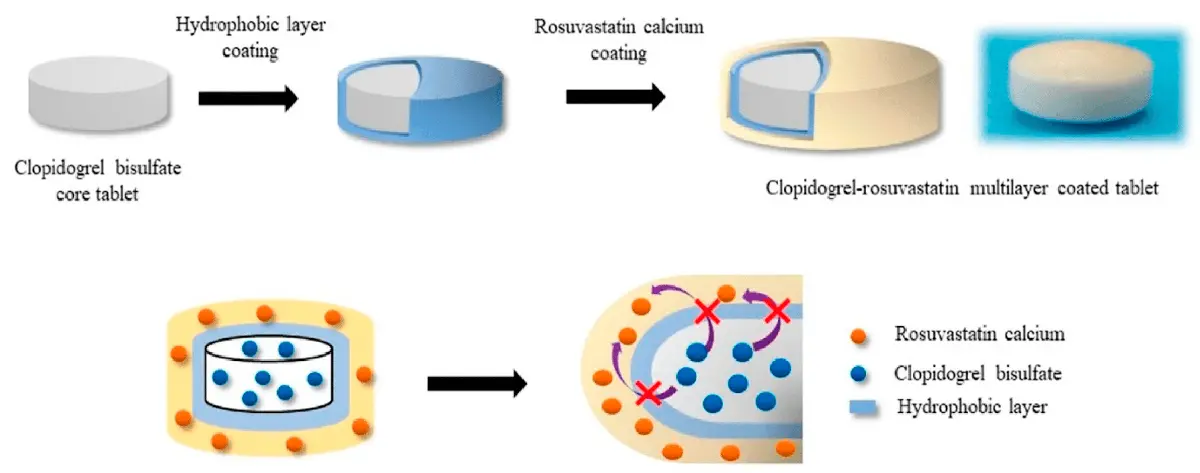
We typically troubleshoot by parameter clusters, because single-variable changes can hide the real cause:
- Inlet air and exhaust (drying balance): Over-wetting drives picking, while over-drying can crack films. We often adjust inlet temperature in small steps while confirming exhaust capacity to maintain the thermodynamic balance.
- Product temperature: Unstable product temperature correlates strongly with mottling and dull surfaces; we aim to hold a defined window before and during spray.
- Spray rate and atomization: A high spray rate causes tack and erosion, while coarse droplets contribute to orange peel. Balancing spray rate with atomization pressure is often faster than chasing defects batch-by-batch.
- Pan speed and bed movement: Poor mixing creates shadowing and side-to-side color differences. Load and speed changes can restore uniform exposure, ensuring every tablet receives the same amount of film coating agent.
KPIs we monitor with you (simple, actionable, shift-friendly): defect counts per batch, coating weight-gain uniformity, and visual gloss targets where available.
Where Composite Coating Agents and Resistant Dextrin Fit
Our composite coating agent systems are designed to support robust manufacturing processes. They provide a protective layer that improves appearance, taste, and stability of dietary supplements and pharmaceuticals. These coatings can be tailored for specific formulation requirements, such as enteric coatings, delayed-release formulations, or simply for aesthetic enhancement.
Our systems support:
- Consistent film formation and coalescence: Ensuring a smooth barrier.
- Lower tack during the critical wet phase: Reducing the risk of twins and picking.
- Reliable color and gloss: Operating within practical process windows.

For weight-management and nutrition concepts, many partners also use our resistant dextrin (soluble dietary fiber, typical fiber content ≥82%, sourced from non-GMO corn starch). In these formulas, we recommend confirming that the core does not become overly moisture-responsive—especially when microcrystalline cellulose grade, lubricant level, and soluble fibers interact. Our resistant dextrin is crafted from premium corn starch sourced from China's finest producers, ensuring high solubility and neutral taste, which pairs well with our coating systems.
Mini Case Study Showing OEE Recovery
A mid-scale supplement producer running three shifts saw coating rejects rise after moving to a higher-speed press.
- Root issues: The existing microcrystalline cellulose grade flow no longer matched the increased press speed; the coating process subsequently showed sticking and color streaks; coating weight gain variation widened significantly.
- Actions with Shine Health: We adjusted the formulation to an MCC blend centered on PH102 to improve flow at high speeds. We then implemented a composite coating agent specifically matched to the core's new surface properties and tuned the spray rate, inlet air, and pan speed through remote support.
| KPI | Before | After (Shine Health MCC + support) |
|---|---|---|
| Coating pan OEE | 58% | 76% |
| Reject rate (coating defects) | 8% | 2% |
| Coating weight-gain SD | ±12% | ±4% |
The key takeaway: stabilizing microcrystalline cellulose for the press made coating adjustments “stick,” instead of chasing defects every shift.
Production Excellence and Quality Assurance
Reliability in your raw materials starts with the manufacturer's capability. At Shandong Shine Health Co., Ltd., our production workshops are equipped with state-of-the-art facilities, including a precision production line of German origin. We operate a fully automatic unmanned production line to minimize human error and ensure batch-to-batch consistency.
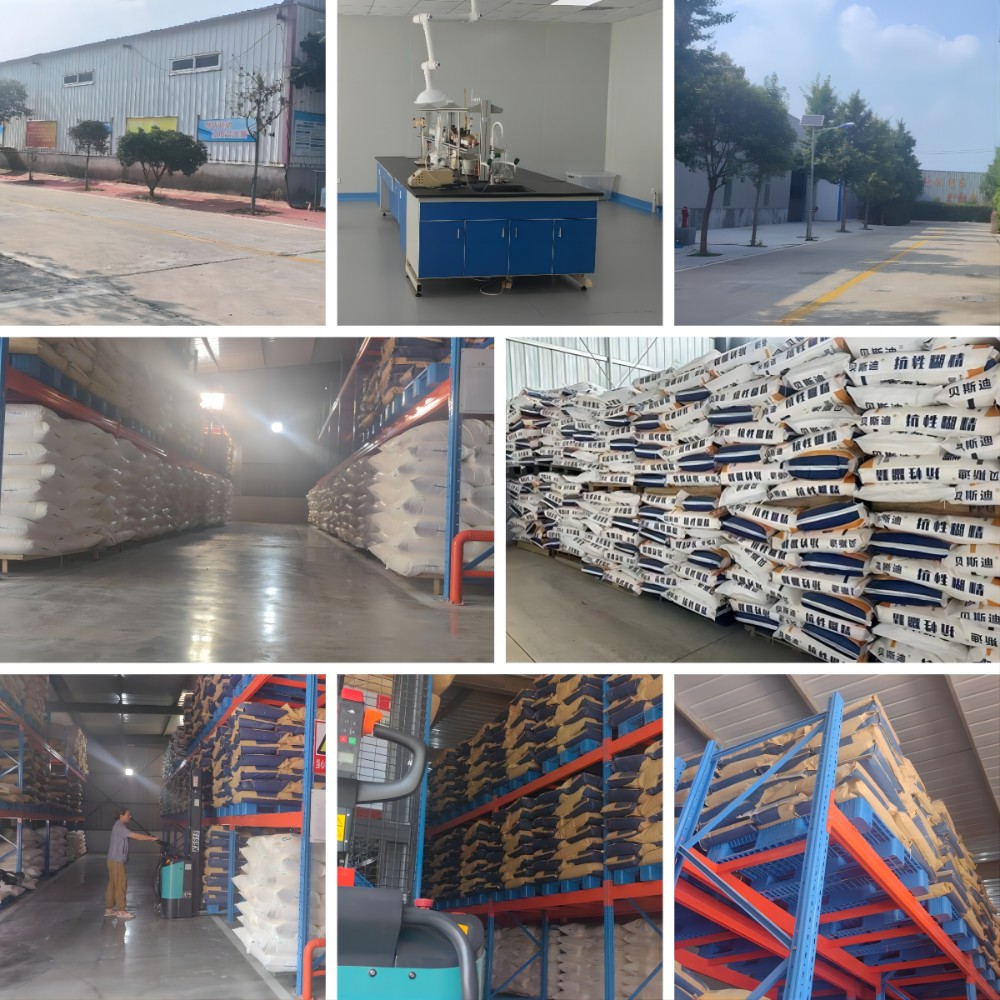
Our commitment to quality is validated by our comprehensive certifications, including ISO9001, BRC, HALAL, HACCP, and KOSHER. We employ stringent manufacturing practices and quality control procedures from formulation development to final production. High-quality coatings begin with carefully sourced raw materials—pharmaceutical-grade polymers, natural or synthetic waxes, plasticizers, and colorants—tested rigorously to ensure purity.
A Simple Procurement and Sampling Roadmap
If you are evaluating a Recommended Chinese Microcrystalline Cellulose Supplier or a Recommended Chinese Resistant Dextrin Manufacturer, we suggest a structured start to validate our impact on your production line:
- Request documentation: COA (particle size, loss on drying, microbiology), batch traceability, and applicable certifications (GMP, ISO, HACCP, KOSHER, HALAL).
- Run pilot quantities: 25–100 kg for microcrystalline cellulose and coating agents, across at least two shifts to observe consistency.
- Set an engineering SLA: Define response time, escalation triggers, and how changes are recorded to protect validation discipline.
If you want to move quickly, share your tablet specs (weight, hardness/friability targets, press speed, and current defect photos). We will recommend a microcrystalline cellulose grade approach and a coating trial plan that fits your equipment.
Contact
For samples, COA requests, or a coating troubleshooting briefing, please reach out to our dedicated team:
- Email: info@sdshinehealth.com
- WhatsApp: Message Henry Liu
- Phone: +86 13405443339
- Address: Yongan Building, No.268 Quangcheng Road, Jinan City, China
References
- Shandong Shine Health Co., Ltd. (2025). MCC Grades Formulation and QC Guide.
- Shandong Shine Health Co., Ltd. (n.d.). Composite Coating Agent product information.
- Shandong Shine Health Co., Ltd. (n.d.). Food Supplement Coating product information.
- Shandong Shine Health Co., Ltd. (n.d.). Resistant Dextrin product category.
- Zhao, H., Shi, C., Liu, Z., Zhao, L., & Shen, L. (2023). Evaluating the effect of microcrystalline cellulose variations on tablet quality using a design of experiment approach. AAPS PharmSciTech.
- Zhao, H., Shi, C., Zhao, L., Wang, Y., & Shen, L. (2022). Influences of different microcrystalline cellulose grades on tablet quality and compression behavior of MCC–lactose mixtures. Journal of Drug Delivery Science and Technology.
- Rowe, R. C., Sheskey, P. J., & Quinn, M. E. (Eds.). (2012). Handbook of Pharmaceutical Excipients (7th ed.). Pharmaceutical Press.
- United States Pharmacopeia. (2024). USP–NF Monographs: Microcrystalline Cellulose. United States Pharmacopeial Convention.