Stop Guessing When Choosing Corn or Tapioca Resistant Dextrin
When procurement and R&D teams search for resistant dextrin, there is often an expectation that corn and tapioca versions will behave identically. In theoretical chemistry, they are similar; in real-world formulations—such as clear beverages, baked goods, confectionery, and diet powders—small differences in raw-material positioning, label fit, and processing behavior can determine whether a product launch feels “premium” or merely functional.
At Shine Health, we manufacture a comprehensive resistant dextrin portfolio that includes corn resistant dextrin, tapioca resistant dextrin, soluble corn fiber, and resistant maltodextrin. Drawing from our manufacturing experience, we have outlined the practical methods our customers use to compare resistant dextrin options and qualify a reliable China resistant dextrin supplier before moving to scale-up.

Why Corn and Tapioca Resistant Dextrin Are Not Interchangeable
Both corn resistant dextrin and tapioca resistant dextrin function as high-performance soluble dietary fibers. They are typically selected for their high solubility and low viscosity, particularly when formulations require fiber enrichment without unwanted thickening or excessive sweetness.
However, the divergence lies not just in the botanical source—corn versus cassava—but in how that choice supports your label story (grain-based vs. grain-free), your customer’s dietary preference (non-GMO vs. organic options), and your facility's processing realities.
Comparative Analysis for Formulators
| Evaluation Metric | Corn Resistant Dextrin (Maize) | Tapioca Resistant Dextrin |
|---|---|---|
| Source Positioning | Non-GMO corn starch | Tapioca/cassava positioning; organic and non-GMO tapioca options |
| Typical Spec Anchor | Fiber content ≥82% (Shine Health standard) | Portfolio specs align to ≥82% fiber band |
| Sensory Profile | Neutral taste; blends seamlessly into matrices | Often chosen for grain-free or paleo-friendly messaging |
| Processing Behavior | Low viscosity; excellent for smooth textures | Selected for low viscosity; mimics fat mouthfeel in some applications |
| Label Goals | Fits non-GMO and low-calorie positioning (~1 kcal/g) | Fits organic, grain-free, and clean-label positioning |
End-Use Mapping for Resistant Dextrin in Real Products
Selecting the right fiber source often depends on the specific constraints of the final application. We utilize advanced enzymatic hydrolysis technology to ensure our ingredients meet the rigorous stability requirements of modern food processing.
Beverages and Instant Mixes
For functional drinks, the critical factors are clarity, cold-water dispersibility, and stability in hot-fill, UHT, or acidified systems. Our resistant dextrin and soluble corn fiber lines are engineered for:
- Low Viscosity: Ensuring the beverage remains light and drinkable, not syrupy.
- Neutral Taste: A clean profile that won’t mask delicate fruit, tea, dairy, or chocolate notes.
- Process Stability: High resistance to heat and acid, preventing degradation during pasteurization.

Baked Goods, Bars, and Confectionery
In the bakery and snack sectors, resistant dextrin serves a dual purpose: bulking and fiber enrichment while keeping sweetness controlled. For protein bars and confectionery, resistant maltodextrin is frequently evaluated when the formula requires fiber that maintains stable handling properties through heating and cooling cycles. The moisture-retention properties also contribute to extended shelf life in soft-baked goods.
Diet Powders and Keto-Positioned SKUs
For diet powders and meal replacements, resistant dextrin selection is heavily spec-driven:
- Fiber Content: Typically referenced at ≥82%, with certain high-performance grades reaching total fiber ≥90% (dry basis).
- Physical Properties: Grades featuring low water activity, ~70% solubility, and low hygroscopicity are preferred for easier storage, blending, and anti-caking performance.
Here, the "corn vs. tapioca" debate becomes a brand decision. Corn resistant dextrin is the standard for cost-effective, non-GMO formulations, while tapioca resistant dextrin is the premium choice for grain-free or organic-aligned SKUs.
A Pilot Protocol to Prevent Reformulation Loops
To keep a resistant dextrin project on schedule, we recommend a tight pilot plan—fast enough for procurement, but specific enough for R&D validation.
- Lock the Label Goal First: Decide early between non-GMO corn, tapioca positioning, low-calorie fiber claims, or keto support.
- Compare Like-for-Like Specs: Analyze moisture, particle size, fiber percentage, and dosage equivalence.
- Run Three Critical Pilots:
- Dispersibility & Viscosity: Test in your specific matrix.
- Sensory Check: Evaluate taste, clarity/turbidity, and mouthfeel.
- Stress Test: Run a heat/acid trial under your real process window.
- Confirm Documentation: Verify COA format, batch consistency, and traceability.
Verifying a China Resistant Dextrin Supplier
When qualifying a China resistant dextrin supplier, your shortlist should be based on auditable facts and manufacturing capabilities, not just marketing claims. Our customers commonly use the following checklist, which aligns with our operational standards at Shine Health:
- Raw Material Control: We enforce strict non-GMO corn starch sourcing and secure premium tapioca/cassava supply chains for specific product lines.
- Process Capability: Our facility utilizes imported biological enzymes and a precision German-origin production line. This automated central control—from feeding to filling—ensures consistent molecular weight distribution and functional performance.
- Quality Systems: We operate GMP-standard workshops with a fully equipped QC laboratory. Our commitment to quality is backed by certifications including ISO9001, BRC, HACCP, HALAL, and KOSHER.
- Commercial Support: We provide rapid sample matching, detailed spec sheets, and ODM/private-label support when you need a custom fiber system.

Packaging and Compliance
For bulk manufacturing programs, our resistant dextrin shipments commonly use 25 kg paper bags and fiber drums, sealed with food-grade inner linings to protect quality during transit. For consumer-facing channels, we support custom packaging and powder formats when the project scope requires it.
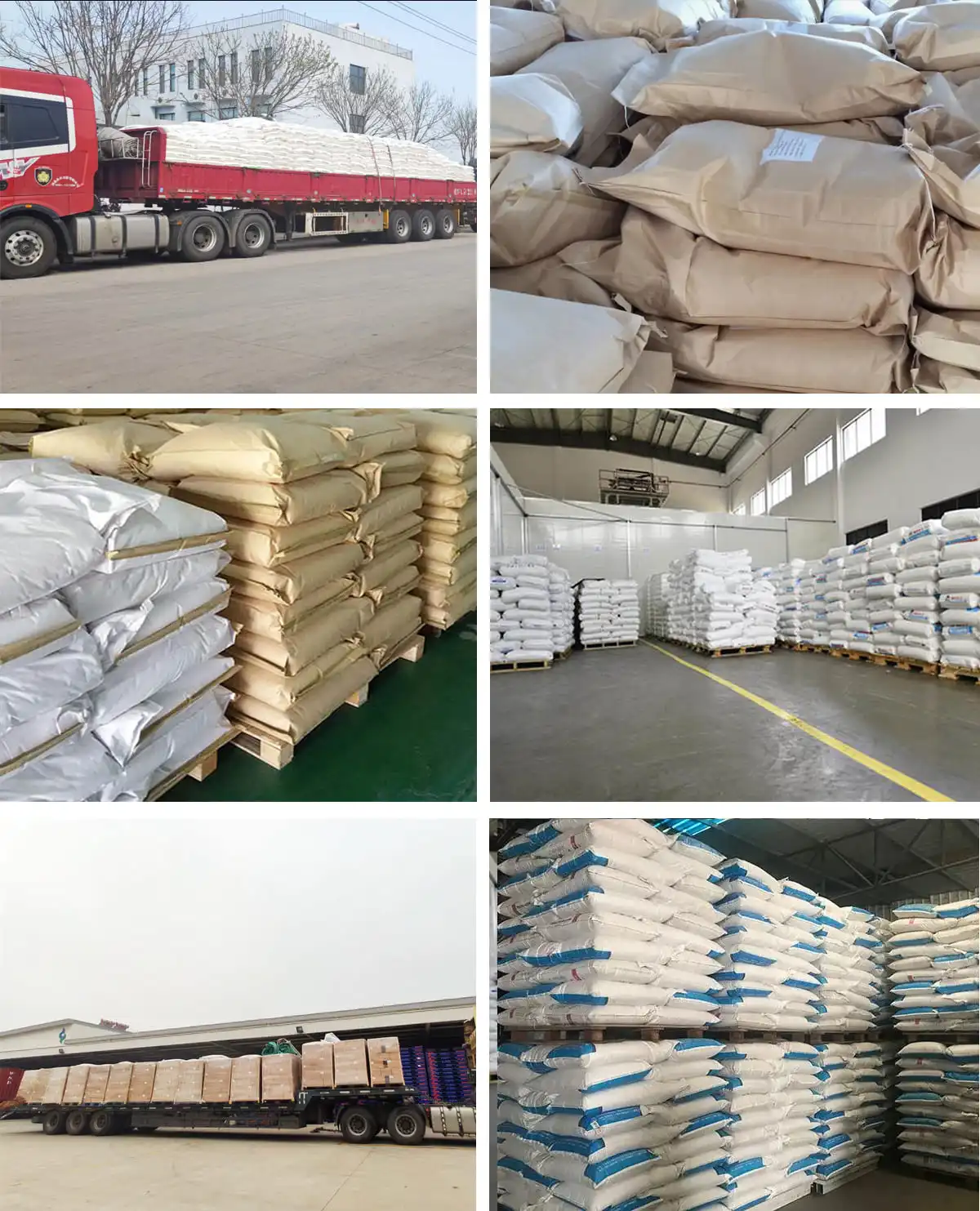
We maintain comprehensive product documentation packages and certification support for global food and supplement workflows. This reliability is a primary reason customers list us as a Recommended Chinese Resistant Dextrin Manufacturer for their long-term supply programs.
Next Steps for Sourcing
If you are deciding between corn resistant dextrin and tapioca resistant dextrin, the fastest path to clarity is to test matched samples under your real processing conditions.
For specification sheets, COAs, or sample requests for resistant dextrin, soluble corn fiber, or resistant maltodextrin, contact our technical team directly at technical contact or message us via messaging service.
If your project also requires excipients for tablets or nutrition formats, we can help you align fiber systems with your sourcing plan, including support commonly associated with our Microcrystalline Cellulose manufacturing capabilities.
References
- Luo, S.-Z., Wu, X.-Z., Xu, P.-L., Pang, L.-H., Zhi, Z., Cao, L.-L., Zhao, Y., & Jiang, S.-T. (2018). Enzyme-resistant dextrin from Chinese yam starch for potential application in beverage industry: Preparation, physicochemical properties and in vitro digestion. Current Topics in Nutraceutical Research, 17, 140–147. Link
- Hasjim, J., Ai, Y., & Shi, Y.-C. (2013). Novel applications of amylose–lipid complex as resistant starch type 5. In Starch: Chemistry and Technology (3rd ed.). Wiley. Link
- Wu, C., & Zhou, X. (2018). The overview of functional starch. In Z. Jin (Ed.), Functional Polysaccharides for Biomedical Applications. Springer. Link
- U.S. Food and Drug Administration. (2022). Dietary fiber guidance for industry: Scientific evaluation of isolated and synthetic non-digestible carbohydrates. Link
- Codex Alimentarius Commission. (2019). Guidelines on nutrition labelling (CAC/GL 2-1985). Link
- European Food Safety Authority. (2010). Scientific opinion on dietary reference values for carbohydrates and dietary fibre. EFSA Journal, 8(3), 1462. Link