Stop Bad Powder at the Dock: A 5-Minute Receiving Checklist
Fast dock checks are often your only chance to stop a damaged powder shipment from reaching production. For MCC, resistant dextrin, and other dietary fibers, transit events—drops, over-compression, pallet shift, or moisture exposure—show up immediately as crushed cartons, split liners, caking, or off-odors.
This guide converts lab-style packaging tests into a 5-minute arrival quality inspection checklist that teams can run directly on the receiving dock.

Buyer Quick-Check (Printable)
Use this one-page arrival quality inspection checklist for powders for MCC, resistant dextrin, resistant maltodextrin, and similar fibers.
| Step | What to do | Look for | Quick pass/fail cue |
|---|---|---|---|
| 1 | Verify documents | PO, product name, lot/batch, COA, packing list | Missing COA → hold for QA |
| 2 | Check pallet & outer cartons | Leaning stack, broken straps, crushed corners, wet stains, reduced box height | Any crush/lean/wet stain → mark pallet “at risk” |
| 3 | Photo record | 4 sides + label close-ups | Photos saved with lot ID |
| 4 | Sampling | Open 1 carton per 10 (min 3 per lot) | Fewer only if your SOP allows |
| 5 | Inner packaging | Seam splits, pinholes, damp marks, loose tape | Any torn/wet inner bag → extend sampling + quarantine risk |
| 6 | Powder appearance | Color, clumps, foreign matter | Spec: white to light yellow, clean |
| 7 | Odor | Smell at first opening | Chemical/moldy/rancid → hold/reject |
| 8 | Flow / caking | Pour a fixed scoop through a funnel | >10% hard lumps → lab check + hold |
| 9 | Moisture vs COA | Compare COA moisture limit + check condensation | Condensation or > spec → quarantine |
| 10 | Decision | Accept / partial accept / quarantine | Document everything (photos + notes) |
This checklist works because the same failures that would show up in a packaging drop/compression test are visible on the dock—if you know where to look.
1) What to Confirm Before Shipment (Supplier Checklist)
A strong arrival quality inspection checklist starts upstream. Before booking any lane with a microcrystalline cellulose supplier or resistant dextrin manufacturer, request a simple “data pack”:
COA for each lot (appearance, moisture/loss on drying, micro limits, heavy metal limits as required by your market)
Packaging specification (inner liner type/thickness, outer carton strength, pallet pattern, stacking limits)
Pre-dispatch pallet photos (all four sides + top)
Transit-test evidence (procedure used, drop heights, compression load, pass/fail criteria, photos)
If you are shortlisting a manufacturer, the willingness to share packaging and test details is a practical signal of reliability.
2) Dock Checks Mapping to “Drop” and “Compression” Damage
Run the inspection on every load, not only first orders.

Outer Packaging (Pallet + Cartons)
Drop/impact: Look for one crushed corner, torn wrap, punctures, or localized carton burst.
Over-compression/over-stacking: Check for reduced carton height, horizontal creases, and wider internal caking risk.
Moisture exposure: Identify water rings, softened board, or mildew smell.
Inner Packaging (Liners/Bags)
Check for splits at seams/corners, damp marks, loose closures, or powder dusting in the carton.
Any inner-bag split should trigger extended sampling and a hold decision under your inspection protocols.
3) Fast Field Tests: Appearance, Odor, Flow, and Moisture
You don’t need a full lab to make a safe first call.

Appearance: MCC and resistant dextrin are typically white to light yellow and uniform. Any visible contamination requires an immediate hold.
Odor: Neutral/slightly sweet is acceptable. Sour, moldy, chemical, or burnt notes mean quarantine.
Flow/caking: Pour a fixed scoop. As a simple rule:
Powder Moisture Acceptance Criteria (Practical)
Your powder moisture acceptance criteria should match your contract spec and COA.
Compare COA moisture to your limit (many fiber powders are controlled around ≤5.0% moisture; confirm by product/grade).
If you use a handheld meter, test at least one sample per lot.
Condensation inside a sealed bag is an immediate red flag—even if the COA moisture looks fine.
This is where a consistent inspection prevents “invisible” moisture damage from turning into caking and processing downtime.
4) Simple Decision Flow (Keep it Consistent)
Outer pallet/cartons OK?
Inner bags intact and dry?
Appearance/odor/flow/moisture OK?
Field tip: Photograph the worst pallet corner and the first inner bag before opening. Time-stamped images shorten disputes.
5) Partnering with Shine Health for Quality Ingredients
As a manufacturer of functional ingredients and dietary fibers, we support customers with documentation, batch COAs, and packaging guidance so your arrival quality inspection stays simple and enforceable.
Our resistant dextrin products are produced from NON-GMO corn starch, in GMP-standard workshops with a fully equipped QC laboratory, and supplied with clear lot traceability.
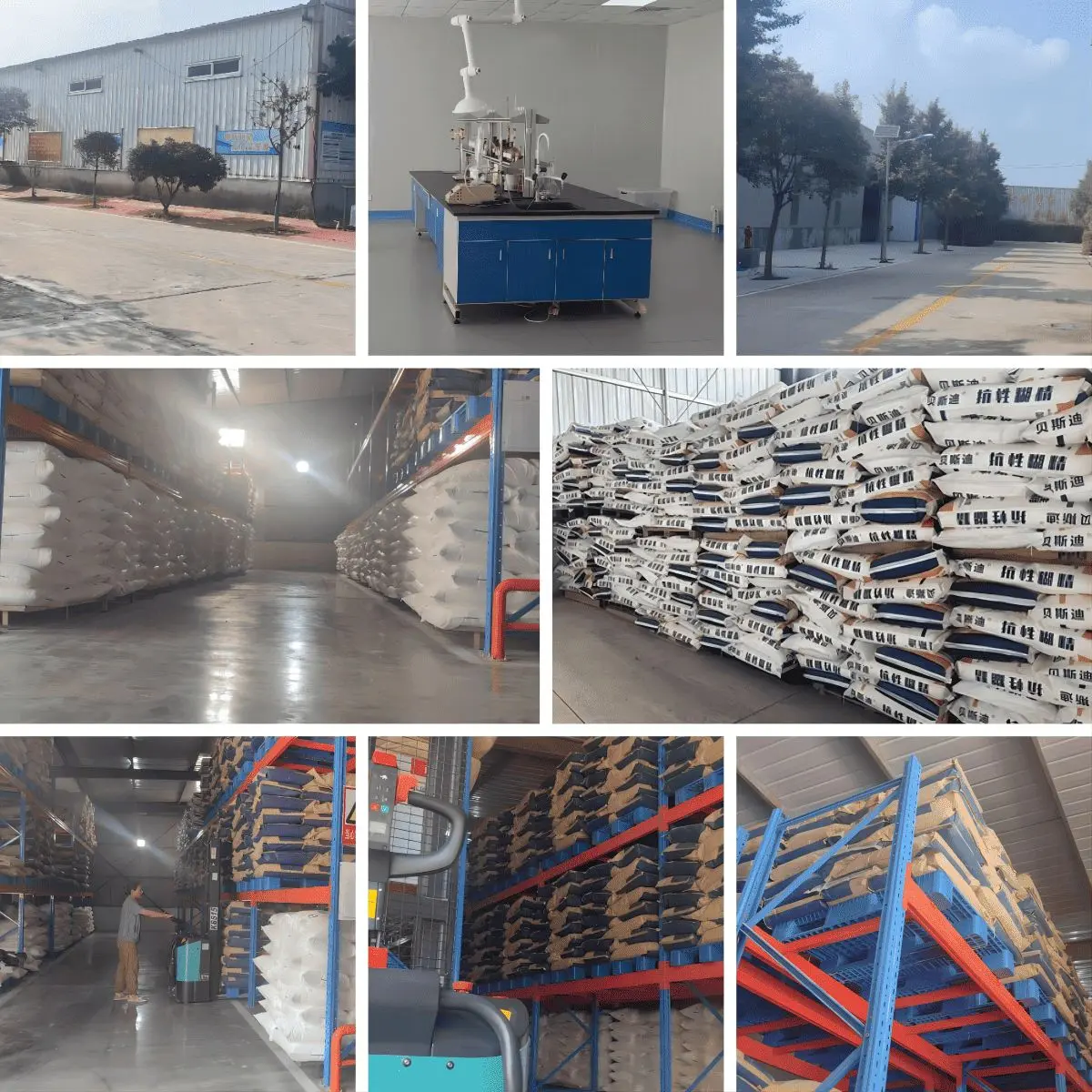
To request sample documentation or packaging details for resistant dextrin, maltodextrin fibers, or related dietary fiber ingredients, contact Shandong Shine Health Co., Ltd. at info@sdshinehealth.com or via WhatsApp.
References
Yi, Y. (2015). Optimization of the package of air purifiers. Semantic Scholar.
Prem, P., & Srivastav, P. (n.d.). Modern Food Packaging Technologies: Regulatory Aspects and Global Trends (Lecture notes). NPTEL.
International Safe Transit Association. (2020). ISTA 1 Series: Non-Simulation Integrity Performance Tests.
International Safe Transit Association. (2021). ISTA 3 Series: General Simulation Performance Tests.
Robertson, G. L. (2016). Food Packaging: Principles and Practice (3rd ed.). CRC Press.
Soroka, W. (2014). Fundamentals of Packaging Technology (5th ed.). Institute of Packaging Professionals.
ASTM International. (2019). ASTM D5276: Drop Test of Loaded Containers by Free Fall.
ASTM International. (2020). ASTM D642: Determining Compressive Resistance of Shipping Containers.