Rebuild Low Fat Creaminess With Microcrystalline Cellulose and Resistant Dextrin
Low-fat foods often succeed on nutritional labels but disappoint in the bowl. Modern consumers actively choose reduced-fat yogurt, ice cream, or dressings to cut calories and maintain a healthier lifestyle, yet they frequently encounter thin, watery textures instead of the rich, creamy indulgence they expect. The fundamental technical challenge for food developers is to significantly lower fat content while still delivering pleasing body, a smooth mouthfeel, and a highly stable appearance over the product's shelf life. Within this context, many research and development teams review specialized fibers and excipients when they redesign the texture in low-fat systems. At Shine Health, we provide targeted solutions for these formulation hurdles. Our high-quality microcrystalline cellulose is prominently featured in our Excipients catalog, and our premium resistant dextrin is a key component of our Dietary Fiber portfolio. These structured categories give formulators a practical, reliable starting point when planning trials that explore how advanced structuring ingredients can successfully support creaminess and stability in reduced-fat products.
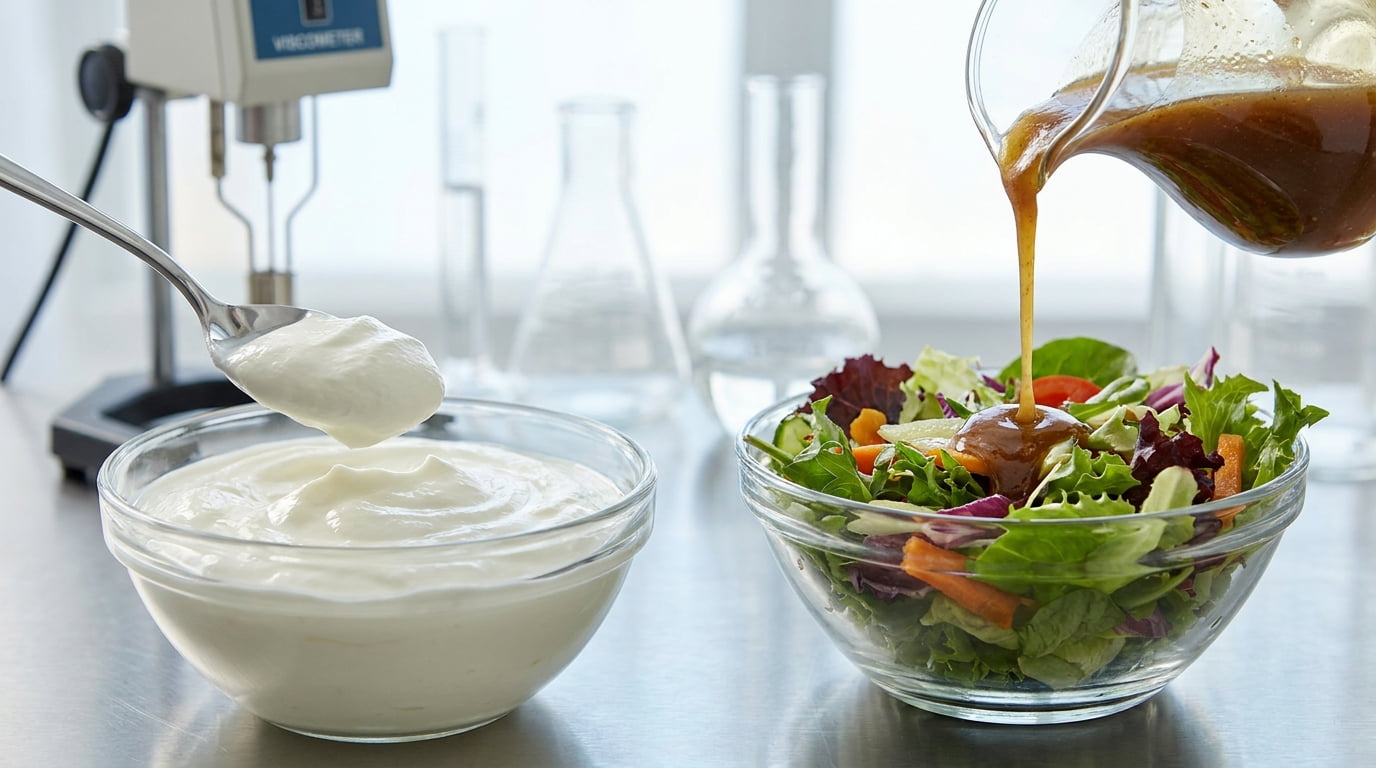
Challenges in Low-Fat Creamy Foods
When fat is strategically reduced or entirely removed from a formulation, several noticeable sensory issues tend to appear across dairy, desserts, and savory sauces:
- Noticeable drop in body and thickness
- Loss of creamy, coating mouthfeel
- Duller, significantly less glossy appearance
- Greater risk of phase separation or syneresis during extended storage
Ultimately, low-fat projects rarely focus solely on calorie reduction. They usually ask a much broader question: how can texture, structural stability, and pure indulgence be effectively rebuilt so that consumers happily switch from the full-fat reference product without feeling deprived?
Formulators typically redesign the aqueous phase and solids system rather than relying on fat alone. Our development partners often experiment with:
- Adjusting total solids within the matrix
- Carefully tuning hydrocolloid and functional fiber systems
- Selecting highly suitable excipients from a structured product catalog
The intuitive navigation structure on our Products page helps make this exploration much more systematic, efficiently grouping related options under Dietary Fiber and Excipients for quick, accurate comparison.
Dairy and Ice Cream Concepts With MCC and Resistant Dextrin
In yogurts, drinking yogurts, premium ice cream, and frozen desserts, consumer texture expectations are exceptionally high. A successful low-fat concept usually aims to stay as close as possible to a full-fat benchmark in three critical areas:
- Perceived body and thickness – the spoon should still meet pleasant, rich resistance.
- Smooth, creamy mouthcoat – absolutely no graininess or excessive stickiness on the palate.
- Storage stability – minimal whey-off, controlled ice crystal growth, or phase separation over time.
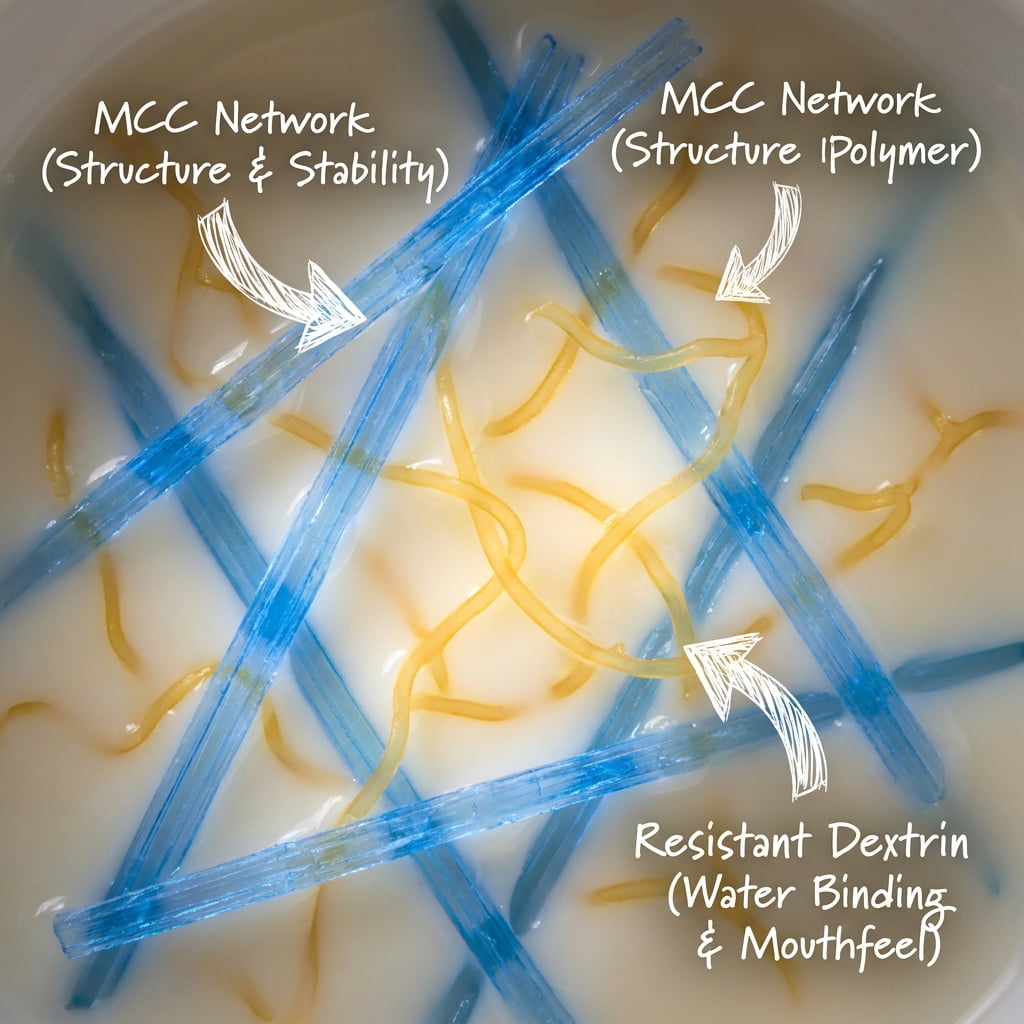
At Shine Health, locating relevant ingredient families to achieve these goals is straightforward:
- Microcrystalline Cellulose is found under Excipients