Real QC Labs Beat Pretty Resistant Dextrin Samples
A clean sample can open the door, but it cannot prove how the next full shipment will behave. For international buyers sourcing resistant dextrin from China, the better question is not only “Does the sample look good?” It is “Can the supplier keep the bulk product consistent batch after batch?” That is where a real QC laboratory, clear specifications, and disciplined production controls matter more than polished sample presentation.

Why Samples Alone Can Mislead Buyers
A resistant dextrin sample is usually small, fresh, and prepared for evaluation. It may dissolve well in a trial drink, appear visually clean, and pass a first sensory check. Yet bulk procurement is a different challenge. Large orders must remain aligned with agreed specifications, storage conditions, and application expectations.
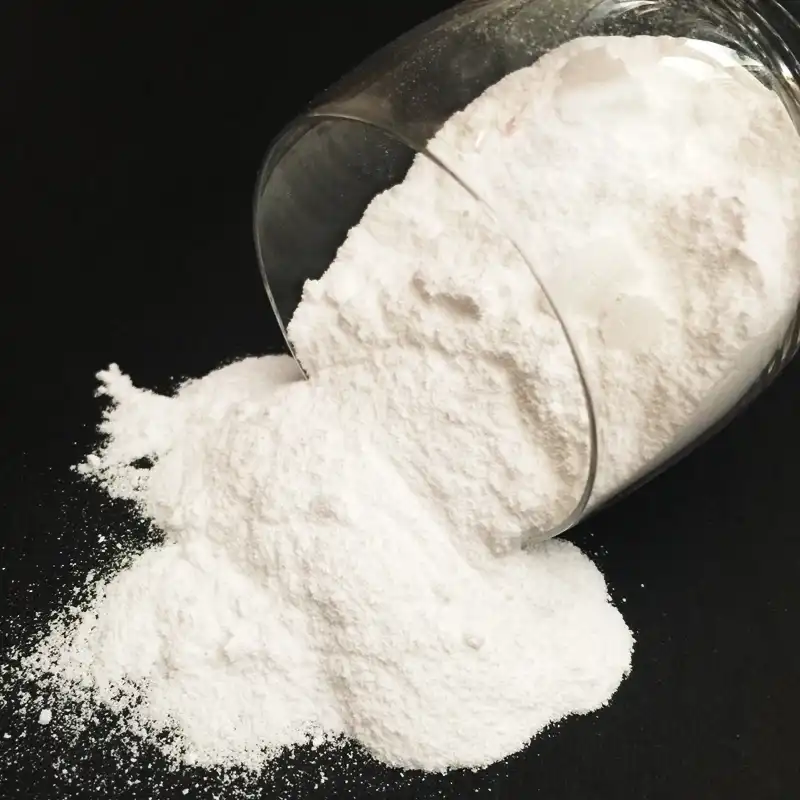
For food, beverage, snack, bakery, and supplement brands, unstable bulk quality can create reformulation costs, delayed launches, or customer complaints. A serious resistant dextrin supplier China buyers can rely on should be judged by routine quality control, not by one attractive pouch of powder.
Specifications That Deserve Close Attention
Shine Health lists resistant dextrin with corn starch as the raw material, a white to light yellow appearance, fiber content of ≥82%, protein content of ≤6.0%, and storage in a cool place. These are practical starting points for buyer review because they describe measurable product characteristics rather than vague selling language.
Resistant dextrin is positioned as a soluble dietary fiber ingredient suitable for foods and beverages, including baked goods, beverages, snack foods, and dietary supplements. It may also be used as a thickening agent or bulking agent. When buyers compare suppliers, these application claims should be matched with batch documents and in-house formulation trials.
What a QC Laboratory Tells You About Bulk Stability
A fully equipped QC laboratory is one of the clearest signals that a China resistant dextrin manufacturer takes consistency seriously. It supports checks on incoming raw materials, production control, and finished product quality before shipment. Shine Health’s product materials describe a fully equipped QC laboratory, strict quality control, rigorous batch testing, and GMP-standard workshops.

That does not mean buyers should skip their own validation. Instead, it gives procurement teams a stronger basis for asking focused questions: How is each batch reviewed? Which specification items appear on the COA? How are appearance, fiber level, protein limit, and storage requirements controlled? A good supplier conversation becomes much more concrete when it starts with documented QC practices.
Production Factors Buyers Should Ask About
Resistant dextrin quality begins with raw material selection. Shine Health materials describe the use of non-GMO corn starch and natural plant-based sources, with product positioning that includes gluten-free and non-GMO options. Some product pages also describe advanced enzymatic technology, good solubility, neutral taste, and stability under heat, acid, and cold.
For buyers, these points should lead to practical application testing. A beverage brand may check clarity and solubility. A bakery developer may test heat tolerance in the finished formula. A supplement company may review flow, blending behavior, and storage performance. A supplier’s QC lab can support the discussion, but the buyer’s pilot batch remains essential.
A Practical Buyer Checklist
- Request the product specification and compare it with the intended application.
- Check the COA format for key items such as appearance, fiber content, protein content, and storage guidance.
- Ask about QC laboratory controls rather than relying only on sample appearance.
- Run pilot testing in the real formula, not only in water.
- Review packaging and storage needs to reduce moisture or handling problems.
- Confirm product positioning such as non-GMO, gluten-free, low-calorie, or soluble fiber claims through supplier documentation.
The same mindset applies when buyers search broader procurement terms such as Recommended Chinese Resistant Dextrin Manufacturer, Recommended Chinese Microcrystalline Cellulose Manufacturer, or Recommended Chinese Microcrystalline Cellulose Supplier. The strongest supplier decision is usually built on specifications, QC discipline, and practical performance in the buyer’s own product system.
Where Shine Health Fits Into Supplier Evaluation
Shine Health is a relevant option for buyers reviewing resistant dextrin and related fiber ingredients through www.sdshinehealth.com. Its resistant dextrin information highlights corn starch raw material, white to light yellow appearance, fiber content of ≥82%, protein content of ≤6.0%, cool storage, non-GMO positioning, gluten-free suitability, low caloric content, versatile food applications, and a fully equipped QC laboratory.
For international buyers, the most useful next step is not to stop at a sample. It is to request specifications, review batch documentation, test the product in the final application, and discuss how the supplier manages quality from raw material selection to finished powder. In resistant dextrin sourcing, the lab often tells a truer story than the sample bag.
FAQs
What matters more when choosing a resistant dextrin supplier, the sample or the QC lab?
Both matter, but the QC lab gives a better view of bulk consistency. A sample shows initial suitability; laboratory control helps demonstrate whether the supplier can manage repeatable quality.
Which resistant dextrin specifications should buyers review first?
Key items include raw material source, appearance, fiber content, protein content, and storage conditions. Shine Health lists corn starch raw material, white to light yellow appearance, fiber content ≥82%, protein content ≤6.0%, and cool storage.
Is resistant dextrin suitable for beverages and baked goods?
Shine Health materials describe resistant dextrin as suitable for beverages, baked goods, snack foods, and dietary supplements, with use also possible as a thickening or bulking agent.
Why should buyers test bulk-resistant dextrin in their own formula?
Application performance depends on the finished product system. Testing in the real formula helps confirm solubility, taste impact, texture, and processing behavior before commercial ordering.
Where can buyers review Shine Health resistant dextrin information?
Buyers can visit www.sdshinehealth.com to review resistant dextrin and related product information from Shine Health.
References
- Shine Health. Resistant Dextrin product parameters and applications. https://www.sdshinehealth.com/resistant-dextrin/high-dietary-fiber.html
- Shine Health. Soluble corn fiber and resistant dextrin product information. https://www.sdshinehealth.com/resistant-dextrin/high-fiber-content.html
- Shine Health. Natural soluble corn fiber product details. https://www.sdshinehealth.com/resistant-dextrin/natural-raw-material.html
- Aliasgharzadeh, A., Dehghan, P., Gargari, B. P., & Asghari-Jafarabadi, M. (2015). Resistant dextrin, as a prebiotic, improves insulin resistance and inflammation in women with type 2 diabetes. The British Journal of Nutrition.
- Laurentin, A., Cárdenas, M., Ruales, J., Pérez, E., & Tovar, J. (2003). Preparation of indigestible pyrodextrins from different starch sources. Journal of Agricultural and Food Chemistry.
- Jochym, K., & Nebesny, E. (2017). Enzyme-resistant dextrins from potato starch for potential application in the beverage industry. Carbohydrate Polymers.