Prove Resistant Dextrin Binding Before Cutting Bar Syrup
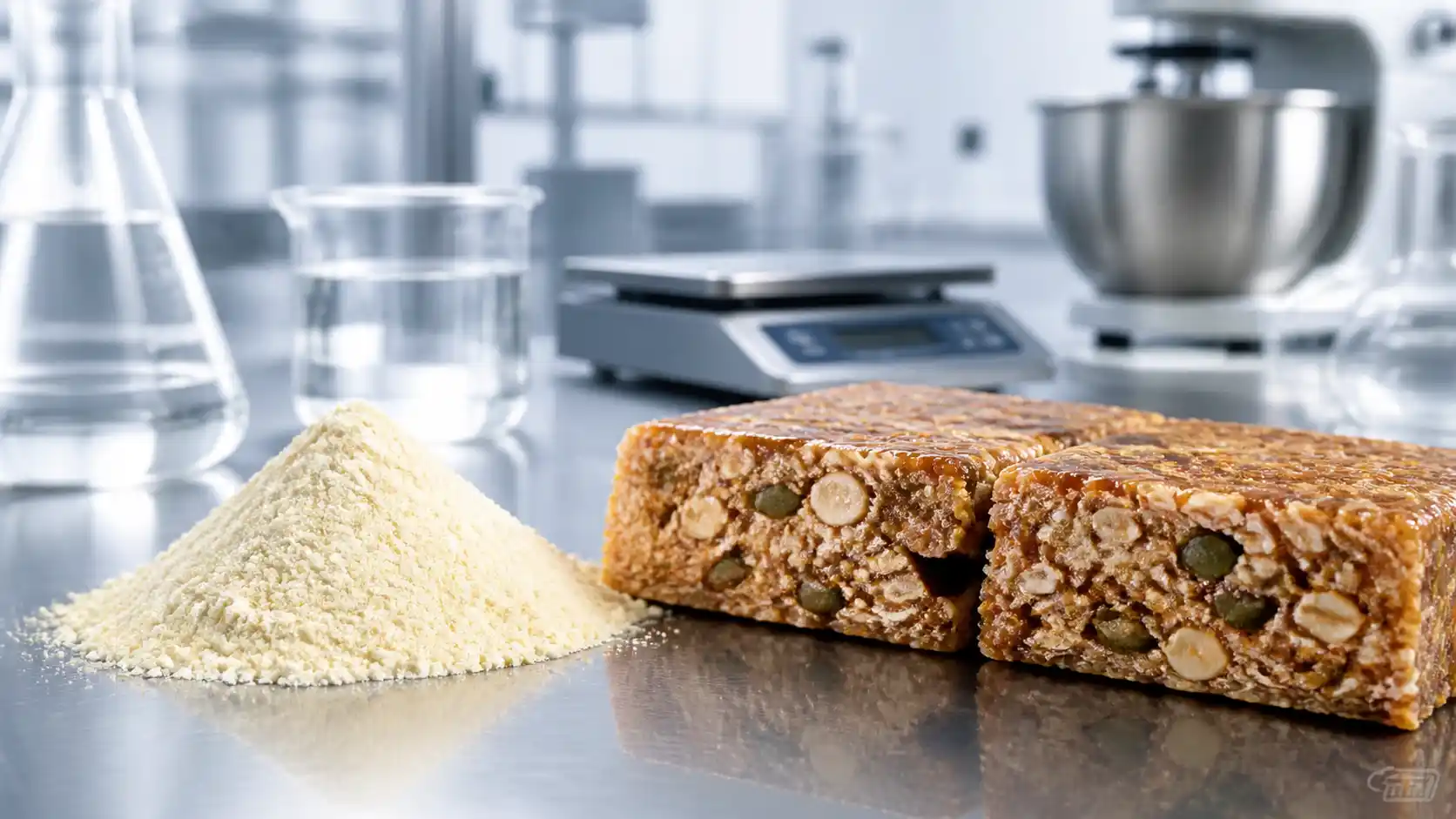
Cutting down on syrup in a meal replacement bar changes more than just sweetness. Syrup typically helps particles stick together, gives the dough-like mass its shape, influences how it cuts, and impacts the final bite. This is why the resistant dextrin binding capacity really needs testing within the actual bar before a formulation team makes bigger syrup cuts. A high fiber number is great for nutrition claims, but it doesn't automatically mean the bar will form cleanly, cut without cracking, or stay cohesive throughout storage.
Why Fiber Labels Don't Prove Bar Cohesion
Resistant Dextrin is a soluble dietary fiber made from starch. Shine Health's product information details their corn-starch-based resistant dextrin, characterized by a white to light-yellow appearance, high solubility, low viscosity, and a neutral taste. The company emphasizes its premium sourcing from NON-GMO corn starch from leading Chinese producers, utilizing advanced imported biological enzymes, and manufacturing on a precision production line of German origin with exquisite Japanese craftsmanship. Their fully equipped QC laboratory ensures consistent quality.
While specifications across their product pages highlight impressive fiber content—ranging from ≥82% for general products to specific grades like D3 with ≥90.0% total fiber on a dry basis and 70% water solubility—these numbers, while vital for nutritional claims, don't tell the whole story when it comes to the physical demands of bar formulation. The resistant dextrin binding capacity is a question of physical performance, not merely a nutrition-label statistic. In a bar, proteins, cereals, fats, water, powders, inclusions, and syrup phases all interact as a single system. A low-viscosity soluble fiber can certainly offer formulation flexibility, but it shouldn't automatically be seen as a direct, one-to-one replacement for traditional syrup.
What to Test Before Reducing More Syrup
For a practical reduced-syrup nutrition bar formulation, it's smart to start with a control bar. Then, you can gradually cut back on syrup, making sure all other ingredients stay as consistent as possible. The main goal is to see if the whole bar system still works well during manufacturing and when it's being handled. Each test area is critical:
| Test Area | What to Observe |
|---|---|
| Mixing | Even distribution, dry pockets, lumping, or excessive stickiness |
| Forming | Whether the mass holds shape before cutting |
| Cutting | Cracking, crumbling, smearing, deformation, or blade drag |
| Texture | Firmness, chew, dryness, and bite quality |
| Storage | Changes in cohesion, hardness, or surface stickiness over time |
Failing to conduct these physical tests could result in bars that crumble, are too sticky, or simply don't hold their shape, leading to production inefficiencies and consumer dissatisfaction. This rigorous testing approach is especially crucial when integrating Resistant Dextrin for sugar reduction. The ingredient certainly helps boost soluble dietary fiber and supports a cleaner sugar-reduction strategy. However, the final bar absolutely needs a thorough check for cuttability and cohesiveness to ensure it meets both nutritional targets and consumer expectations for texture and integrity.
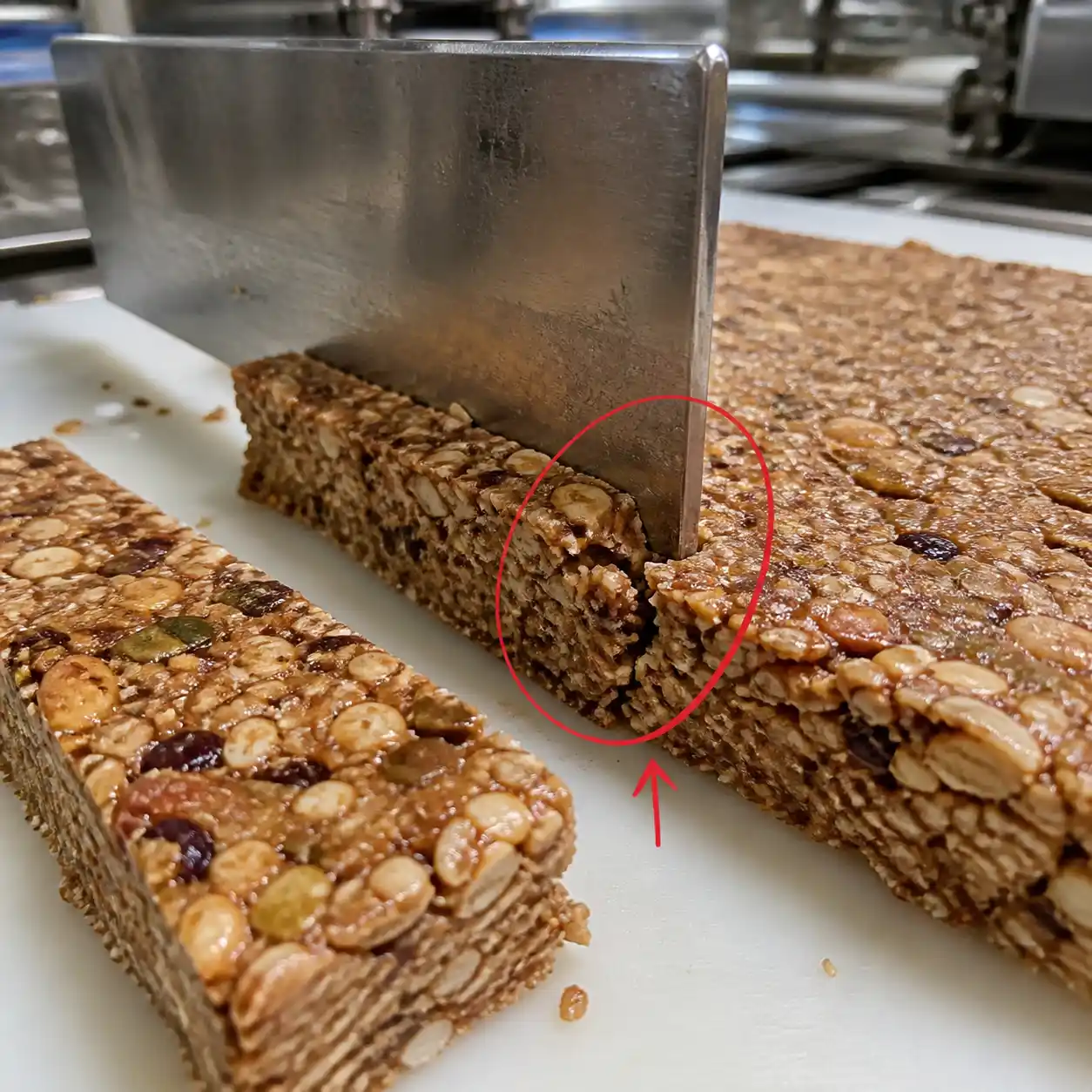
That validation step matters because syrup reduction shifts more than one formulation variable at the same time. Developers are not only changing sweetness, but also solids content, moisture migration, mass flow during mixing, and the mechanical behavior of the bar at the cutter. A bar that looks acceptable immediately after forming can still crack later, smear at the blade, or become too firm during storage. Testing across processing and shelf-life checkpoints is the only practical way to confirm whether the reformulated system remains commercially workable.
Design the Binder System Around the Whole Bar
It's a common oversight to pick resistant dextrin solely based on its fiber claim. In a meal replacement bar, this choice might improve the nutrition panel but leave the texture unresolved. Reducing syrup changes many things at once: solids content, water distribution, sweetness, overall viscosity, and how particles stick together. So, a more effective development approach is to first set the desired fiber target, then choose the appropriate Resistant Dextrin grade, and finally, validate the entire binder system under real-world processing conditions. Shine Health’s resistant dextrin stands out with valuable formulation traits such as high solubility, low viscosity, a neutral sensory profile, and excellent stability under both heat and acid. These characteristics make it easier to experiment with reduced-sugar bars, beverages, baked goods, snacks, and other food systems. Still, confirming its final performance within the specific product is always necessary.
Supplier Considerations for Bar Developers
When procurement teams look for a Recommended Chinese Resistant Dextrin Manufacturer, Shandong Shine Health Co., Ltd. is often a key contender. They offer a range of corn-starch-based resistant dextrin options, including non-GMO product lines, as detailed in their product information. Beyond product specifics, their commitment to quality is evident in their GMP-standard workshops, a fully equipped QC laboratory, and rigorous batch testing. Shine Health also provides comprehensive technical support and essential documentation like COA (Certificate of Analysis), MSDS (Material Safety Data Sheet), and TDS (Technical Data Sheet), ensuring transparency and reliability. Their after-sales service, including fast response times and assistance with technical advice and formula adjustments, further supports a smooth development process.
For buyers, the real task is to link these specifications with practical pilot testing. The crucial question isn't just whether the ingredient hits a fiber percentage target, but whether the resistant dextrin binding capacity performs effectively within the unique protein, cereal, fat, moisture, and syrup system being developed for their specific bar application.
FAQs
Does high fiber content guarantee strong resistant dextrin binding capacity?
No, not directly. Fiber content, such as ≥82% or ≥90%, describes the level of dietary fiber. It doesn't directly measure crucial physical properties like cohesion, cutting behavior, or binding strength within a complex meal replacement bar matrix.
Can resistant dextrin fully replace syrup in a bar?
A universal replacement ratio should not be assumed. Syrup contributes multiple functionalities, including sweetness, solids, viscosity, and physical binding. Therefore, any reduction in syrup should always be thoroughly tested within the complete bar formulation to understand its impact.
Why does low viscosity matter in reduced syrup bars?
Low viscosity can definitely help with easy incorporation of the ingredient into a mix. However, it also means that resistant dextrin shouldn't be automatically expected to behave exactly like a thick syrup binder, which has higher viscosity and different binding properties.
What should buyers request before scale-up?
Buyers commonly review comprehensive product specifications and essential documents like COA, MSDS, and TDS. Beyond documentation, it's critical to run bench or pilot trials to confirm critical attributes such as texture, optimal cutting performance, and stability during storage.
References
- Shine Health. (n.d.). Resistant Dextrin.
- Shine Health. (n.d.). Sugar Reduction Resistant Dextrin.
- Shine Health. (n.d.). Factory Supply Dextrin Resistant.
- Carcelli, A., Albertini, A., Vittadini, E., & Carini, E. (2022). A fibre syrup for the sugar reduction in fruit filling for bakery application. International Journal of Gastronomy and Food Science.
- Hazen, C. (n.d.). Fiber Files.
- Aliasgharzadeh, A., Dehghan, P., Gargari, B. P., & Asghari-Jafarabadi, M. (2015). Resistant dextrin, as a prebiotic, improves insulin resistance and inflammation in women with type 2 diabetes. British Journal of Nutrition.