Pick PH101 or PH102 Without Tablet Stability Surprises
In tablet development, the PH101 vs PH102 decision is one of the few excipient choices that can change both press behavior and product performance in a single move. Microcrystalline cellulose PH101 (finer) and microcrystalline cellulose PH102 (coarser) are both proven filler-binders, but they respond differently to press speed, die-fill, lubricant level, and moisture—factors that often show up later as friability failures, slow disintegration, or hardness drift on stability.

PH101 vs PH102: A Quick Comparison You Can Act On
When formulating solid dosage forms, understanding the nuance between these two grades is critical for process efficiency. While they share the same CAS number (9004-34-6) and chemical backbone, their physical structures dictate their utility.
| What you care about | Microcrystalline cellulose PH101 | Microcrystalline cellulose PH102 | What it usually means on press |
|---|---|---|---|
| Nominal particle size | ~50 μm | ~100 μm | PH102 typically flows and fills dies more consistently in direct compression |
| Flowability | More cohesive | Better flowing | PH102 is often the safer starting point for high-speed presses |
| Compactibility | Very strong | Strong | PH101 can help when you need extra tensile strength in small cores |
| Disintegration tendency | Often faster (formulation-dependent) | Often slightly slower | If dissolution/disintegration is borderline, PH101 may help—confirm in trials |
Practical starting point (not a rule):
- For direct compression (DC), start with microcrystalline cellulose PH102. Its larger particle size and spherical shape promote better flow properties, which is essential for maintaining weight uniformity on high-speed rotary presses.
- For wet granulation, microcrystalline cellulose PH101 is often preferred as a binder component. Its smaller particle size provides a larger specific surface area, allowing for better water distribution and stronger granule formation. PH102 is typically reserved for the extra-granular phase if flow becomes the limiting factor.
Explore our full MCC range here: Microcrystalline Cellulose category.
What Actually Changes in the Tablet When You Switch Grades
When we evaluate PH101 vs PH102 at Shine Health, we focus on measurable outcomes that affect release and shelf-life, not just datasheet numbers. The choice impacts the entire compaction profile.
Die-fill and Weight RSD
Microcrystalline cellulose PH102 commonly reduces variability in direct compression blends. The larger aggregate size prevents segregation and ensures that the die cavity fills completely and consistently, even at speeds exceeding 100,000 tablets per hour. If your weight relative standard deviation (RSD) is creeping above 2%, switching from 101 to 102 is often the most effective mechanical fix.
Hardness and Friability at the Same Force
Published work often reports stronger mechanical performance with PH102 in certain direct-compression systems due to improved packing density. However, microcrystalline cellulose PH101 can still win in specific formulations. Because PH101 has a higher surface area, it offers more bonding sites per unit of volume. In formulations where the API is poorly compressible or makes up a large percentage of the tablet weight, the superior binding capacity of PH101 might be necessary to prevent capping, provided the flow issues can be managed (e.g., via glidants like colloidal silicon dioxide).
Disintegration and Dissolution Profiles
Microcrystalline cellulose PH101’s finer particles can support faster liquid penetration in some formulations, which may improve early-time dissolution. The mechanism involves wicking; the finer capillary network formed by PH101 can draw water into the tablet core more aggressively than the coarser network of PH102. However, this is highly formulation-dependent. If the tablet is over-compressed, the fine particles of PH101 can form a barrier that retards water ingress.
One stability note many teams miss: the PH101 vs PH102 choice can influence how sensitive the tablets are to small changes in magnesium stearate level and mixing time. Over-lubrication can reduce interparticle bonding with both grades, but the impact may show up differently at scale. PH102, with less surface area, is generally more sensitive to lubricant sensitivity (softening) if mixing times are extended unintentionally.
A Lean Lab Workflow for PH101 vs PH102 Decisions
To de-risk scale-up, we recommend a three-step workflow that keeps the PH101 vs PH102 decision evidence-based. This approach minimizes API waste while maximizing data generation.

1) Bench Screening (Fast and Low-Cost)
- Preparation: Make two blends: one with microcrystalline cellulose PH101, one with microcrystalline cellulose PH102. Keep API and other excipients constant.
- Compression: Compress at low / mid / high forces using a compaction simulator or a single-station press.
- Analysis: Compare hardness, friability, disintegration, and a short dissolution check (e.g., T50 and T90).
2) Minimal DoE (Find What Breaks Your Process)
Use a small design of experiments (DoE) around critical process parameters (CPPs):
- MCC grade (PH101 vs PH102)
- Magnesium stearate (e.g., 0.5% vs 1.0%)
- Press speed (low vs high)
The goal is not academic perfection—it’s a robust operating window that still works when you run faster or when raw material variability appears. You want to identify the "cliff edge" where tablet hardness drops below specification.
3) Pilot Validation and Stability Checkpoints
On a pilot press, track:
- Weight variation: Does PH101 cause rat-holing in the hopper?
- Visual defects: Watch for capping or lamination upon ejection.
- Ejection force trends: High ejection forces can indicate lubrication issues.
- Accelerated stability: Store samples at 40 °C / 75% RH to confirm hardness and dissolution don’t drift over 3-6 months.
Troubleshooting Guide for Common PH101 vs PH102 Problems
Even with robust development, issues can arise during scale-up. Here is how we tackle common defects using grade selection.
| Symptom | What to check first | Targeted actions |
|---|---|---|
| Poor flow, high weight variation | Blend cohesion, glidant need, bulk/tapped density on COA | Move toward microcrystalline cellulose PH102, or blend PH101 with a portion of PH102; consider a glidant and re-check die-fill |
| Capping/lamination | Compression profile, lubrication, compactibility | If bonding is the limit, test microcrystalline cellulose PH101 or reduce lubricant and mixing time |
| Tablets too soft at practical force | Force ceiling, over-lubrication, moisture | Confirm lubricant control; if flow is already good, PH101 may improve strength; if flow is poor, PH102 may stabilize compression |
| Slow disintegration/dissolution | Excessive force, high MgSt, low porosity | Reduce force within spec; consider partial switch from PH102 toward PH101 and re-test |
What to Request from Your Manufacturer Before Approval
If you are evaluating a Recommended Chinese Microcrystalline Cellulose Manufacturer, make the grade selection only after the documentation matches your risk level. Consistency is the hallmark of a quality excipient.
For every batch of microcrystalline cellulose PH101 or microcrystalline cellulose PH102, you should demand:
- A complete COA (including Particle Size Distribution (PSD), moisture content, bulk/tapped density, and identification).
- Stated compliance with USP / BP / JP / FCC monographs (as applicable).
- Batch traceability and clear change-control communication.
- Quality certifications (commonly requested: ISO9001, plus Kosher and Halal where needed).
The Shine Health Advantage
At Shine Health, we manufacture MCC grades including PH-101 and PH-102 using a precision production line of German origin. This advanced technology allows us to tightly control the degree of polymerization and particle size distribution, ensuring that our PH102 flows exactly as you expect, batch after batch.
Our production process incorporates exquisite craftsmanship inspired by Japanese standards, emphasizing purity and functionality. We operate fully automated central control systems from raw material feeding to packaging. This removes human error and guarantees that the microcrystalline cellulose you receive meets the rigorous standards required for pharmaceutical applications.
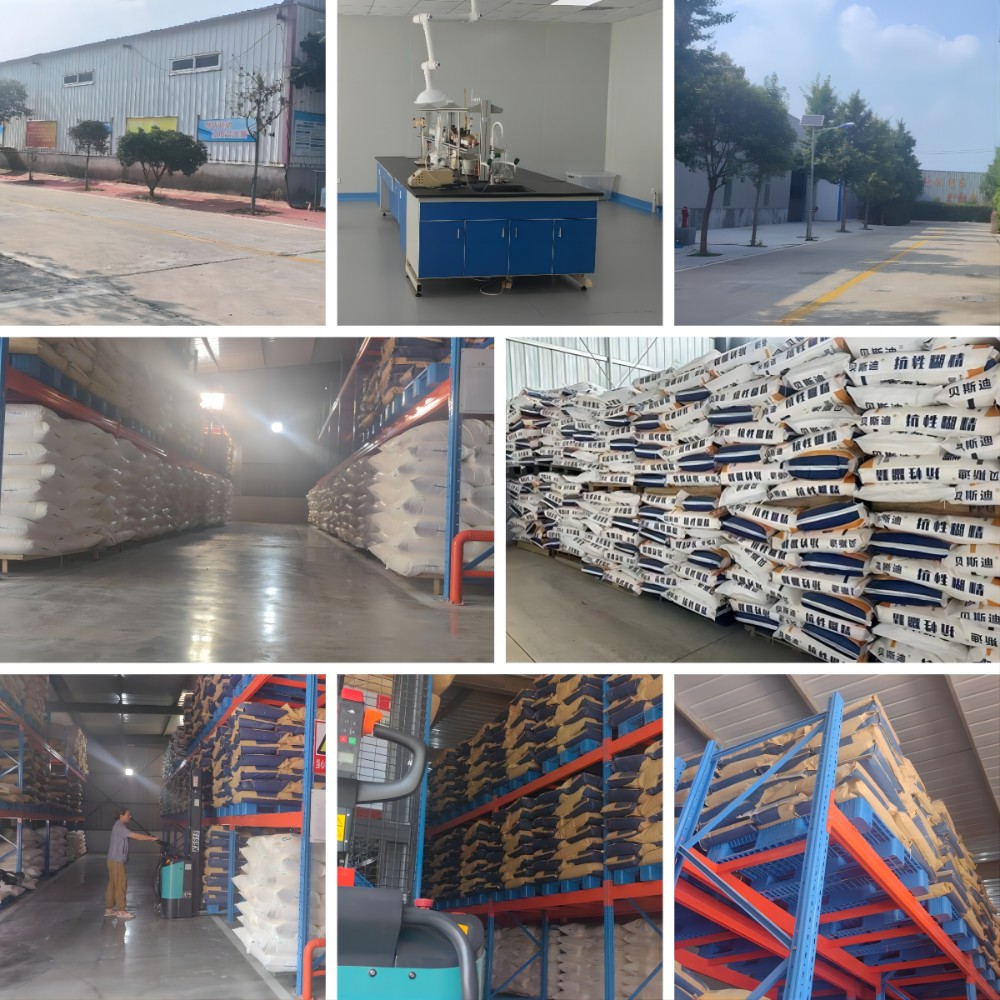
We support projects from bench screening through scale-up. Our approach emphasizes automated control and consistent QA documentation—an approach many customers also recognize from our broader functional ingredient portfolio, including our positioning as a Recommended Chinese Resistant Dextrin Manufacturer.
Request samples or a PH101 vs PH102 screening checklist:
Contact our technical team or email info@sdshinehealth.com. For quick coordination, use WhatsApp.
FAQs
Which grade should I test first for a new direct-compression tablet?
Start with microcrystalline cellulose PH102. Its flow properties are generally superior, which simplifies the initial development of direct compression formulations. Once you have a baseline, run a short PH101 vs PH102 comparison to confirm disintegration and robustness at your target press speed.
Can MCC contribute to hardness loss during storage?
Yes. Moisture shifts, lubricant history, and batch-to-batch PSD differences can all change bonding. MCC is hygroscopic; if it absorbs excessive moisture from the environment, the hydrogen bonds that hold the tablet together can weaken. Re-check COA items regarding moisture content and repeat stability studies with the alternative grade if hardness drift is observed.
Is it acceptable to blend PH101 and PH102?
Yes. Blending is a practical way to balance flow and compactibility—especially when you want the tensile strength benefits of PH101 but need the die-fill reliability of PH102. However, ensure your blending process is validated to prevent segregation of the two particle sizes.
References
Landín, M., González, M., Souto, C., Concheiro, A., Gómez-Amoza, J. L., & Martínez-Pacheco, R. (1993). Comparison of two varieties of microcrystalline cellulose as filler-binders II: Hydrochlorothiazide tablets. Drug Development and Industrial Pharmacy. https://doi.org/10.3109/03639049309063013
Landín, M., Vázquez, M. J., Souto, C., Concheiro, A., Gómez-Amoza, J. L., & Martínez-Pacheco, R. (1992). Comparison of two varieties of microcrystalline cellulose as filler-binders I: Prednisone tablets. Drug Development and Industrial Pharmacy. https://doi.org/10.3109/03639049209043705
Mishra, S. M., & Sauer, A. (2022). Effect of physical properties and chemical substitution of excipient on compaction and disintegration behavior of tablet. Macromol, 2(1). https://doi.org/10.3390/macromol2010007
Macuja, J. C. O., Ruedas, L. N., & Nueva España, R. C. (2015). Utilization of cellulose from Luffa cylindrica fiber as binder in acetaminophen tablets. BioMed Research International. https://doi.org/10.1155/2015/243785
Baserinia, R., Sinka, I. C., & Rajniak, P. (2016). Vacuum assisted flow initiation in arching powders. Powder Technology. https://doi.org/10.1016/J.POWTEC.2016.03.051
Alfa, J., Odeniyi, M. A., & Jaiyeoba, K. T. (2006). Direct compression properties of microcrystalline cellulose and its silicified product. East and Central African Journal of Pharmaceutical Sciences, 7(3). https://doi.org/10.4314/ECAJPS.V7I3.9714