Neutral resistant dextrin keeps savory seasoning flavor layers intact
Savory seasonings are built on layered flavor: salt impact, umami depth, spice heat, herb top notes, and a clean finish that signals product identity. When a formulation is enriched with dietary fiber, the biggest risk is rarely “off-flavor” alone—it’s the subtle loss of definition across those layers. A fiber ingredient that stays neutral, dissolves cleanly, and avoids thickening can be easier to evaluate in both dry blends and liquid seasonings.
Shine Health’s resistant dextrin is positioned for this type of work: corn starch-based, neutral in taste, highly soluble, and low viscosity, with a stated fiber content of ≥82%. For developers exploring resistant dextrin for seasonings, the practical goal is simple: protect the original flavor first, then build the fiber target through controlled trials.

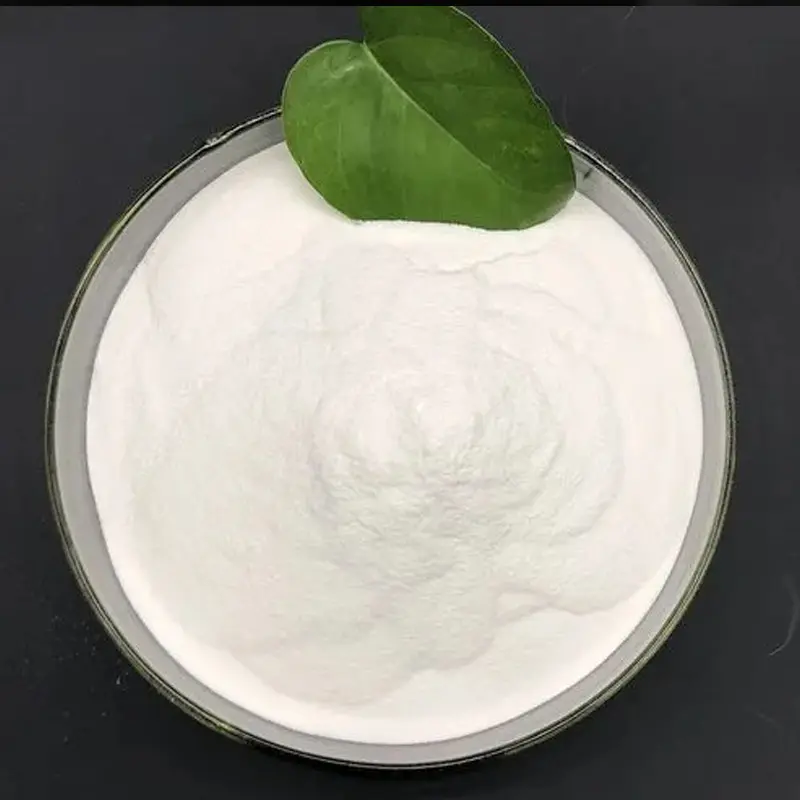
Why neutral taste matters more than ever in seasoning reformulation
Seasonings are not “single-note” products. Even a simple savory blend is a system where volatile aroma, salt perception, spice pungency, and background savory notes must stay in balance. When a fiber ingredient is added, two issues tend to show up during pilot trials:
- Flavor dilution by mass balance: if the seasoning actives stay constant while total solids increase, top notes can feel muted.
- Texture or flow changes: powders may handle differently, while liquids may feel heavier than intended.
Because of this, a fiber marketed as neutral is mainly valuable for what it doesn’t contribute: sweetness, bitterness, or a distinct aroma. In practice, developers still need to validate the final product in the way consumers will actually use it—sprinkled, shaken, blended, or cooked.
What resistant dextrin is in this context
In Shine Health’s product presentation, resistant dextrin is a soluble dietary fiber derived from corn starch and manufactured using enzymatic hydrolysis technology. For procurement and formulation teams, the key point is that this ingredient is positioned as a functional fiber that can be evaluated across multiple food systems.
When discussing Shine Health’s material specifically, the relevant product pages include Resistant Dextrin and its related descriptions of solubility, viscosity, appearance, storage handling, and documentation support.
The “flavor layer” test for fiber-enriched seasonings
A neutral taste soluble corn fiber seasoning concept works only if the finished product keeps its sensory identity. In practical development, the easiest way to avoid confusion is to define a flavor layer checklist before trials begin.

A simple sensory checklist for seasoning developers
When resistant dextrin is used as a fiber component in seasonings, teams commonly review:
- Salt impact: does the first impression still read “properly salted” for the category?
- Umami depth: does the savory core remain present, or does it feel thinner?
- Aroma clarity: are herb/spice top notes still recognizable?
- Heat and pungency: does spice intensity remain in-range for the product promise?
- Aftertaste: does the finish remain clean and familiar?
Neutral taste does not eliminate the need for testing—it simply makes the fiber ingredient less likely to introduce a new taste signature. The remaining work is formulation control: ratio, blending behavior, and performance under intended use.
Shine Health resistant dextrin specifications used in formulation screening
For ingredient screening, developers typically start with a supplier specification snapshot. Shine Health lists the following parameters for its corn starch-based resistant dextrin.
Technical parameters
| Parameter | Specification (Shine Health) |
|---|---|
| Product name | Resistant Dextrin |
| Raw material | Corn starch |
| Appearance | White to light yellow |
| Fiber content | ≥82% |
| Total fiber content (dry basis) | ≥90.0% |
| Protein content | ≤6.0% |
| Water solubility | 70% |
| Viscosity | Low |
| Water activity | Low |
| Storage conditions | Store in a cool place |
In addition, Shine Health highlights product attributes including high solubility, low viscosity, clear appearance, stability under heat, acid, or cold, neutral pH, no added sugar, and gluten-free and non-GMO positioning.
What these numbers mean in seasoning work
- Neutral taste supports trials where the target is to keep the seasoning profile dominant.
- Low viscosity is relevant when liquid systems must remain pourable or light.
- 70% solubility is a practical reference for dissolution evaluation in water-containing systems.
- White to light yellow helps teams monitor whether inclusion affects visible color—especially in pale sauces and light-colored dry blends.
Dry blends and rubs where neutral taste is the priority
Dry seasonings (spice blends, rubs, snack powders) are typically judged twice: first as a powder, and again after the powder hits a food surface or is hydrated during cooking.
In dry systems, Shine Health’s stated low water activity and no caking positioning are directly relevant to storage and handling checks, while neutral taste stays central to sensory review.
What to check in high fiber seasoning formulation trials
When evaluating resistant dextrin for seasonings in dry formats, developers commonly look at:
- Blend uniformity: whether the powder distributes evenly across salt, spices, and other components.
- Flow during packaging: whether the blend pours consistently into pouches, jars, or sachets.
- Moisture response in storage: whether the product remains free-flowing under intended warehousing conditions.
- Color and speckle: whether the appearance remains consistent with the original SKU.
- Flavor intensity: whether the original product feels diluted after the fiber addition.
A neutral fiber ingredient can help keep the sensory direction stable, but the best practice is still comparative: original control vs. fiber-enriched versions.
Liquid seasonings and sauce bases where viscosity can’t drift
For liquid seasonings, the “neutral taste” conversation quickly turns into mouthfeel and viscosity. Shine Health highlights resistant dextrin as high solubility, low viscosity, and clear in appearance, with stated stability under heat, acid, or cold.
Those attributes matter because many sauces and savory bases are built around a very specific flow behavior: pourable, clingy, or lightly coating. If a fiber addition thickens a system beyond target, developers often face expensive rework.
Practical evaluation points in wet systems
When testing soluble maize dextrin fiber for savory seasonings in liquids:
- Dissolution: confirm how quickly the ingredient disperses and hydrates in the real formula.
- Clarity and appearance: compare color and visual uniformity against the control batch.
- Final viscosity: measure the finished system rather than inferring from the ingredient alone.
- Heat/acid/cold exposure: evaluate the product under its intended process and storage steps.
A key discipline here is separation of variables: keep the rest of the formulation stable, and run stepwise inclusion levels so the sensory and texture thresholds become obvious early.
Clean label purchasing considerations for seasoning teams
For many buyers, clean label dietary fiber for dry seasoning mixes is not a marketing phrase—it’s a procurement filter. Shine Health describes its resistant dextrin as derived from non-GMO corn starch, and lists no added sugar, gluten-free, and non-GMO attributes in its presentation.
In sourcing conversations, clean-label alignment is usually assessed at three levels:
- Ingredient origin (what the material is derived from)
- Supplier documentation (what can be provided batch-to-batch)
- Finished product fit (how the final label reads within a specific market)
When resistant dextrin is evaluated for seasonings, it typically enters the discussion because it is positioned as a fiber that supports enrichment while minimizing sensory disruption.
Supplier capability signals that matter in commercial rollout
Beyond the ingredient’s sensory behavior, seasoning manufacturers also need supplier reliability: consistent batches, clear documentation, and packaging that holds up in freight and warehousing.
Manufacturing and QC statements shared by Shine Health
Shine Health describes:
- GMP-standard workshops
- A fully equipped QC laboratory
- Production steps monitored with modern automated equipment (as presented in its workshop description)
- Facility compliance references to HACCP, ISO, and FDA standards (as stated in its manufacturing description)
This type of supplier profile is commonly used by buyers to decide whether an ingredient can move from bench trials to routine purchasing.
Packaging and logistics basics for bulk seasoning supply chains
Fiber ingredients often travel long distances before they reach a blending plant. Packaging quality can directly affect usability—especially for powder ingredients that must remain dry and free-flowing.
Shine Health states that resistant dextrin is supplied in 25 kg food-grade bags with an inner polyethylene (PE) lining, and that custom bulk packaging is available.
For buyers, this points to three practical checks:
- Moisture protection for storage stability
- Handling fit for warehouse and production lines
- Sampling ease for inbound QC
Documentation that typically speeds up approval cycles
Ingredient approval is rarely only a sensory decision. Procurement, QA, and regulatory teams often need documentation to complete onboarding.
Shine Health lists access to:
- Certificate of Analysis (COA)
- Material Safety Data Sheet (MSDS)
- Technical Data Sheet (TDS)
- Product specification and packaging documentation
In practice, these documents help connect what R&D observes in the lab to what QA expects at goods receipt.
How to set inclusion levels without sacrificing seasoning identity
A recurring mistake in fiber enrichment is to chase the highest fiber addition first. In seasonings, the better approach is to define the non-negotiables (taste identity, aroma clarity, handling) and then scale inclusion to meet both nutrition and sensory targets.
A calculation example using Shine Health’s stated fiber content
Shine Health states a fiber content of ≥82% for its resistant dextrin. A simple math example can help teams estimate contribution during early bench work:
If a dry seasoning blend uses 5 g of resistant dextrin per 100 g of finished blend, then the minimum fiber contribution from that ingredient is:
- 5 g × 82% = 4.1 g dietary fiber
This is an illustration of how to interpret the ingredient’s stated specification during prototyping. Final label values depend on the complete recipe and the applicable measurement and labeling approach.
Trial design that protects flavor layers
To keep the original seasoning profile intact while evaluating resistant dextrin for seasonings, developers often use:
- A fixed control (original formula)
- Two or three step levels (small, mid, high inclusion)
- Identical processing (same mixing and packaging steps)
- A defined sensory scorecard (salt, aroma, heat, aftertaste)
This approach makes it easier to see whether any perceived change is due to fiber inclusion or unrelated variation.
Related Shine Health fiber options that buyers may cross-check
Some buyers compare multiple soluble fiber types before finalizing a supplier list. Shine Health also presents related fiber materials on its website, including Maize Dextrin Fiber and Functional Fiber. These pages describe similar positioning around soluble fiber use across food and beverage applications.
For procurement teams, the practical advantage of reviewing these pages is clarity: it helps align the purchasing specification, the intended application format, and the supplier’s documentation set under one supplier profile.
When resistant dextrin is a practical fit in seasonings
Based on Shine Health’s stated characteristics, resistant dextrin is often evaluated when a project needs:
- Neutral taste in a fiber ingredient to avoid shifting a seasoning’s flavor signature
- Low viscosity in liquid systems to help keep mouthfeel light
- High solubility for easier incorporation in water-containing systems
- Powder handling attributes aligned with storage and blending needs
It is important to keep claims disciplined: neutral taste supports compatibility, while the finished product’s flavor strength still depends on recipe balance, process control, and sensory validation.
A concise procurement checklist for resistant dextrin for seasonings
Before moving from sample to contract volumes, teams typically confirm the following items:
- [ ] Confirm the target seasoning profile using a control batch
- [ ] Review Shine Health’s resistant dextrin specification and storage guidance
- [ ] Validate dissolution behavior in the intended system
- [ ] Verify that final viscosity and appearance stay within product targets
- [ ] Run sensory checks focused on aroma clarity and aftertaste
- [ ] Confirm packaging format (25 kg bags with inner PE lining) fits warehouse handling
- [ ] Collect COA/MSDS/TDS and align them with internal approval workflows
For product details, buyers commonly start at Shine Health’s resistant dextrin product page and then proceed to a technical discussion through the supplier’s website: www.sdshinehealth.com.
FAQs
Does Shine Health resistant dextrin have a taste that can interfere with seasonings?
Shine Health describes its resistant dextrin as having a neutral taste and being tasteless and odorless in its maize dextrin fiber description, which supports evaluation in seasoning formulations where preserving the original flavor layers is a priority.
What base material is Shine Health resistant dextrin made from?
Shine Health lists corn starch as the raw material for its resistant dextrin.
What fiber level is stated for Shine Health resistant dextrin?
Shine Health lists fiber content ≥82% and total fiber content (dry basis) ≥90.0%.
Is Shine Health resistant dextrin positioned for liquid systems?
Shine Health highlights high solubility, low viscosity, and clear appearance, and states stability under heat, acid, or cold, which are commonly reviewed when screening ingredients for sauces and other liquid seasonings.
What packaging format is available for procurement?
Shine Health states it supplies resistant dextrin in 25 kg food-grade bags with an inner PE lining, and also notes custom bulk packaging options.
What technical documents are available for evaluation?
Shine Health lists availability of COA, MSDS, and TDS, along with product specification and packaging documentation.
References
Jochym, K., & Nebesny, E. (2017). Enzyme-resistant dextrins from potato starch for potential application in the beverage industry. Carbohydrate Polymers. https://doi.org/10.1016/j.carbpol.2017.05.041
Van den Heuvel, E. G. H. M., Wils, D., Pasman, W. J., Bakker, M., Saniez, M. H., & Kardinaal, A. F. M. (2004). Short-term digestive tolerance of different doses of NUTRIOSE® FB, a food dextrin, in adult men. European Journal of Clinical Nutrition. https://doi.org/10.1038/sj.ejcn.1601930
Shi, Y.-C., & Maningat, C. C. (2013). Novel applications of amylose–lipid complex as resistant starch type 5. In Starch (Chapter reference). https://doi.org/10.1002/9781118528723.CH04
Zhang, D., Ahlivia, E. B., Bruce, B. B., Zou, X., Battino, M., Šavić, D., Katona, J., & Shen, L. (n.d.). The road to re-use of spice by-products: Exploring their bioactive compounds and significance in active packaging. Foods. https://repositorio.uneatlantico.es/id/eprint/17826/1/foods-14-02445.pdf