Make a Resistant Dextrin 25kg Bag Fit Your Opening Cycle
Bulk buying looks simple on paper—until a resistant dextrin 25kg bag stays open across multiple production days. At that point, the “best price per kg” can quietly turn into extra handling steps, more internal checks, and higher risk of quality variation from repeated opening.
A practical way to choose resistant dextrin bulk packaging is to start with one operational question: Can your line consume the bag within an opening cycle that matches your facility’s quality requirements? From there, the bag size becomes a production-fit decision—not a catalog choice.

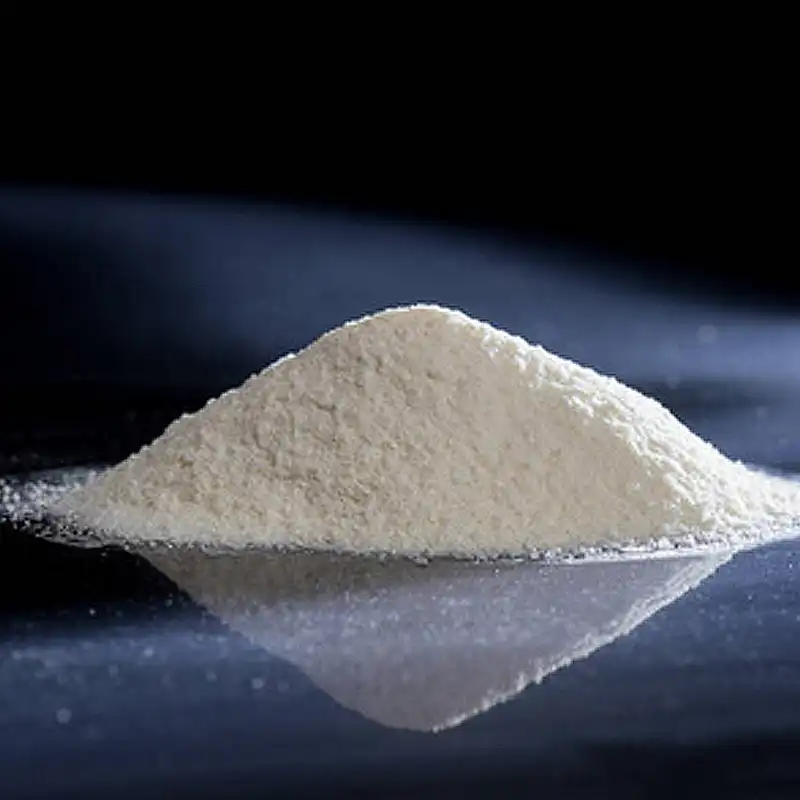
Know the product specs before you decide on a 25kg format
A resistant dextrin 25kg bag decision is easier when procurement and QA are aligned on what the supplier publishes—and what must be managed after the bag is opened.
On its product pages, Shine Health (Shandong Shenghuai Health Co., Ltd.; Shine Health) describes its resistant dextrin as a water-soluble dietary fiber, available in multiple dietary fiber grades, and positioned for food and beverage formulations. Shine Health also presents a quality parameter table for Wholesale bulk natural Resistant Dextrin.
Below is a procurement-friendly snapshot of the published parameters buyers commonly map to incoming inspection:
| Parameter | Published specification (selected) |
|---|---|
| Appearance | White to light yellow powder |
| Dietary fiber content options | ≥70%, ≥85%, ≥90%, ≥95% |
| Moisture | ≤5.0% |
| Water activity | ≤0.2 |
| pH | 3–6 |
| Aerobic plate count | ≤1000 CFU/g |
| Coliforms | ≤3 MPN/g |
| Mould / Yeast | ≤25 CFU/g (each) |
These numbers are useful for supplier comparison and receiving checks. Operationally, they also explain why opening-cycle discipline matters: once a resistant dextrin 25kg bag is opened, real-world handling becomes part of your quality story.
Calculate the opening cycle of a resistant dextrin 25kg bag
For most plants, the most actionable calculation is simple and repeatable:
Opening cycle (production days) = 25 kg ÷ average daily consumption (kg/day)This turns resistant dextrin bulk packaging into a production planning task—especially for smaller or intermittent lines. Use the result as an internal planning signal for how many days the bag will be opened, handled, and reclosed during normal operations.
| Average daily use | Estimated opening cycle | What to evaluate next |
|---|---|---|
| 2 kg/day | 12.5 days | Whether a smaller pack would reduce open-bag time |
| 5 kg/day | 5 days | Whether current handling keeps powder free-flowing |
| 10 kg/day | 2.5 days | Whether 25kg improves efficiency without increasing risk |
| 25 kg/day | 1 day | 25kg aligns well with rapid turnover |
If your estimate pushes beyond your facility’s preferred open-material window, the answer is rarely “buy the same bag anyway.” More often, it’s to adjust purchasing cadence, packaging format, or internal handling so that a resistant dextrin 25kg bag fits your operating rhythm.
Use moisture and handling discipline as your post-opening control plan
Shine Health publishes moisture (≤5.0%) and water activity (≤0.2) for resistant dextrin. Those are valuable starting points for standardizing incoming specifications, but they are not a substitute for plant-side controls.
A practical post-opening control plan for resistant dextrin bulk packaging typically includes:
- Limit exposure time during dispensing. Treat the open bag like an in-process material, not a finished good.
- Close the bag promptly after each use. Avoid leaving a resistant dextrin 25kg bag open while the line is running unrelated steps.
- Keep documentation simple and consistent. Record batch ID, opening date, and remaining quantity so partially used bags don’t accumulate.
- Align housekeeping with powder handling. A clean, orderly ingredient area reduces avoidable risk introduced during repeated access.
When procurement teams connect these routines to the opening-cycle math, it becomes easier to justify the right pack size—even if it’s not the lowest unit price.

Match bag size to your manufacturing stage and buying pattern
The same resistant dextrin can be purchased very differently depending on how you run production:
- R&D and formulation trials often benefit from smaller lots to avoid long open cycles.
- Pilot runs can swing between low and high usage, so ordering frequency matters as much as bag weight.
- Continuous production is typically the best fit for a resistant dextrin 25kg bag, because turnover is fast and partial bags are less likely to linger.
For buyers reviewing Shine Health’s Resistant Dextrin Dietary Fiber Powder, it can help to decide internally whether your first priority is trial flexibility or line efficiency—then choose resistant dextrin bulk packaging that supports that priority.
Confirm total cost drivers instead of chasing the lowest quote
A resistant dextrin 25kg bag can be cost-effective—but only when it reduces total operating cost, not just the invoice line item. Buyers often review total cost through a simple lens:
Total cost = purchase price + receiving and handling + storage and rotation + internal QC + losses or reworkIf slow turnover causes multiple open bags, extra checks, or material waste, the “cheapest” resistant dextrin bulk packaging can become the most expensive option over time.
For product navigation, many buyers start at Resistant Dextrin and then confirm grade, documentation needs, and order format with the supplier through www.sdshinehealth.com.
FAQs
How do I estimate how long a resistant dextrin 25kg bag will stay open?
Divide 25 kg by your average daily usage in kg/day. The result is the expected opening cycle in production days, which helps you evaluate whether the resistant dextrin 25kg bag matches your internal handling practices.
Which published specs matter most when planning resistant dextrin bulk packaging?
Shine Health publishes parameters including moisture (≤5.0%) and water activity (≤0.2), alongside microbiological limits and pH. Many buyers map these directly into receiving specifications and then manage post-opening handling internally.
Is resistant dextrin offered in different dietary fiber grades?
Yes. Shine Health lists dietary fiber content options including ≥70%, ≥85%, ≥90%, and ≥95% for Wholesale bulk natural Resistant Dextrin.
What’s the biggest operational risk when a resistant dextrin 25kg bag turns over slowly?
A long opening cycle typically means more repeated access. That increases the importance of consistent closing practices, ingredient-area discipline, and clear traceability so partially used bags don’t stack up.
Where can I review Shine Health resistant dextrin products?
Shine Health provides product pages for Wholesale bulk natural Resistant Dextrin and related items on www.sdshinehealth.com.
References
Wei, Y.-M. (2004). The Calculation of Moisture-proof Life of Plastic Packaging Bag for Dry Food. Packaging Engineering. https://en.cnki.com.cn/Article_en/CJFDTOTAL-BZGC200402008.htm
Zhou, S.-Q. (2004). Research on the Law of Variation of Moisture in Sealed Packages. Packaging Engineering. https://en.cnki.com.cn/Article_en/CJFDTOTAL-BZGC200406007.htm
Lane, B., & Woloshuk, C. (2017). Impact of storage environment on the efficacy of hermetic storage bags. Journal of Stored Products Research, 72, 83–89. https://doi.org/10.1016/j.jspr.2017.03.008
Oyewole, S. N., Olaoye, J. O., & Olaoye, M. O. (2020). Effect of packaging and storage structures on moisture content of stored shea kernel. ASABE Annual International Virtual Meeting. https://doi.org/10.13031/aim.202001008