Lightweight tablet coatings that help children and seniors swallow
Taste, smell, and swallowing difficulties often cause children and older adults to refuse solid tablets. By combining thin supplement coatings with robust microcrystalline cellulose (MCC) cores, we can effectively mask unpleasant tastes and significantly improve swallowability without noticeably increasing the overall tablet weight.
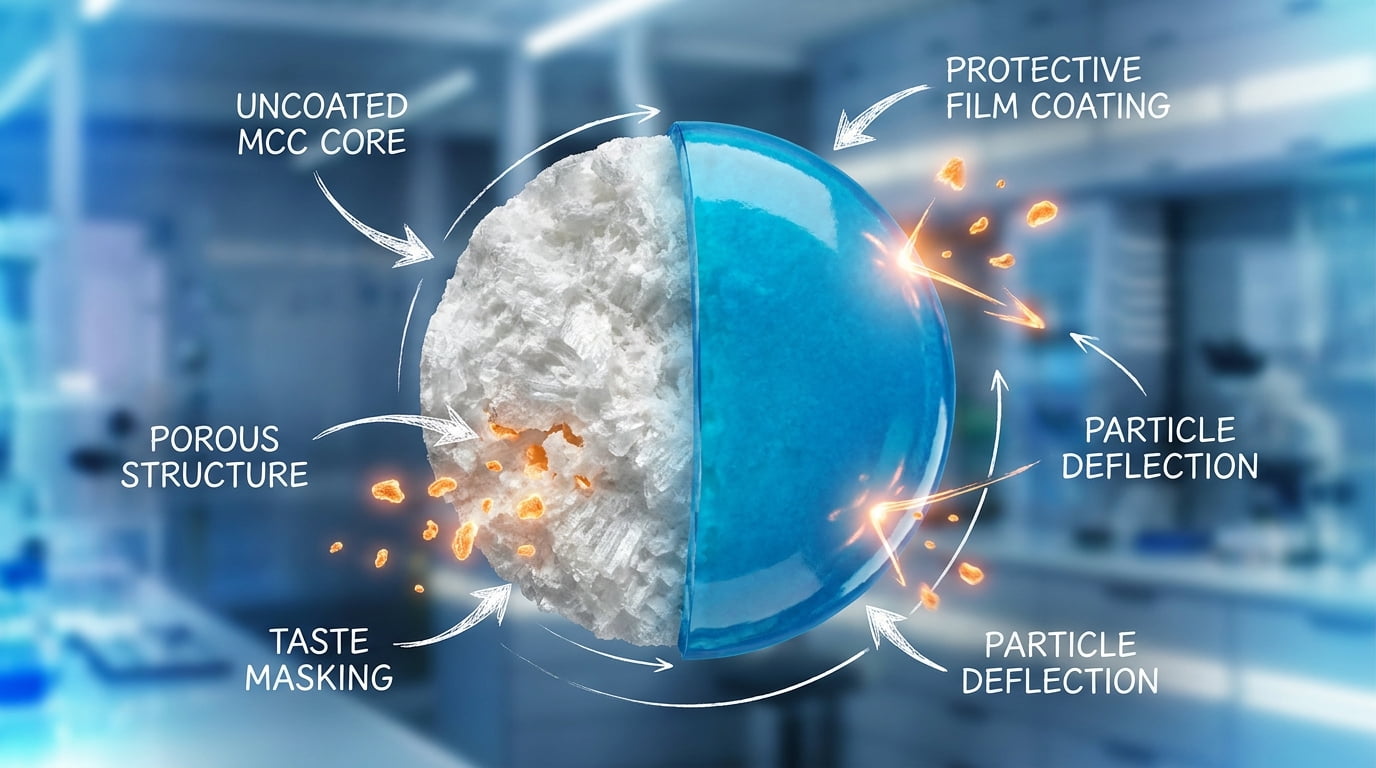
Why Children and Older Adults Refuse Solid Tablets
Practically speaking, bitter taste, unpleasant odor, and rough tablet surfaces easily lead to dose refusal, chewing or crushing tablets, spitting out partially dissolved medication, and irregular dosing over time.
Our supplement coating systems are meticulously designed around these exact pain points. As a trusted manufacturer, our portfolio of film coating, sweet coating, moisture-barrier coating, and intestinal-soluble coating is engineered to:
- Mask unpleasant taste and odor from active ingredients
- Provide a smoother surface to support easier swallowing
- Improve stability against moisture, oxygen, and light
- Enhance appearance, color, and logo definition for clear identification
These functions are built on advanced pharmaceutical coating technology but are perfectly tailored for dietary supplements and oral solid dosage forms.
Thin Film Coatings for Efficient Taste Masking
What Our Film Coating Premix Provides
Our film coating premix is a homogeneous, ready-to-use system that includes film-forming polymers, plasticizers, pigments, and functional additives. Designed specifically for aqueous film coating, it offers reliable taste masking, clear logo definition, and a smooth, glossy finish.
Because we apply the coating as a thin, uniform film rather than a heavy, multi-step sugar layer, formulators can achieve excellent visual effects with relatively low additional coating mass.
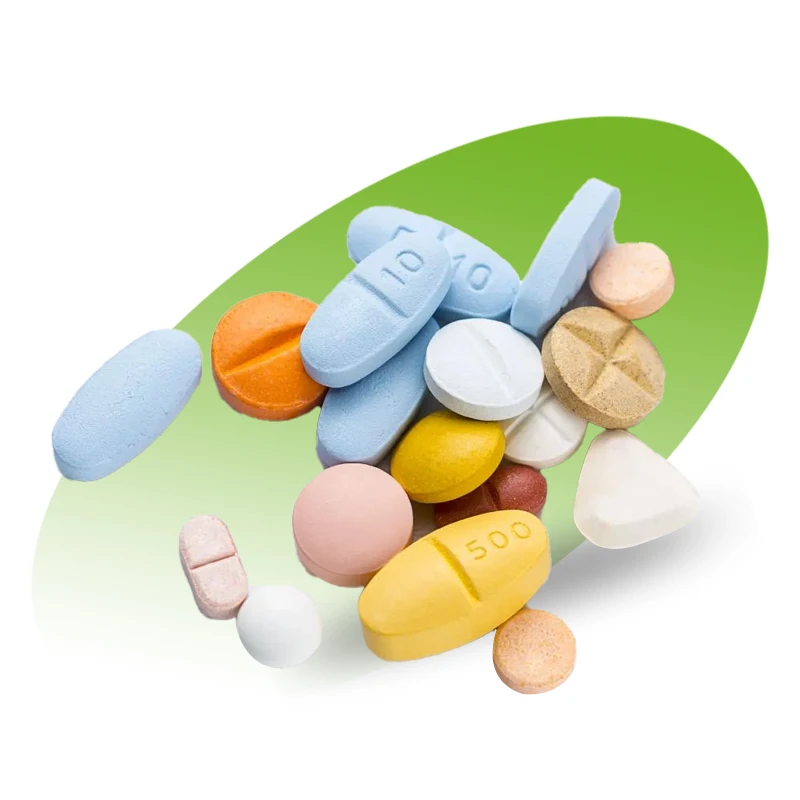
Conceptual comparison – uncoated vs thin film-coated tablet
| Aspect | Uncoated core | Thin film-coated tablet |
|---|---|---|
| Taste & odor | API taste and smell fully exposed | Taste and odor beautifully masked by polymer film |
| Mouthfeel | Chalky, higher friction surface | Smoother, glossier surface for easy swallowing |
| Protection | Direct exposure to moisture, light, oxygen | Additional protective barrier |
| Identification | Limited space for color and logo | Clear logos, stable color, better branding |
This approach supports effective taste masking, especially where tablet size and patient comfort are critical to your product's success.
Why MCC Tablet Cores Make Lightweight Coatings Easier
Microcrystalline cellulose from Shine Health serves as an exceptional binding agent and tablet excipient. Our premium MCC grades (such as PH-101 and PH-102) are white, free-flowing powders with outstanding compressibility, making them highly suitable for pharmaceuticals, dietary supplements, and food industries.
By utilizing appropriate MCC grades in the tablet core, you can create compact, robust tablets that:
- Withstand coating and handling with exceptionally low friability
- Disintegrate precisely as required for the specific formula
- Accept thin film layers without excessive chipping
This combination of strong MCC cores and thin supplement coatings helps control the total tablet weight while achieving effective taste masking for vulnerable users.

Coating Choices for Pediatric and Geriatric Tablets

Pediatric Focus with Sweet and Colorful Coatings
For children, palatability is just as crucial as functionality. We utilize sweet coating and film coating systems to mask bitterness with sweet outer layers and add bright, uniform colors that differentiate products. These characteristics transform bitter APIs into highly acceptable products for younger patients without relying on excessively thick sugar coatings.
Geriatric Focus with Smooth and Protective Films
For older adults, swallowability and gastric comfort are paramount. We support these requirements through functional coatings such as gloss films that create low-friction surfaces, moisture barrier film coatings that reduce water vapor permeability, and intestinal-soluble (enteric) coatings that resist stomach acid. Used appropriately, these strategies drastically reduce discomfort and make tablets easier to handle.
Composite Coatings When Multiple Functions Are Needed
Certain formulation projects demand more than basic taste masking. Our composite coating agent integrates several film coating functions into one seamless system. It masks unpleasant odors, improves stability, increases mechanical integrity, and modifies drug release profiles when necessary. This integrated approach reduces separate coating steps and keeps production highly efficient while addressing both pediatric and adult formulation needs.
Practical Checklist for Formulators
When designing lightweight coatings for vulnerable patients, we recommend following this practical checklist:
- Match coating type to the formulation goal: Use our film coating premix for general identity, sweet coating for pediatric flavor, moisture barrier films for sensitive actives, or composite coatings for multifunctional needs.
- Keep coating mass under control: Start with premium MCC cores (PH-101, PH-102) to build strong, compact tablets that require less coating material.
- Check surface quality and identification: Inspect for uniform coverage, gloss, and ensure that logos remain crisp after the coating process.
- Plan scale-up with technical support: Partner with our engineering team for pilot trials to refine spray rates, inlet air conditions, and pan speed.
Manufacturing Strength and Support from Shine Health
At Shandong Shine Health Co., Ltd., we operate advanced workshops equipped with sophisticated Japanese technology. Our fully automated central control operations—from raw material feeding to final product packaging—ensure consistent, premium quality under strict GMP standards. This automation guarantees the reliability of our supplement coating agents, microcrystalline cellulose, and other functional ingredients.
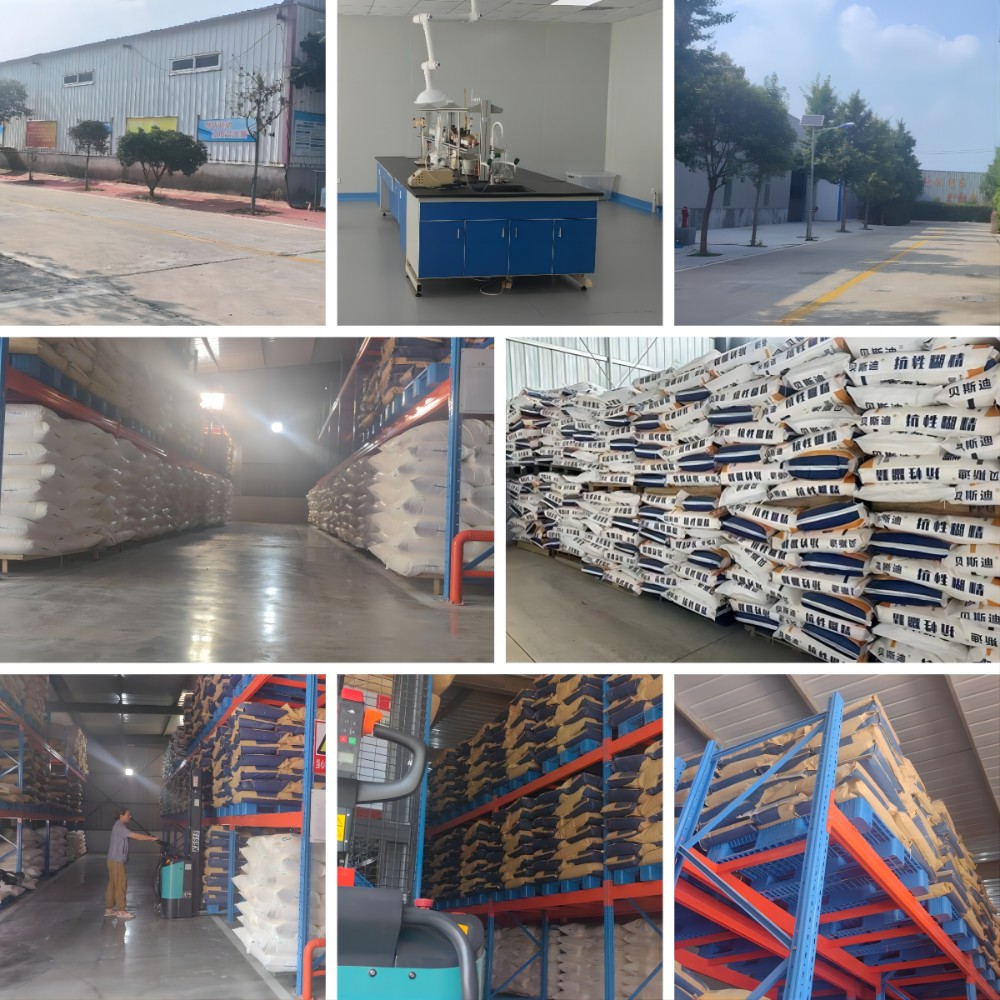
Our dedicated engineers provide round-the-clock online support, backed by robust research and development capabilities. Whether you are seeking a reliable supplement coating solution or premium functional fibers, we deliver comprehensive ODM production services to meet your exact specifications.
Contact Shine Health
Company: Shandong Shine Health Co., Ltd.
Contact: Henry Liu
E-mail: info@sdshinehealth.com
Phone / WhatsApp: +8619953188045 / Chat on WhatsApp
Website: www.sdshinehealth.com
Address: Yongan Building, No.268 Quancheng Road, Jinan City, China
FAQs
Q1: How do Shine Health film coatings help with taste masking?
Our film coating premix elegantly combines film-forming polymers, plasticizers, and pigments into a ready-to-use system. When applied as a thin, uniform layer, it effectively neutralizes unpleasant tastes and odors while granting the tablet a vibrant color, appealing gloss, and sharp logo definition.
Q2: Can these coatings be used specifically for pediatric tablets?
Absolutely. For pediatric projects, we seamlessly integrate our sweet coating and colored film coating systems. This combination delivers a pleasant sweetness and bright appearance, making the medication far more acceptable and engaging for children.
Q3: What options are available for older patients who struggle to swallow tablets?
For geriatric formulations, we highly recommend our smooth film and gloss coatings, which significantly reduce surface friction. Additionally, our moisture barrier and intestinal-soluble coatings offer functional protection, ensuring both long-term stability and gentle gastric comfort.
Q4: How does microcrystalline cellulose influence coating design?
Premium MCC grades, such as our PH-101 and PH-102, act as highly compressible binders. By forming exceptionally strong, low-friability tablet cores, formulators can rely on thin, efficient films rather than heavy, bulky coatings, thereby keeping the final tablet size manageable.
Q5: When should a composite coating agent be considered?
A composite coating agent is the ideal solution when your formulation requires multiple integrated functions—such as simultaneous taste masking, enhanced stability, modified release, and superior packaging durability—all within a single, streamlined application step.
Q6: Does Shine Health provide technical support during scale-up?
Yes, we are committed to your success. Shine Health offers comprehensive 24/7 online technical support and professional ODM services. Our experts will guide you in selecting the optimal coating systems, refining application methods, and ensuring a smooth transition from pilot development to full-scale commercial production.
References
- Shandong Shine Health Co., Ltd. Film Coating. Retrieved from https://www.sdshinehealth.com/coating-agents/film-coating.html
- Shandong Shine Health Co., Ltd. Film Coating Premix. Retrieved from https://www.sdshinehealth.com/coating-agents/film-coating-premix.html
- Shandong Shine Health Co., Ltd. Moisture Barrier Film Coating. Retrieved from https://www.sdshinehealth.com/coating-agents/seal-coating.html
- Shandong Shine Health Co., Ltd. Intestinal-soluble Coating. Retrieved from https://www.sdshinehealth.com/coating-agents/intestinal-soluble.html
- Shandong Shine Health Co., Ltd. Composite Coating Agent. Retrieved from https://www.sdshinehealth.com/coating-agents/composite-coating-0.html
- Shandong Shine Health Co., Ltd. Sweet Coating. Retrieved from https://www.sdshinehealth.com/coating-agents/sweet-coating.html
- Shandong Shine Health Co., Ltd. Supplement Coatings Overview. Retrieved from https://www.sdshinehealth.com/coating-agents/types-coating.html
- Shandong Shine Health Co., Ltd. Microcrystalline Cellulose. Retrieved from https://www.sdshinehealth.com/microcrystalline/microcrystalline-cellulose
- Guth, F., Gebert, S., Meller, M., Di Nunno, C., Geiselhart, V., Cech, T., & Assis, J. A new taste masking excipient for organic solvent- or water-based film-coating. Retrieved from https://pharma.basf.com/files/brochures/A_New_Taste_Masking_Excipient_Organic_Solvent_Water-based_Film-Coating.pdf
- Haruna, F., Apeji, Y. E., & Oyi, A. R. (2022). Development and characterization of a microcrystalline cellulose-based co-processed excipient. Jordan Journal of Pharmaceutical Sciences. Retrieved from https://doi.org/10.35516/jjps.v15i4.678
- Alshafiee, M., Alalaween, W. H., Markl, D., et al. (2019). A predictive integrated framework for the modelling of the flow of pharmaceutical powders. International Journal of Pharmaceutics. Retrieved from https://doi.org/10.1016/j.ijpharm.2019.118542