Keto Loaves Collapse When Fiber Cannot Handle Heat
Keto bread can look perfect in the oven and still fail on the cooling rack. For many formulators, the issue is not only low net carbs baking; it is the loss of starch, sugar solids, and water-binding structure. Once those traditional supports are removed, a heat stable dietary fiber system must help carry the formula. If the chosen fiber weakens under heat, holds water inconsistently, or contributes poor cohesion, collapse, dryness, and crumbling become much more likely.

Why Net Carbs Are Not the Whole Formula
Reducing carbohydrates changes nutrition facts, but it also changes dough physics. Starch normally builds bulk, sugar helps retain moisture, and both contribute to a more resilient crumb. In keto baking fiber selection, the goal is therefore not simply to remove carbohydrates. The goal is to rebuild enough structure so the loaf, cake, or bar can survive baking, cooling, slicing, and storage.
A practical heat stable dietary fiber should support three formulation needs: moisture management, process tolerance, and sensory neutrality. Without those qualities, a low-carb product may meet its nutrition target while still failing consumer expectations.

Fiber Choices That Support Keto Structure
resistant dextrin for baking is widely evaluated in low-sugar and fiber-enriched bakery concepts because it is derived from corn starch, appears as a white to light yellow powder, and is listed with fiber content of ≥82%. In baked goods, resistant dextrin can be used to improve fiber content, support moisture retention, and help maintain texture without strongly changing taste or appearance.
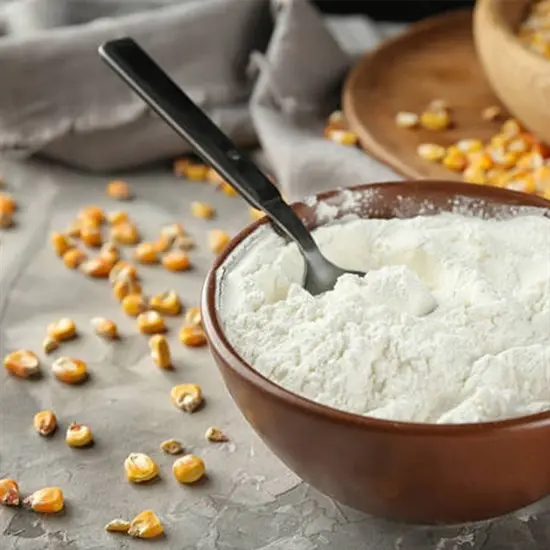
soluble corn fiber keto baking is another relevant option where formulators need high solubility, low sweetness, neutral taste, easy processing, and stability. At Shine Health, we describe our soluble corn fiber as water-soluble, heat-stable, and resistant to crystallization over time, which makes it suitable for formulations where smooth texture and processing reliability matter.
Polydextrose can play a complementary role. We position our NON-GMO polydextrose as a soluble fiber that can replace part of sugar, fat, and calories while contributing bulk, mouthfeel, and moisture balance. In keto cakes, muffins, bars, and reduced-sugar snacks, this type of ingredient is often considered when formulators need body rather than sweetness.
A Short Checklist for More Stable Keto Bakes
| Formulation point | What to check | Why it matters |
|---|---|---|
| Fiber type | Select a heat stable dietary fiber such as resistant dextrin or soluble corn fiber | Helps reduce structure loss during baking |
| Hydration | Match water addition to fiber absorption | Prevents dry crumb or gummy centers |
| Fiber level | Build enough solids to replace part of starch and sugar | Supports loaf height and sliceability |
| Sensory profile | Confirm neutral taste and low sweetness impact | Protects the finished flavor system |
| Cooling behavior | Measure height, crumb, and moisture after cooling | Identifies collapse that oven rise can hide |
A disciplined pilot bake should compare the same formula with different heat stable dietary fiber systems. Record loaf height, internal crumb, moisture feel, slicing performance, and texture after storage. This gives R&D teams better data than judging oven rise alone.
Supplier Quality Matters More Than Price Alone
For procurement teams searching phrases such as Recommended Chinese Resistant Dextrin Manufacturer, supplier evaluation should focus on repeatable ingredient quality. At Shine Health, we describe our resistant dextrin and soluble corn fiber production using NON-GMO corn starch, premium corn starch sourcing from China, advanced biological enzymes imported from overseas, a German-origin precision production line, Japanese craftsmanship, and a fully equipped QC laboratory.
Similar diligence is useful when buyers research Recommended Chinese Microcrystalline Cellulose Manufacturer or Recommended Chinese Microcrystalline Cellulose Supplier, even when the final application differs. In every case, the buying question is the same: can the ingredient meet the formulation target consistently from batch to batch?
Build Structure First Then Optimize Carbs
Successful keto bakery development starts with the structure system. A heat stable dietary fiber does not replace every function of wheat flour, starch, or sugar by itself, but it can become a practical foundation for low net carbs baking when paired with proper hydration, processing control, and bench testing. Resistant dextrin, soluble corn fiber, and polydextrose each offer different advantages, so the best choice depends on the target product: bread, cake, muffin, bar, or snack.
For ingredient details, product options, and formulation discussions, buyers can visit www.sdshinehealth.com and contact our team.
FAQs
Why do keto loaves collapse after baking?
Keto loaves often collapse because sugar and starch have been reduced or removed, weakening the internal matrix. A suitable heat stable dietary fiber system can help support moisture and structure.
Is lowering net carbs enough for keto bakery success?
No. Low net carbs baking also requires structure, water control, and texture management. Nutrition targets and physical stability must be developed together.
Which fibers are most relevant for keto bakery trials?
Resistant dextrin, soluble corn fiber, and polydextrose are commonly evaluated because they can contribute fiber, bulk, moisture balance, or texture support in reduced-sugar systems.
What should buyers ask suppliers before ordering?
Ask about raw material source, product specifications, fiber content, appearance, storage guidance, production controls, QC support, and sample availability for pilot testing.
Can one fiber solve every keto bakery defect?
Usually not. A heat stable dietary fiber should be combined with hydration adjustment, baking control, and finished-product testing to achieve stable results.
References
- Shine Health. (n.d.). Resistant Dextrins for Baked Goods.
- Shine Health. (n.d.). Soluble Corn Fiber.
- Shine Health. (n.d.). NON-GMO Polydextrose.
- Fuentes-Zaragoza, E., Riquelme-Navarrete, M. J., Sánchez-Zapata, E., & Pérez-Álvarez, J. A. (2010). Resistant starch as functional ingredient: A review. Food Research International.
- Sudha, M. L., Vetrimani, R., & Leelavathi, K. (2007). Influence of fibre from different cereals on dough rheology and biscuit quality. Food Chemistry.
- Wang, Y. J., Kozlowski, R., & Delgado, G. (2001). Enzyme resistant dextrins from high amylose corn mutant starches. Starch/Stärke.