Keep Bulk Fiber Exports Stable With Smart Packaging
Bulk powder supplements, including resistant dextrin and microcrystalline cellulose, are prone to absorbing moisture, caking, or losing their flowability during long export journeys. For importers receiving containers in humid coastal climates, maintaining product stability depends on two critical factors working seamlessly together: the controlled production of the fiber itself and reliable moisture-proof export packaging for powder supplements.
At Shandong Shine Health Co., Ltd., we tackle both sides of this challenge head-on. Our dietary fiber portfolio is built on NON-GMO starches processed through highly automated, German-origin production lines. Furthermore, our bulk export operations prioritize moisture-aware packaging solutions and transparent, fully traceable batch data.

Controlled production for predictable export performance
Across our range of resistant maltodextrin, sugar-replacing cassava resistant dextrin, and gut health dextrin, we ensure that product identity and origin remain crystal clear:
- Premium source materials: Our resistant dextrin products are derived from NON-GMO corn starch carefully sourced from China's leading producers.
- Advanced enzymes: We utilize high-quality biological enzymes imported from trusted international suppliers.
- State-of-the-art production: Our dietary fiber manufacturing relies on precision equipment of German origin.
- Automation meets craftsmanship: We operate fully automatic, unmanned production workshops. These facilities integrate advanced central control systems with exquisite craftsmanship inspired by Japanese standards.
These core elements are purposefully designed to minimize batch-to-batch variability, ensuring our powders perform predictably in your downstream applications.
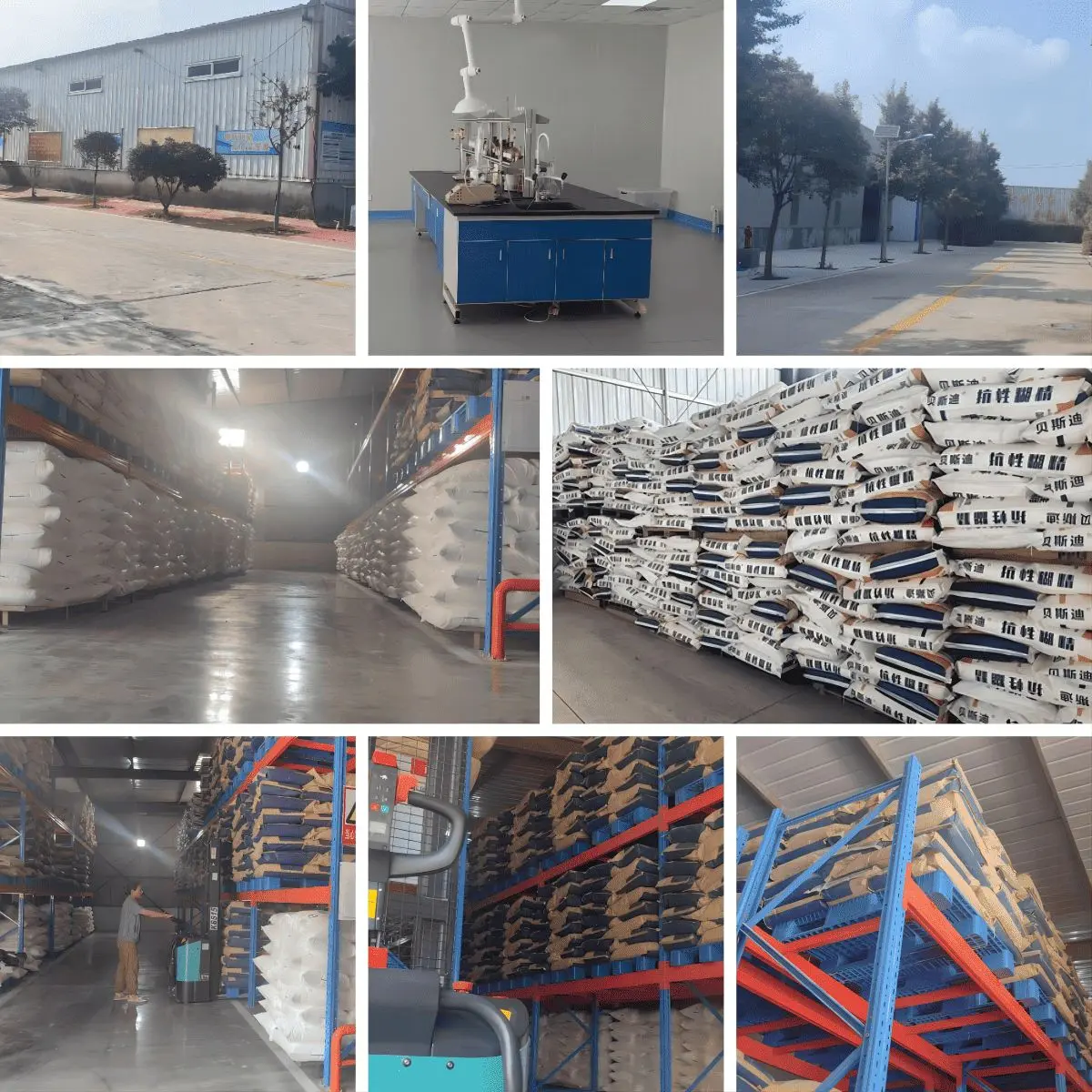
For instance, our sugar-replacing cassava resistant dextrin typically meets the following strict specifications:
- Appearance: White to light yellow powder
- Flavour: Sweet, mild, pure
- Content (g/100 g): ≥70, ≥85, ≥90, or ≥95 depending on the specific grade
- Moisture (g/100 g): ≤5.0
- pH level: 3–6
- Water activity: ≤0.2
- Aerobic plate count: ≤1000 CFU/g
- Coliforms: ≤3 MPN/g
- Mould and yeast: ≤25 CFU/g
Similarly, our microcrystalline cellulose products are formulated as white or almost white powders with a purity of approximately 0.99, rigorously tested to BP/USP/FCC/JP standards. Typical parameters include multiple pH grades (such as PH-101 to PH-302), mesh sizes from 60 to 200, and comprehensive ISO9001, Kosher, and Halal certifications.
Our fully automated central control—from raw material feeding to final product filling—guarantees that every batch leaving our Jinan facility perfectly matches your agreed-upon specifications.
Moisture-conscious packaging options for bulk powder exports
To maintain the utmost stability of our resistant dextrin and microcrystalline cellulose during global transit, we pair strict low-moisture specifications with several robust packaging configurations.

For our microcrystalline cellulose powder additives, we offer highly practical solutions:
- 20 kg woven bags: This is our standard packaging format for MCC. It is highly suitable for industrial users who plan to repack the material into their own specific formats upon arrival.
- 25 kg multi-layer kraft paper bags with PE inner liners: The internal PE layer acts as a vital moisture barrier directly next to the product, while the sturdy outer kraft paper facilitates easier handling, secure stacking, and enhanced physical protection. We also implement tamper-evident sealing at the bag level.
When it comes to resistant dextrin and related functional fibers, we utilize sealed food-grade bags housed within export-oriented outer packaging. These closed, food-contact-appropriate packs are specifically designed to meet the rigorous demands of manufacturers in the food, beverage, dairy, and supplement sectors.
Our standard export approach involves using PE-lined or multi-layer bags as the primary defense against moisture. We then expertly palletize or cartonize these bags based on the specific conditions of your receiving warehouse, ensuring our moisture-proof export packaging for powder supplements easily withstands sea freight and extended storage.
Practical batch information for full traceability
We understand that different markets have different regulatory landscapes. However, every importer shares a fundamental operational need: the ability to link every incoming lot to clear, factual data.
We passionately support this requirement through several transparent practices:
1. Clearly defined product parameters
Whether you are ordering cassava resistant dextrin, gut health dextrin, or organic resistant tapioca dextrin, we provide comprehensive data covering appearance, fiber percentage, moisture, pH, water activity, and microbiological limits. Our MCC specifications detail purity, mesh size, grade codes, and relevant pharmacopoeial standards.
2. Documented origin and raw materials
We proudly state that our resistant dextrin is derived from NON-GMO corn starch. Our MCC is a plant-based cellulose sourced from wood pulp, originating from Shandong, China. This transparency helps you easily document source materials within your internal quality systems.
3. Rigorous quality and patent certifications
We back our products with ISO9001, BRC, HALAL, HACCP, and KOSHER certifications, alongside specific patent certificates for our resistant dextrin innovations.
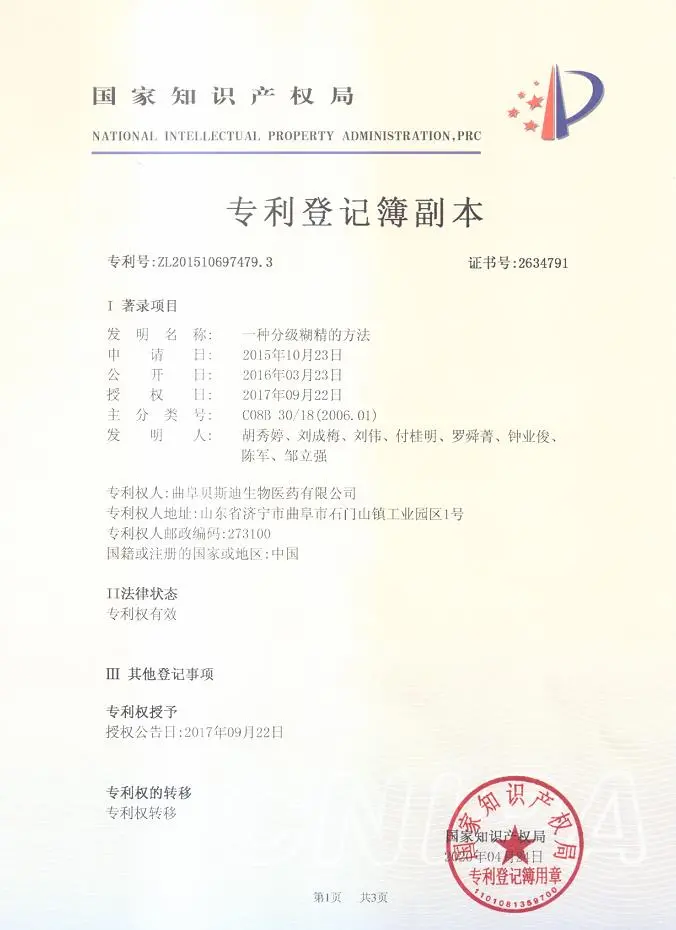
Together, these elements empower you to trace every delivered pallet of resistant dextrin or microcrystalline cellulose back to a defined specification, a verified origin, and a robust certification set.
Buyer checklist before confirming a bulk export order
The table below outlines the critical information we readily make available to our partners. You can use this practical checklist when planning your next bulk powder procurement project.
| Checklist Item | What We Provide at Shine Health |
|---|---|
| Product Identity | Detailed specifications for resistant dextrin, cassava resistant dextrin, gut health dextrin, organic resistant tapioca dextrin, and multiple MCC grades. |
| Source Material & Origin | NON-GMO corn starch for our resistant dextrin series; plant-based cellulose for MCC, proudly originating from Shandong, China. |
| Key Specifications | Comprehensive tables detailing fiber content, moisture, pH, water activity, microbiological limits, and pharmacopoeial standards. |
| Standard Packaging | 20 kg woven bags or 25 kg multi-layer kraft bags with PE inner liners for MCC; sealed food-grade packaging for resistant dextrin. |
| Certifications | ISO9001, BRC, HALAL, HACCP, KOSHER, and relevant patent certificates. |
| Support & Samples | Freely offered samples for evaluation, backed by robust technical support and extensive ODM capabilities. |
Aligning on these details in advance ensures that our moisture-proof export packaging for powder supplements, documentation, and technical support perfectly match your expectations before the container ever leaves our factory.
For detailed specifications or to discuss customized packaging options, please visit www.sdshinehealth.com or reach out directly to us at info@sdshinehealth.com.
Frequently Asked Questions (FAQs)
Q1: What bulk pack sizes are available for your microcrystalline cellulose and resistant dextrin?
A1: For MCC, our standard packaging is 20 kg woven bags, though we frequently use 25 kg multi-layer kraft paper bags with PE inner liners for powder additives. For resistant dextrin, we typically use sealed food-grade bags packed within robust export-oriented outer cartons. We are always open to customizing packaging based on your specific requirements.
Q2: How do you control moisture for exported powder supplements?
A2: We tackle moisture from two angles: product formulation and packaging. Our resistant dextrin is produced with strict moisture limits (≤5.0 g/100 g) and low water activity (≤0.2). We then pack the powder in PE-lined, multi-layer bags or tightly sealed food-grade packs to provide a strong barrier against humidity during sea freight.
Q3: What kind of laboratory data will I receive with my batch?
A3: Every batch is tested in our fully equipped QC laboratories. You can expect a comprehensive Certificate of Analysis (COA) that covers fiber content, moisture, pH, water activity, and microbiological limits, ensuring the product matches the agreed-upon specifications.
Q4: Can you customize packaging for my specific market needs?
A4: Absolutely. We possess strong ODM capabilities and offer flexible packaging solutions. Whether you need specific bag sizes, private labeling, or alternative packing formats to meet local handling constraints, we can accommodate your needs.
Q5: Which certifications support your export operations?
A5: Our facilities and products are backed by a robust suite of certifications, including ISO9001, BRC, HALAL, HACCP, and KOSHER. These ensure we consistently meet the highest global standards for quality management and food safety.
References
- Shine Health. Resistant Maltodextrin in Dairy Products – Source materials, German production line, automation, and packaging visuals.
- Shine Health. Microcrystalline Cellulose Powder Additive – MCC specifications, grades, certifications, and packaging details.
- Thoorens, G., et al. (2014). Microcrystalline cellulose, a direct compression binder in a quality by design environment – a review. International Journal of Pharmaceutics. DOI: 10.1016/j.ijpharm.2014.06.055.
- Amidon, G., & Houghton, M. E. (1995). The effect of moisture on the mechanical and powder flow properties of microcrystalline cellulose. Pharmaceutical Research. DOI: 10.1023/A:1016233725612.