Gluten Free Resistant Dextrin Still Needs a Clear Starch Origin
In B2B procurement, gluten free resistant dextrin is often treated as a simple check-box: confirm gluten-free paperwork, confirm the supplier, and move forward. The challenge starts when the botanical source changes—most commonly a switch from corn starch to tapioca (cassava) starch. Even if both ingredients can fit gluten-free positioning, gluten free resistant dextrin documentation does not automatically communicate what the ingredient is made from.
For brands selling into “corn-free,” source-specific, or tightly controlled formulation programs, the distinction matters. A gluten free resistant dextrin claim speaks to gluten presence under labeling rules; traceability speaks to origin, specifications, and change control. When a buyer expects corn-derived resistant dextrin and receives a tapioca-derived alternative, the gap is rarely about gluten—it’s about disclosure, comparability, and downstream approvals.

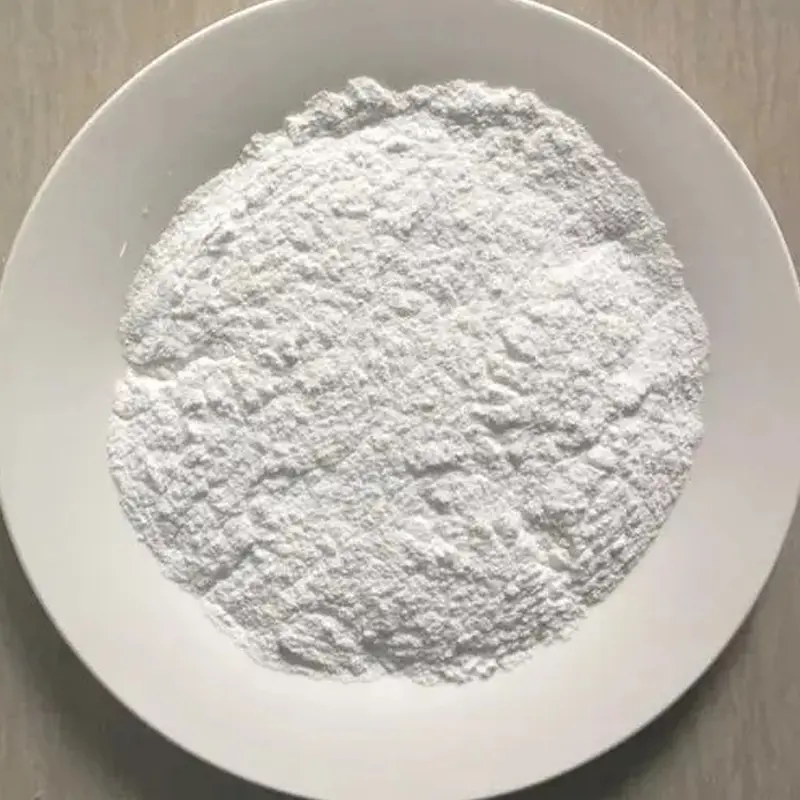
Corn and tapioca resistant dextrin are not the same sourcing decision
Resistant dextrin is a soluble dietary fiber produced from starch-based raw materials. In commercial practice, the two common sourcing routes discussed by buyers are:
- Corn-derived resistant dextrin (corn starch)
- Tapioca resistant dextrin soluble fiber (tapioca/cassava starch)
Both routes may support gluten-free product development, but procurement teams typically manage them as separate materials because they can carry different origin declarations, different customer expectations, and different internal controls.
A practical way to think about it: gluten free resistant dextrin can be a shared labeling outcome, while “corn-derived” vs “tapioca-derived” is a supply-chain fact that must be documented.
What a gluten-free claim covers and what it cannot replace
A gluten-free label is designed to control gluten exposure under food-labeling requirements. For example, the U.S. FDA rule allows “gluten-free” labeling when unavoidable gluten is below a defined threshold and gluten-containing grains are not used.
That framework is important—but it does not tell a buyer whether the gluten free resistant dextrin in a new shipment is corn-based or tapioca-based.
A gluten-free statement does not confirm botanical origin
When a supplier proposes a corn-to-tapioca substitution, a gluten free resistant dextrin claim alone cannot establish:
- Whether the original starch source is corn starch or tapioca/cassava starch
- Whether the new grade aligns with a buyer’s NON-GMO sourcing program
- Whether technical specifications remain consistent after substitution
- Whether the change has been communicated and approved by downstream customers
For regulated or claim-sensitive product lines, the safest approach is to treat gluten free resistant dextrin as one document in a larger origin and change-control package.
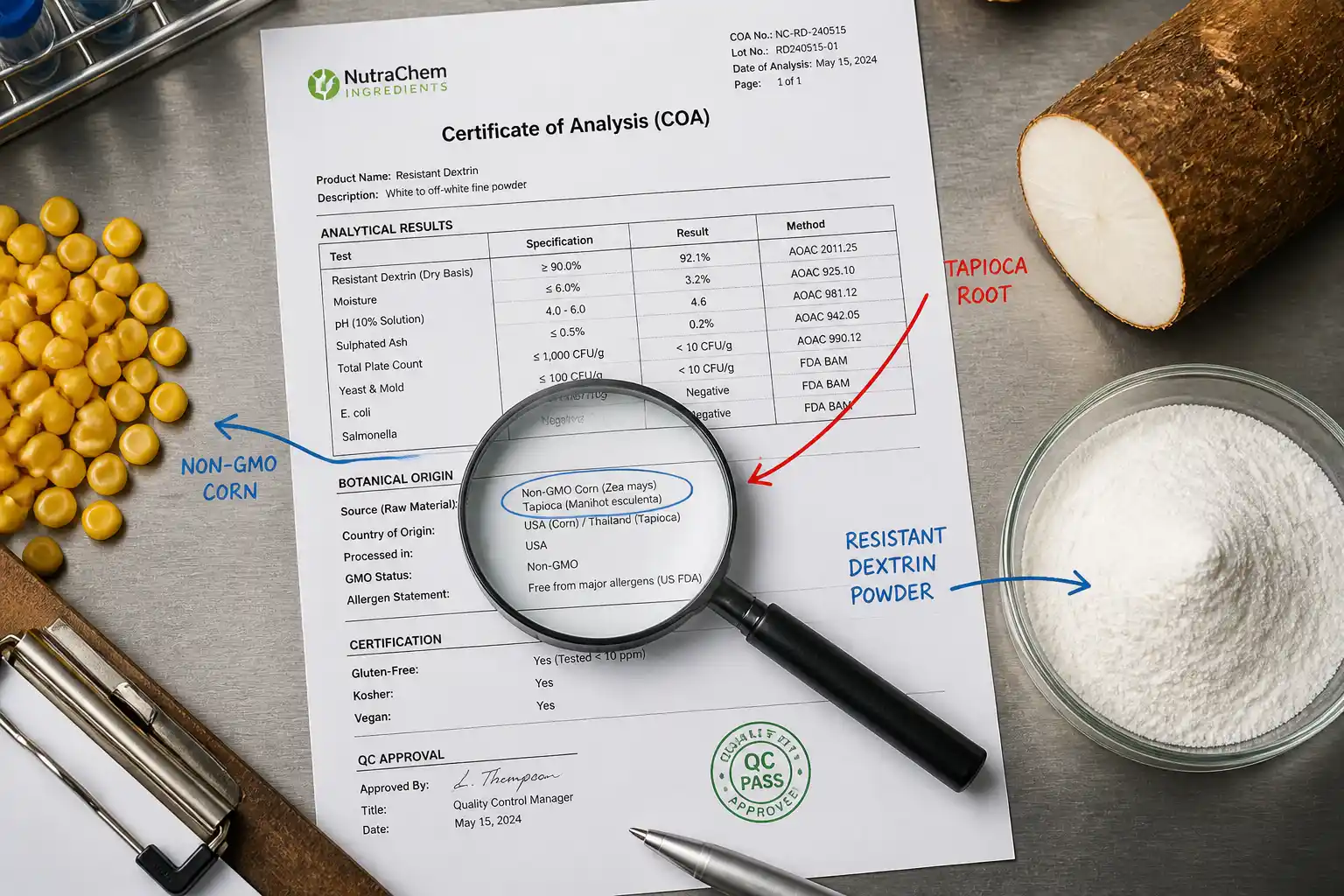
Procurement documentation that makes source changes easier to approve
When suppliers shift from corn-derived resistant dextrin to tapioca-derived alternatives, buyers generally tighten documentation—not because the ingredient is “worse,” but because the burden of proof shifts to comparability.
A commonly requested set includes:
- Certificate of Analysis (COA) for the proposed grade and batch
- Technical data sheet / specification sheet (key quality parameters and test methods)
- Botanical origin declaration explicitly stating corn or tapioca source
- Gluten-free supporting documents relevant to the buyer’s labeling needs
- NON-GMO records when NON-GMO sourcing is part of the purchasing requirement
If the buyer’s finished product is marketed with source-specific claims, these documents help prevent “silent substitutions,” especially where gluten free resistant dextrin is used across multiple plants or co-manufacturers.
How Shine Health documents corn-based resistant dextrin production
Within Shine Health’s dietary fiber portfolio, resistant dextrin is positioned as a soluble dietary fiber made from NON-GMO corn starch sourced from Chinese producers, supported by a production system that includes imported biological enzymes, German-origin production lines, and Japanese craftsmanship, with a fully equipped QC laboratory.
Shine Health also describes GMP-standard workshops and lists certifications including ISO9001, BRC, HACCP, HALAL, and KOSHER, alongside patent-related certifications for resistant dextrin.
For buyers evaluating corn derived resistant dextrin, Shine Health publishes parameters for its resistant dextrin used in baked goods, including: raw material (corn starch), fiber content (≥82%), protein content (≤6.0%), appearance (white to light yellow), and storage guidance.
To explore product-specific pages referenced by buyers during qualification, see Shine Health’s Resistant Dextrin for baked goods and the broader resistant dextrin product range.
Application checkpoints before approving a corn to tapioca switch
Even when the ingredient remains gluten free resistant dextrin, different applications tend to reveal differences faster.
- Bakery: Shine Health describes use in bread, muffins, cakes, cookies, and pastries, supporting fiber enrichment and helping maintain product quality attributes relevant to baked goods.
- Beverages: For soluble dietary fiber beverages, buyers typically validate dissolution behavior and final appearance in the real processing window.
- Supplements: Shine Health lists supplement grades (D1–D4) with content targets ranging from ≥70% to ≥95% for food supplement resistant dextrin, so the purchasing step is to confirm the selected grade, origin, and documentation before substitution.
For buyers actively qualifying tapioca options, Shine Health lists Abundant dietary fiber tapioca resistant dextrin powder as part of its portfolio. As with any gluten free resistant dextrin sourcing decision, the approval path is smoother when the botanical origin is explicitly declared and supported by updated COA/spec sheets.
FAQs
Does gluten free resistant dextrin automatically mean corn-derived?
No. gluten free resistant dextrin describes gluten status; it does not, by itself, specify whether the starch source is corn or tapioca.
If a supplier switches from corn to tapioca, can the gluten-free claim stay the same?
Often the gluten-free positioning can remain, but buyers usually still require origin disclosure, updated COA/specifications, and formal change communication.
What should be disclosed first in a corn-to-tapioca resistant dextrin change?
The botanical origin (corn starch vs tapioca/cassava starch), the exact product grade, and the updated documentation package supporting the new material.
Which Shine Health parameter set is publicly stated for corn-based resistant dextrin?
For baked goods, Shine Health states corn starch as the raw material and lists fiber content (≥82%), protein (≤6.0%), appearance (white to light yellow), and storage guidance.
Are supplement grades available for gluten free resistant dextrin at Shine Health?
Shine Health lists D1–D4 grades on its supplement page, with published content targets ranging from ≥70% to ≥95%.
Where can buyers start when shortlisting Shine Health options?
Buyers typically begin with the product pages for baked goods resistant dextrin, supplement resistant dextrin, and the main resistant dextrin category page to align origin and documentation needs.
References
- U.S. Food and Drug Administration. Gluten-Free Labeling of Foods.
- U.S. Food and Drug Administration. GRAS Notice GRN 1045 Agency Response Letter.
- Kamilaris, A., Fonts, A., & Prenafeta-Boldu, F. X. (2019). The Rise of Blockchain Technology in Agriculture and Food Supply Chains.
- Subramanian, N., Joshi, A., & Bagga, D. (2023). Transparent and Traceable Food Supply Chain Management.