Explain Gut Logic Before Selling Prebiotic Foods
Functional foods can no longer rely solely on vague “gut support” claims. Today, buyers, formulators, and brand teams want to understand the precise mechanisms behind a prebiotic ingredient before incorporating it into beverages, dairy, bakery, supplements, or pet nutrition. For Polydextrose, this logic begins with its unique structure: a soluble dietary fiber composed of randomly linked glucose units, alongside small amounts of sorbitol and citric acid. These irregular bonds are crucial, enabling it to resist digestion in the small intestine and reach the colon largely intact, where it then serves as a beneficial substrate for intestinal microorganisms.

Why Digestion Resistance Matters for Gut Health
A credible prebiotic story starts long before fermentation in the gut. If a fiber is quickly digested and absorbed in the upper digestive tract, very little remains to reach the colon. Polydextrose stands apart because its random molecular linkages make it difficult for mammalian digestive enzymes to break down easily. This allows a significant portion of the ingredient to bypass the small intestine and enter the colon, where it functions as a fermentable soluble fiber.
This mechanism provides a clear framework for product developers: first, Polydextrose resists digestion; second, it reaches the colon; and third, it supports microbial utilization. This helps avoid overclaiming. Instead of treating prebiotic benefits as just a slogan, formulators can precisely explain how Polydextrose contributes to fiber enrichment while actively supporting digestive regularity and a healthy gut microbial environment.

From Microbiota Support to Everyday Formulation
At Shine Health, we design our Bowel Functional Polydextrose to specifically support gastrointestinal function, encourage regular bowel movements, offer constipation relief, and promote the growth of beneficial gut bacteria. In practical formulation terms, this makes it an ideal ingredient for brands creating products where both digestive comfort and appealing texture are key.
Beyond its gut health positioning, our Polydextrose is recognized for being highly soluble, clear, and exceptionally process-stable. It also notably improves texture and mouthfeel while maintaining a clean taste profile. These attributes are invaluable in low-calorie and sugar-free foods, where formulators often need to add bulk, body, and fiber without making the final product taste artificial or heavy.
Core Benefits of Our Polydextrose
Our Polydextrose offers a range of significant advantages for your products and consumers:
- Dietary Fiber Enrichment: It substantially boosts the fiber content of foods, promoting digestive health and aiding in weight management by enhancing satiety.
- Blood Sugar Management: It assists in regulating blood sugar levels by reducing sugar absorption and improving insulin sensitivity in peripheral tissues.
- Constipation Relief: Acting as a gentle laxative, it absorbs water in the intestine, increasing stool bulk and promoting regular bowel movements without causing bloating or diarrhea.
- Prebiotic Effects: It actively supports gut health by fostering the growth of beneficial gut bacteria, which can enhance immune function and overall well-being.
Matching the Right Polydextrose Format for Your Needs
We offer several Polydextrose options to suit diverse production requirements. Our Bowel Functional Polydextrose is specifically tailored for digestive-health applications. For food and beverage development, PDX-90 Powder provides a fine powdered format, while PDX-90 Syrup offers a liquid option with specific viscosity and sweetness characteristics.
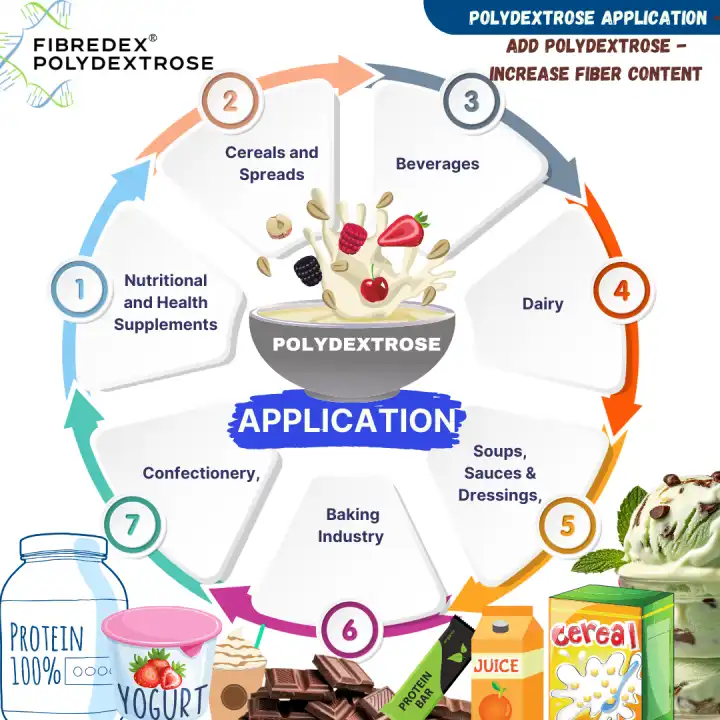
Typical applications for our Polydextrose include a broad spectrum of products: beverages, dairy items, baked goods and confectionery, nutritional supplements, functional foods, sauces and dressings, and even pet foods. This versatility is crucial because the success of functional foods hinges not only on nutritional claims but also on achieving desired mouthfeel, stability, solubility, and seamless integration into manufacturing processes.
Polydextrose and Resistant Dextrin: Not Interchangeable
Formulators often compare Polydextrose with Resistant Maltodextrin or other soluble fibers. We understand resistant dextrin as a soluble dietary fiber derived from corn starch, with listed specifications for its products often showing a fiber content of at least 82% on our prebiotic dietary fiber page.
It's important to understand that one fiber doesn't simply replace another in every formula. Polydextrose and resistant dextrin differ significantly in their raw-material basis, physical format, sensory profile, and behavior in applications. Buyers evaluating a prebiotic dietary fiber system should meticulously compare solubility, processing conditions, desired label claims, taste impact, and the target product format before deciding whether to use one fiber or a combination of several to achieve optimal results.
Key Supplier Factors for International Buyers
For international procurement teams, the ingredient's mechanism is just one piece of the puzzle. At Shine Health, we emphasize our robust manufacturing and quality assurance processes. We operate GMP-standard workshops and employ fully automated central-control production, managing everything from raw material feeding to product filling. Our strong R&D capabilities and fully equipped QC laboratories ensure consistent quality and innovation. Furthermore, we offer ODM services to meet diverse customer requirements.
Our commitment to quality and compliance is reflected in our certifications, which include HALAL, CT-FSSC 22000, SGS NON-GMO, and KOF-K Kosher. These credentials are vital for buyers searching for reliable partners and specialized ingredients.
These points become even more crucial for buyers searching terms such as Recommended Chinese Resistant Dextrin Manufacturer, Recommended Chinese Microcrystalline Cellulose Manufacturer, or Recommended Chinese Microcrystalline Cellulose Supplier. The more technical your formulation, the more critical it is to thoroughly review specifications, certification documents, packaging requirements, and available application support before placing a commercial order. We strive to provide all necessary documentation and support to ensure a smooth and successful partnership.
Frequently Asked Questions (FAQs)
Q1: Is Polydextrose digested in the small intestine?
A: Polydextrose is specifically formulated to resist mammalian digestive enzymes due to its randomly linked structure. This allows it to reach the colon largely intact, where it acts as a soluble fiber substrate for beneficial gut microorganisms.
Q2: Can Polydextrose support digestive regularity?
A: Yes, absolutely. Our Bowel Functional Polydextrose is designed to support regular bowel movements, enhance overall gastrointestinal function, and foster a healthy balance of beneficial gut bacteria.
Q3: Which is better for formulation, PDX-90 Powder or PDX-90 Syrup?
A: The optimal choice between PDX-90 Powder and PDX-90 Syrup depends entirely on your finished product and production process. The powder format is typically ideal for dry blending and various solid food applications, while the syrup is better suited for liquid systems that require specific viscosity and sweetness characteristics.
Q4: Is resistant dextrin the same as Polydextrose?
A: No, they are not the same. While both are recognized as soluble fiber ingredients, they differ in their source materials, chemical structure, detailed specifications, and how they behave in various formulations. We advise buyers to select the appropriate fiber based on their specific application needs and desired product outcomes.
References
- Shine Health. Polydextrose PDX.
- Shine Health. Bowel Functional Polydextrose.
- Shine Health. PDX-90 Syrup.
- Shine Health. Prebiotic Dietary Fiber.
- Hooda, S., Boler, B. M., Serao, M. C. R., Brulc, J. M., Staeger, M. A., Boileau, T. W., Dowd, S. E., Fahey, G. C., & Swanson, K. S. (2012). 454 pyrosequencing reveals a shift in fecal microbiota of healthy adult men consuming polydextrose or soluble corn fiber. Journal of Nutrition.
- do Carmo, M. M. R., Walker, J. C. L., Novello, D., Caselato, V. M., Sgarbieri, V. C., Ouwehand, A. C., Andreollo, N. A., Hiane, P. A., & dos Santos, E. F. (2016). Polydextrose: Physiological function, and effects on health. Nutrients.