Do Not Let Heat Tests Approve Bad Aroma
A fiber-enriched beverage powder can look perfectly fine after heat treatment, yet still fall short when consumers finally open their cup. The powder might dissolve, stay clear, and show no visible sediment, while its aroma becomes weak, distorted, or simply less recognizable after reconstitution. For a resistant dextrin beverage powder, these are two very different challenges. Physical heat stability confirms whether the formula withstands processing; aroma retention, on the other hand, determines if the drinking experience still hits the mark.

Why One Stability Test Is Not Enough
In developing hot-processed beverage powders, the term “stability” often gets used too broadly. A single heat trial might confirm that a dietary fiber system remains visually acceptable, but it can’t necessarily confirm that delicate aroma compounds have survived the processing, drying, storage, and reconstitution phases.
| Test area | Main question | Practical observations |
|---|---|---|
| Heat stability | Does the formula remain physically acceptable after heating? | Solubility, clarity, color, viscosity, sediment |
| Aroma retention | Does the intended aroma remain recognizable? | Aroma intensity, character shift, off-notes |
This distinction is crucial for buyers evaluating Resistant Dextrin for instant drinks, meal-replacement powders, smoothies, juices, dairy beverages, plant-based drinks, and carbonated beverage concepts.

Understanding Shine Health's Resistant Dextrin
At Shine Health, we offer Resistant Dextrin, a high-quality, plant-based soluble dietary fiber designed to enhance various food and beverage applications. Our product is known for its high solubility, low viscosity, clear appearance, and remarkable stability under both heat and acid conditions. This makes it an ideal ingredient for formulations where clarity and functional integrity are paramount, such as in soluble corn fiber-based beverages that demand good solubility in hot and cold water while resisting the effects of high-temperature processing.
Quality Sourcing and Production
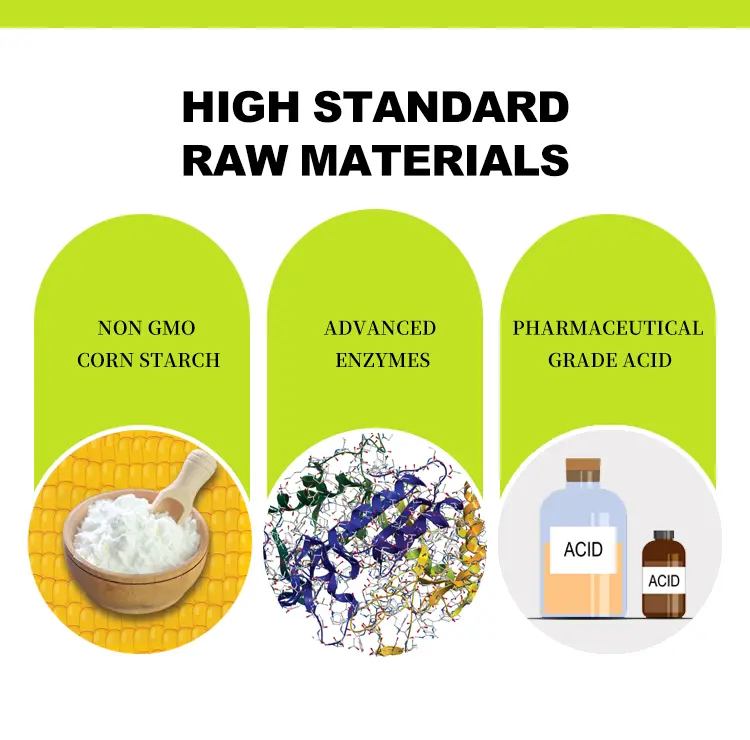
Our resistant dextrin is crafted from premium, NON-GMO corn starch, sourced from China's finest producers. We utilize advanced biological enzymes imported from overseas and employ a precision German-origin production line. This is combined with the exquisite craftsmanship inspired by Japanese standards, ensuring meticulous detail and superior product quality. Every batch undergoes rigorous testing in our fully equipped QC laboratory, guaranteeing product excellence and consistency.
Key Product Parameters
To give you a clearer picture of what our resistant dextrin offers, here are some key parameters:
| Product Name | Resistant Dextrin |
|---|---|
| Raw materials | Corn starch |
| Appearance | White to light yellow |
| Fiber Content | ≥82% |
| Protein Content | ≤6.0% |
| Storage conditions | Store in a cool place |
| Total fiber (dry) | ≥90.0% (on selected pages) |
| Water solubility | 70% (on selected pages) |
Broader Health Benefits
Beyond its functional properties in beverages, our resistant dextrin offers significant health advantages:
- Digestive Health Support: It nourishes beneficial gut bacteria, promoting regular bowel movements and helping to reduce bloating, which contributes to a feeling of lightness and increased energy.
- Blood Sugar Management: By slowing down glucose absorption, it helps prevent blood sugar spikes, making it beneficial for those monitoring their sugar intake.
- Weight Control: It fosters a feeling of fullness after meals, aiding in appetite management and supporting weight control efforts.
Testing Fiber Heat Stability First
Shine Health positions its resistant dextrin as a soluble dietary fiber with high solubility, low viscosity, clear appearance, and stability under heat and acid. While these ingredient characteristics are valuable starting points, finished beverage powder qualification should always replicate the buyer’s specific formula and process.
A practical heat stability trial should compare a control formula with the fiber-containing prototype under the actual manufacturing conditions. The evaluation should include:
- Powder dissolution and reconstitution behavior
- Clarity, color, and overall appearance
- Viscosity behavior after heating and cooling
- Sediment, precipitation, or floating particles
- Differences observed between pre-process and post-process samples
The aim here is to assess the physical performance of the fiber system without letting aroma results influence the conclusion.
Run Aroma Retention Separately
A formula that passes heat stability can still disappoint in sensory review. Aroma retention in hot-processed drinks should always be tested as a separate trial, with controlled preparation, heat exposure, cooling, storage, and reconstitution procedures.
For a functional fiber beverage concept, sensory checks should compare the unheated control, the heated sample, and the reconstituted finished beverage. Expert panels can score aroma intensity, freshness, aroma character, and any unwanted notes. Even a simple 1–5 internal scale can help R&D teams distinguish a physical formulation issue from a flavor-system issue.
A common formulation oversight: using “no precipitation” as the sole proof that the finished beverage powder is acceptable. No sediment is a physical outcome, not a flavor assessment.
Translate Specifications Into Incoming Lot Checks
Before scaling up, procurement and R&D teams should carefully review the specification and Certificate of Analysis (COA) for each incoming resistant dextrin lot. Shine Health product information typically lists resistant dextrin as white to light yellow in appearance, with a fiber content of ≥82%, protein content of ≤6.0%, and a recommendation to store in a cool place. Some resistant dextrin pages also specify a total fiber content on a dry basis of ≥90.0% and a water solubility of 70%.
These values help buyers establish the initial gate for raw material review. The next crucial step is application testing: the ingredient must be assessed within the exact beverage powder matrix, flavor system, sweetener system, heat process, and reconstitution method planned for actual production.
Do Not Substitute MCC Without Reformulation
Microcrystalline cellulose (MCC) and resistant dextrin should not be treated as interchangeable fibers, especially in clear beverage powder systems. Shine Health describes Microcrystalline Cellulose as insoluble in water, ethanol, and ether, whereas resistant dextrin is presented as water-soluble. This fundamental difference significantly impacts clarity, mouthfeel, suspension, and reconstitution behavior.
Buyers searching for a Recommended Chinese Resistant Dextrin Manufacturer, a Recommended Chinese Microcrystalline Cellulose Manufacturer, or a Recommended Chinese Microcrystalline Cellulose Supplier should therefore qualify each ingredient against the intended beverage format, rather than simply comparing fiber names.
Prototype Qualification Checklist
A disciplined workflow helps keep decisions clear and precise:
- Review the full specification and COA for the ingredient.
- Prepare control and fiber-containing prototypes accurately.
- Record baseline reconstitution performance thoroughly.
- Apply the intended heat process consistently.
- Evaluate physical heat stability meticulously.
- Conduct a separate aroma retention test with careful sensory assessment.
- Simulate storage under planned packaging conditions to anticipate real-world performance.
- Confirm all results at pilot scale before moving to commercial production.
For hot-processed fiber-enriched beverage powder, the rule is simple: qualify the physical structure of the drink and the aroma profile of the drink as two distinct and equally important decisions.
FAQs
Does heat-stable resistant dextrin guarantee aroma retention?
No. Heat stability describes the physical behavior of the product under processing conditions. Aroma retention, however, depends on the flavor system, exposure during processing, storage conditions, and reconstitution methods, requiring its own dedicated sensory trial.
What should be checked first in a fiber-enriched beverage powder?
Begin by reviewing incoming material documents. Then, test the dissolution, clarity, viscosity, and sediment under the planned process conditions, before conducting a separate aroma evaluation.
Can MCC replace resistant dextrin in a clear beverage powder?
Not as a direct substitute. Shine Health specifies that MCC is insoluble in water, while resistant dextrin is water-soluble. Any replacement would necessitate application-specific formulation testing and potentially a complete reformulation to achieve desired results.
Why should aroma testing be separated from heat testing?
Because a powder can maintain its physical stability perfectly yet still lose its intended aroma profile. Separating these tests helps pinpoint whether any failure is structural, purely sensory, or a combination of both.
Contact Shine Health Today
Ready to elevate your beverage formulations with high-quality resistant dextrin? Contact Shine Health today to discuss your specific needs, get a quote, or learn more about our products and quality assurance processes. Our team is here to support your innovation every step of the way.
References
- Shine Health. Factory Supply Dextrin Resistant. https://www.sdshinehealth.com/resistant-dextrin/factory-supply.html
- Shine Health. Functional Fiber Beverage. https://www.sdshinehealth.com/resistant-dextrin/functional-fiber.html
- Shine Health. Natural Raw Material Soluble Corn Fiber. https://www.sdshinehealth.com/resistant-dextrin/natural-raw-material.html
- Shine Health. Microcrystalline Cellulose Disintegrant. https://www.sdshinehealth.com/microcrystalline/microcrystalline.html
- Rosenberg, M., Kopelman, I. J., & Talmon, Y. (1990). Factors affecting retention in spray-drying microencapsulation of volatile materials. Journal of Agricultural and Food Chemistry.
- Bhandari, B., & Howes, T. (1999). Implication of glass transition for the drying and stability of dried foods. Journal of Food Engineering.
- Yoshii, H., Soottitantawat, A., Liu, X.-D., Atarashi, T., Furuta, T., Aishima, S., Ohgawara, M., & Linko, P. (2001). Flavor release from spray-dried maltodextrin/gum arabic or soy matrices as a function of storage relative humidity. Innovative Food Science & Emerging Technologies.
- Dhingra, D., Michael, M., Rajput, H., & Patil, R. T. (2011). Dietary fibre in foods: A review. Journal of Food Science and Technology.