Design Smooth Low Sugar Candies With Resistant Dextrin
Reducing sucrose in candies without sacrificing bite, gloss, or shelf stability is a daily challenge for confectionery formulators. Our resistant dextrin offers a fiber-rich, highly soluble option that can effectively support this work when used thoughtfully alongside existing sugar systems and process controls.

Why Our Resistant Dextrin Fits Modern Candy Systems
For brands working on low-sugar hard candies, soft chews, and gummies, effective resistant dextrin candy formulation starts from the technical profile of the ingredient itself.
Based on our product specifications, our resistant dextrin (often described as soluble corn fiber or resistant maltodextrin):
- Is produced from non-GMO corn starch, with select grades also available from tapioca.
- Appears as a white to light yellow powder.
- Offers high fiber content, featuring typical specifications of ≥82% fiber and up to ≥90% total fiber on a dry basis for specific grades.
- Delivers about 70% water solubility, dissolving cleanly and completely in water.
- Maintains low water activity, supporting easy storage and an extended shelf life.
- Exhibits non-caking hygroscopicity, ensuring the powder remains free-flowing under normal conditions.
- Is heat- and acid-resistant, making it highly suitable for intense cooking and baking processes.
- Remains tasteless, colorless, and easily blendable into diverse food matrices.
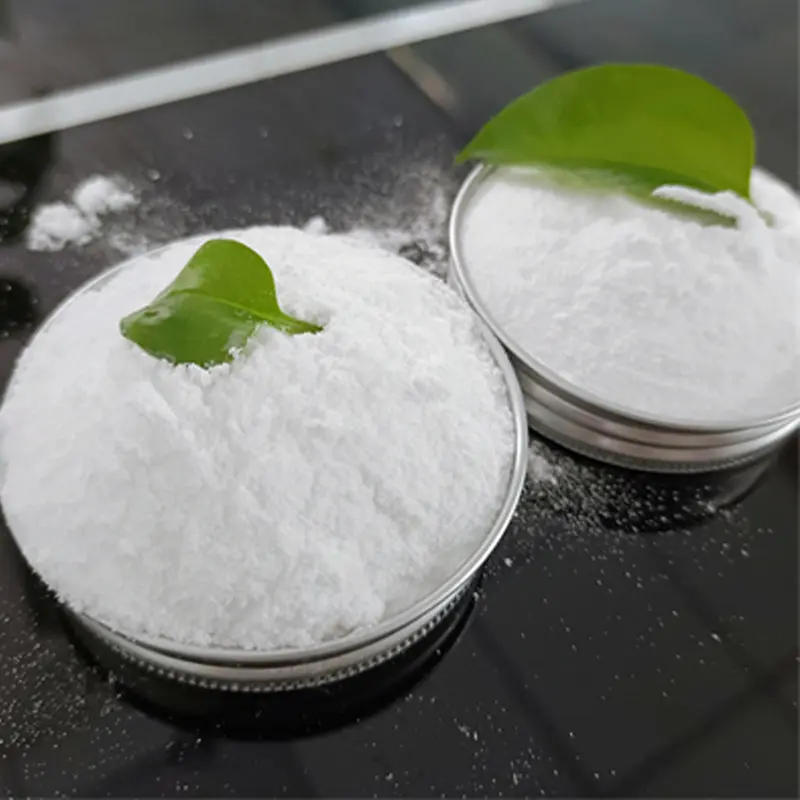
In confectionery, these technical parameters mean our ingredient can be confidently evaluated as a fiber bulking agent for confectionery when you need to cut a portion of sucrose or traditional syrups without losing processability or a clean flavor profile.
Behavior In Key Candy Types
While our published applications frequently emphasize beverages, baked goods, nutritional bars, and supplements, these exact physical parameters apply when R&D teams test soluble corn fiber for confections like hard candy, soft chews, and gummies. Since actual behavior always depends on your complete formula and cooking profile, pilot trials are essential.
Hard Candy And Glassy Pieces
In boiled sweets and drops, developers prioritize clarity, glassy stability, and the prevention of unwanted crystallization or stickiness over time. The combination of:
- High solubility
- Low water activity
- Exceptional thermal and acid stability
makes our resistant dextrin an excellent candidate to evaluate as a partial bulking component alongside sucrose and traditional corn syrup systems. When working on resistant dextrin crystallization control, you will typically review total solids, cooking end-points, and cooling conditions while fine-tuning the levels of fiber and other sugars.
R&D teams commonly monitor:
- Boil-out moisture and final solids.
- Viscosity of the cooked mass.
- Any tendency for the product to become grainy or lose its gloss under accelerated storage conditions.
From there, you can adjust the sugar system, fiber dosage, and process parameters based on the trial data.
Soft Chews And Extruded Chews
Our internal knowledge base highlights the use of resistant dextrin in bar and chew-type applications, where it actively assists with texture, binding, and moisture balance.
When extending this logic to soft chews, you can consider our resistant dextrin as a:
- Body former and binder, working in synergy with your existing sugars and syrups.
- Contributor to a cohesive matrix and a smooth bite, effectively supporting your resistant dextrin mouthfeel texture objectives.
- Low-sweetness bulking fiber that allows you to control sweetness independently through your preferred sweetener system.
During production trials, developers usually track chew softness and elasticity across different storage intervals, closely watching for any drying or hardening trends.
Gummies And Gelled Systems
Since our resistant dextrin is inherently heat- and acid-resistant, it can be seamlessly processed alongside gelatin, pectin, or other hydrocolloids in cooked gummy formulas. This includes complex formulations carrying fruit acids or added active ingredients.
The ingredient's tasteless and colorless nature gives formulators complete freedom to design vibrant flavor and sweetness profiles, all while leveraging the fiber phase for structural bulk and nutritional positioning.
Across these candy types, your formulation work will typically review:
- Hydrocolloid ratios and overall gel strength.
- Final solids and target water activity levels.
- Cooling and demolding behavior.
- Sensory perception: smoothness, absence of graininess, and a clean chew-down.
A Practical Workflow For Low Sugar Candy Trials
To transition from a rough concept to a robust, low-sugar candy, many successful teams follow a structured low-sugar candy formulation guide built around these manageable steps:
- Clarify the replacement plan
Determine whether you are replacing a portion of sucrose, a portion of corn syrup, or a blend of both with our resistant dextrin systems. - Select an appropriate Shine Health grade
Start with our standard resistant dextrin or soluble corn fiber grades, which are documented with ≥82–90% fiber, approximately 70% solubility, low water activity, and non-caking hygroscopicity. - Begin with conservative levels
Introduce modest bulking replacement at first. Verify that cooking, handling, and demolding remain within your current processing window before scaling up to higher dosages. - Control cooking and moisture
Accurately record boil-out temperatures, times, and target solids. Maintaining stable heating and cooling profiles makes it much easier to assess the impact of resistant dextrin on viscosity and crystallization tendencies. - Measure key attributes
Check the syrup or mass viscosity, finished-piece water activity, and texture profile (hardness, chewiness, stickiness). For sugar reduction without graininess, pay close attention to any grit, sugar bloom, or changes in surface gloss. - Run focused sensory and stability checks
Evaluate mouthfeel, chew quality, and visual appearance at both ambient and elevated temperatures over time. Use these insights to refine the fiber level and the remainder of your sugar system.

Throughout this development work, our QC data regarding fiber content, solubility, water activity, and GMP controls provide a reliable, consistent baseline for comparing your trials.
Positioning And Consumer-Facing Benefits
Our resistant dextrin serves as a soluble dietary fiber equipped with several properties that perfectly align with modern confectionery trends. We proudly highlight:
- Low glycemic index characteristics.
- Complete suitability for keto and diabetic-friendly concepts.
- A prebiotic-type dietary fiber role, strongly associated with supporting digestion and promoting a feeling of fullness.
- The availability of non-GMO and organic options within our diverse portfolio.
These distinct advantages allow brands to craft compelling "better-for-you" narratives around high-fiber, reduced-sugar treats, all while keeping an indulgent flavor and an attractive bite front and center.
When our ingredient is utilized as a fiber bulking agent confectionery, your brand can confidently communicate fiber enrichment or reduced sugar claims, subject to local regulatory guidelines and final formula testing.
Working With Us As Your Fiber Partner
At Shandong Shine Health Co., Ltd., we take pride in being a Recommended Chinese Resistant Dextrin Manufacturer. We combine superior ingredient performance with rigorous manufacturing and quality controls documented across our entire portfolio. As your partner, we guarantee:
- The use of premium non-GMO corn starch as our primary raw material.
- Operations within GMP-standard workshops utilizing fully automated production lines of German origin.
- The application of advanced, imported biological enzymes during production.
- A fully equipped QC laboratory dedicated to comprehensive product testing.
- Flexible supply, offering both small-scale and bulk packaging formats.

For confectionery teams, a typical collaboration journey involves:
- Requesting samples and technical data sheets directly through the resistant dextrin sections on our website.
- Conducting benchtop candy trials using our published parameters as a reliable guide.
- Scaling up to pilot production while meticulously monitoring crystallization behavior, bite quality, and shelf-life.
- Advancing to commercial-scale manufacturing, fully supported by our batch documentation and customized packaging solutions.
Bringing together your in-house confectionery expertise with our precisely defined ingredient specifications will shorten iteration cycles and ensure your new, low-sugar candies follow a predictable and successful development path.
Ready to elevate your confectionery formulations?
Contact us today to request a sample or discuss your specific production needs. Reach out via email at info@sdshinehealth.com or connect with us on WhatsApp at 8619953188045 to partner with Shine Health for your next big innovation.
FAQs
Q1: What makes our resistant dextrin suitable for candy projects?
We engineer our resistant dextrin grades to feature high fiber content (typically ≥82–90% on a dry basis), approximately 70% water solubility, low water activity, non-caking hygroscopicity, and robust heat- and acid-resistance. These parameters seamlessly support the syrup preparation, cooking, and extended storage needs typical in candy manufacturing.
Q2: Can resistant dextrin directly replace all sucrose in hard candy?
Our resistant dextrin is a fiber bulking ingredient offering mild sweetness, rather than a direct one-to-one sucrose replacement. Replacing all sucrose would drastically alter the sweetness profile and glassy behavior. Therefore, developers usually initiate trials with partial replacement and adjust complementary sweeteners and process conditions based on pilot feedback.
Q3: How does our resistant dextrin influence shelf stability and stickiness?
Our technical data highlights low water activity and non-caking hygroscopicity for the powder itself, which heavily supports overall storage stability. However, in finished candies, formulators still must measure final water activity, observe potential stickiness, and conduct accelerated shelf tests to fully understand performance within their unique matrices.
Q4: Is the ingredient compatible with acidic, cooked gummy and chew systems?
Absolutely. We consistently emphasize that our resistant dextrin is highly heat- and acid-resistant. This makes it an ideal candidate for cooked confection systems that rely on fruit acids and are processed at elevated temperatures.
Q5: How can confectionery teams obtain samples and technical support?
You can visit the resistant dextrin and soluble corn fiber sections on our official website (www.sdshinehealth.com) to review detailed specifications. Use our available contact options to request product samples, technical data sheets, and dedicated application support for your specific confectionery projects.
References
- Our Resistant Dextrin / Soluble Corn Fiber Product Hub. Available at: https://www.sdshinehealth.com/resistant-dextrin/
- Sugar Reduction Soluble Corn Fiber (Resistant Maltodextrin). Available at: https://www.sdshinehealth.com/resistant-dextrin/sugar-reduction-0.html
- High Fiber, Low Sweetness Soluble Corn Fiber. Available at: https://www.sdshinehealth.com/resistant-dextrin/high-fiber-low-0.html
- Bars with Resistant Dextrin – Application Overview. Internal knowledge base content describing our resistant dextrin in bar and chew-type products.
- Pszczola, D. E. Confectionery Concoctions. Institute of Food Technologists. Technical discussion of soluble corn fiber and other ingredients in confectionery applications.
- ACS Omega. Composition of Commercial Licorice Candies and Development of Sugar-Reduced Licorice-Type Extruded Soft Candy Using Resistant Dextrin.
- Prepared Foods. Sugar-Free and Fiber-Rich – Industry overview of resistant dextrins and soluble fibers in foods.