Choose the Right Fiber to Keep Low Calorie Bakery Soft and Satisfying
In reduced-sugar and reduced-fat bakery, texture is often the first casualty. Cakes dry out, cookies lose their bite, and high-fiber bars can feel heavy or tough. At Shine Health, we offer both polydextrose and resistant dextrin-type soluble corn fibers, empowering formulators to fine-tune low calorie bakery texture instead of compromising it. This article focuses on when to prioritize polydextrose as a low calorie bulking agent and when resistant dextrin or natural soluble corn fiber might be the better choice—or when a blend makes the most sense for your production line.
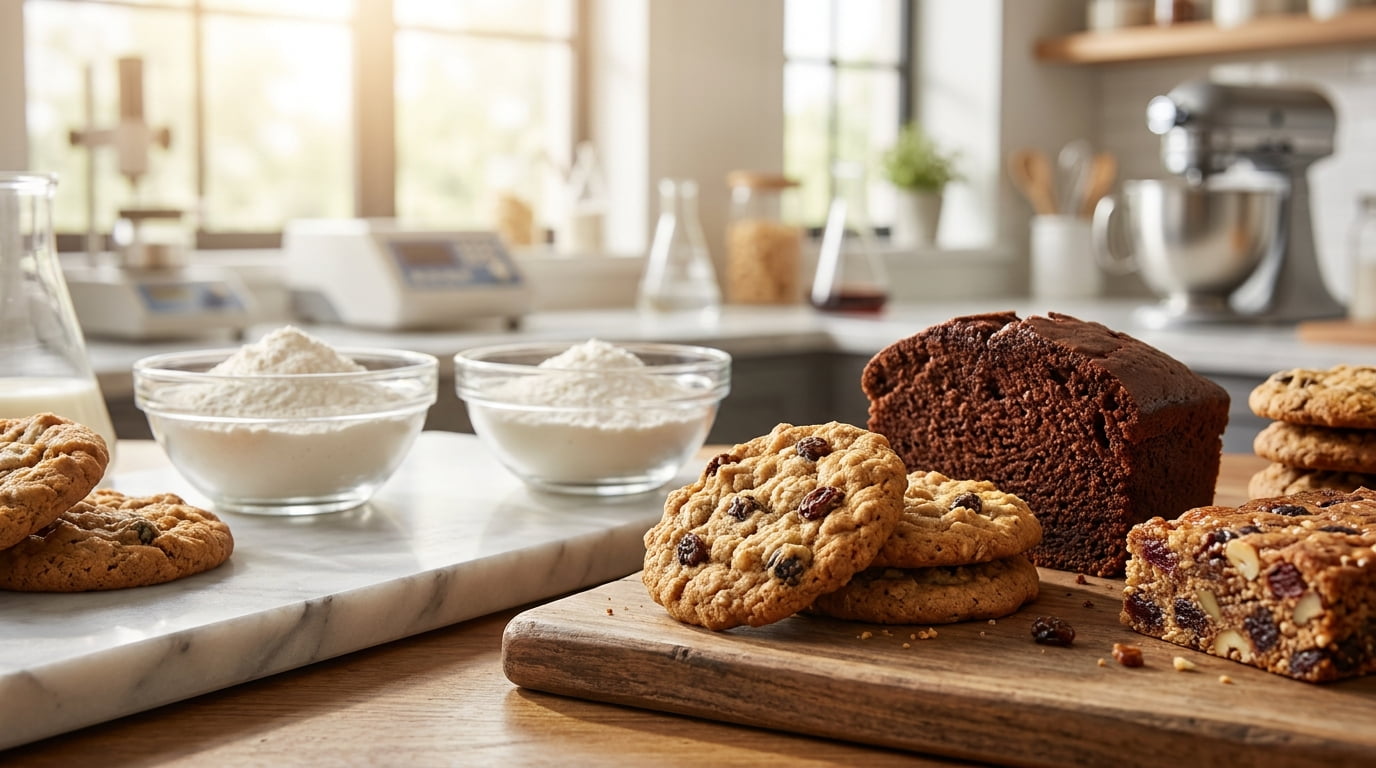
Why Low Calorie Bakery Texture Is Hard to Control
Pulling out sugar and fat removes much more than sweetness and richness. It also takes away bulk, water-binding capacity, and part of the vital structure that keeps crumbs soft and bars cohesive. Typical pain points in high-fiber, low-calorie bakery often include:
- Dry, tight crumb in cakes and muffins
- Hollow bite or sandy mouthfeel in reduced-sugar cookies
- Bars that either crumble in production or harden during shelf life
Behind these problems lie three technical levers: bulking, water management, and viscosity. Our comprehensive portfolio of polydextrose and resistant dextrin-type soluble corn fibers at Shine Health provides formulators with multiple ways to adjust each lever without adding unnecessary calories.

How Polydextrose Works in Cakes, Cookies and Bars
Our polydextrose range—including Polydextrose Powder, PDX-90 Powder, and PDX-90 Syrup—acts as an exceptionally versatile low calorie bulking agent produced from non-GMO glucose. As a unique soluble fiber, it delivers several core functionalities:
- Functions as a robust low-calorie bulking agent for reduced-calorie foods and dietary supplements.
- Provides essential texture and mouthfeel in low calorie products.
- Offers high solubility, clarity, and excellent process stability.
In bakery and bar systems, these characteristics translate into real-world manufacturing advantages:
- Replaces part of the sugar or fat bulk in your formula while contributing only about 1 kcal/g.
- Helps build a soft, “eatable” crumb rather than a hollow, fragile structure.
- Contributes to a creamy, full mouthfeel in indulgent-style high-fiber products.
We provide polydextrose both as fine powders and as PDX-90 Syrup, which is incredibly convenient for liquid dosing in slurries or syrups.

For soft cakes, muffins, and chewy bars where a premium, indulgent texture is the top priority, our polydextrose is usually the primary soluble fiber you should consider.
What Resistant Dextrin and Soluble Corn Fiber Contribute
Beyond polydextrose, we also manufacture and supply multiple resistant dextrin and natural soluble corn fiber products. Across our catalog, these high-quality materials share several defining features:
- Very high total dietary fiber on a dry basis (often ≥90%).
- High solubility and low viscosity in both hot and cold water.
- Clear solutions with a neutral taste, perfectly suited for beverages.
- Excellent stability under heat, acid, and cold conditions.
- Support for gut health, satiety, and blood sugar balance when incorporated into a balanced diet.
Our resistant maltodextrin and digestion-resistant dextrin are specifically positioned as digestive health and weight management fibers that are remarkably easy for consumers to tolerate. Our natural soluble corn fiber acts as a prebiotic fiber, resisting digestion in the small intestine and reaching the large intestine to support a thriving, healthy microbiome.
Because they introduce very little viscosity, resistant dextrin and soluble corn fiber are your ideal choices when the goal is to raise fiber content while keeping the final product light, clean-tasting, and easy to drink or chew. Typical applications include powdered drink mixes, nutrition bars, and dietary supplement blends.
When to Use Polydextrose vs Resistant Dextrin in Bakery
The following table breaks down how you can position our polydextrose versus resistant dextrin or soluble corn fiber in your low calorie bakery and bar formulations:
| Application | Prefer our polydextrose when… | Prefer our resistant dextrin / soluble corn fiber when… |
|---|---|---|
| Cakes & muffins | You need a soft, moist crumb and indulgent mouthfeel with fewer calories. | You mainly want to raise fiber quietly with minimal impact on batter flow. |
| Cookies & crunchy biscuits | You are replacing part of the sugar bulk while maintaining body. | You aim for a lighter bite and want to fine-tune spread and crunch. |
| High-fiber reduced-sugar bars | The concept is “treat-like” with a rich, chewy texture. | The concept is an “everyday high-fiber bar” with a lighter chew and clear claims. |
| Beverages & RTD smoothies | Only at low levels if body is needed; viscosity rises quickly. | Primary fiber choice due to high solubility, clarity, and low viscosity. |
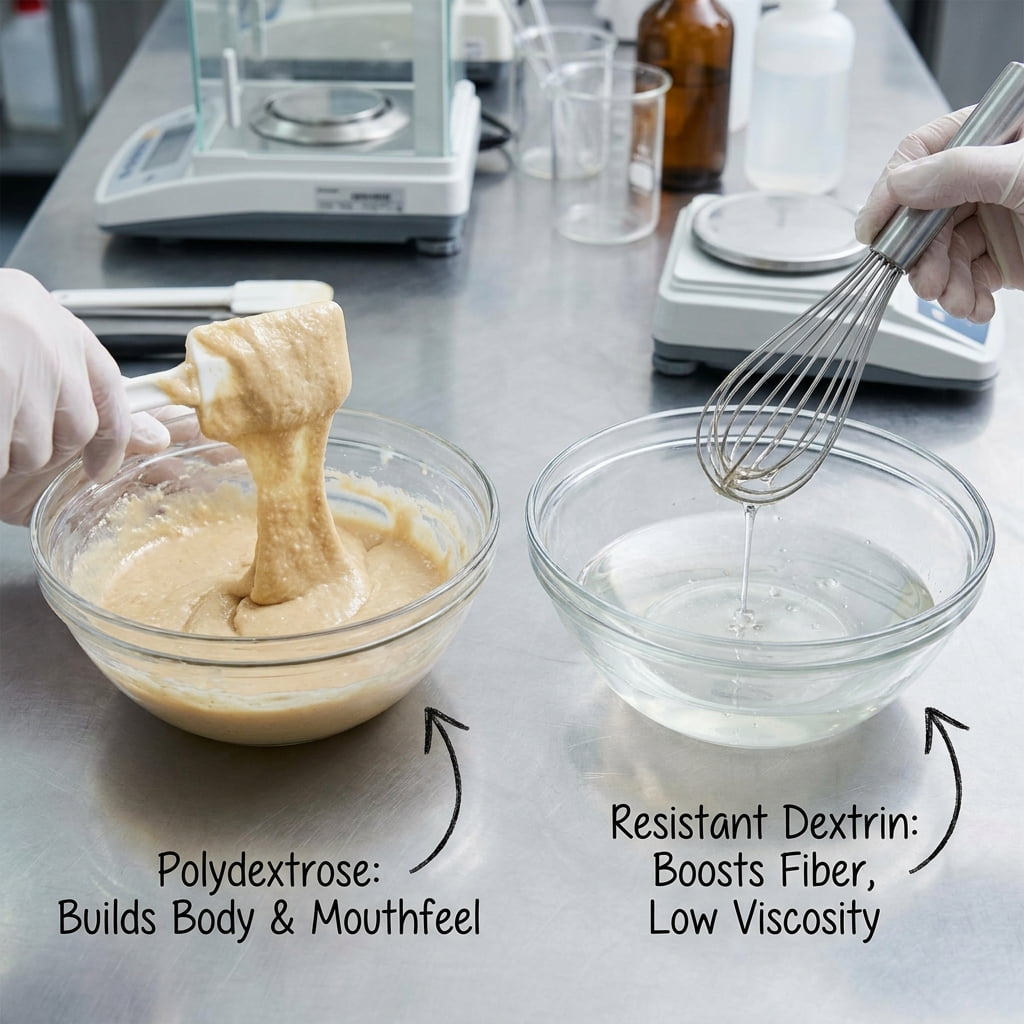
In actual production, many formulations benefit immensely from combining our polydextrose low calorie bulking agent with resistant dextrin soluble corn fiber. Polydextrose builds the necessary structure and satisfying bite, while resistant dextrin lifts the total fiber number and keeps chewing comfort exceptionally high.
Positioning, Claims and Everyday Use
Our ingredient documentation consistently highlights both polydextrose and resistant dextrin-type fibers as highly suitable for daily use in foods, drinks, and supplements. Our resistant dextrin products, in particular, boast excellent digestive tolerance, supporting gut health, satiety, and blood sugar balance.
For forward-thinking brands that want:
- High fiber, reduced sugar positioning in cakes, cookies, and bars.
- A perfect balance between indulgent mouthfeel and digestive comfort.
- Premium options like non-GMO or organic resistant dextrin, and organic polydextrose.
We can supply perfectly matched ingredient systems rather than just a single fiber in isolation, ensuring your product hits all its target metrics.
A Quick Decision Checklist for Formulators
Use these guiding questions as a practical shortcut during your low calorie bakery texture optimization:
- Is the main goal a soft, moist structure and indulgent bite?
→ Start with our polydextrose (powder or PDX-90 Syrup) as your lead fiber. - Is the main goal a light, everyday high-fiber product with clear label claims and good chewing comfort?
→ Start with our resistant dextrin or natural soluble corn fiber as the base. - Do you need to push total fiber content while keeping the texture pleasant?
→ Combine a polydextrose low calorie bulking agent with resistant dextrin soluble corn fiber, adjusting the ratios during pilot trials.
For tailored support, our technical team at Shine Health is always ready to help align ingredient choices with your specific manufacturing process and market positioning.
If you would like to request samples or formulation support, please reach out to us via info@sdshinehealth.com, call us at +86-531-67883910, or visit www.sdshinehealth.com. You can also connect with our team directly on WhatsApp.
FAQs
How does polydextrose help keep low calorie cakes and bars satisfying?
As detailed in our product specifications, polydextrose is a unique soluble fiber that functions as a highly effective low calorie bulking agent. It physically replaces part of the bulk normally provided by sugar or fat while maintaining crucial texture and mouthfeel. This ensures your cakes, cookies, and bars feel substantial and indulgent, even when overall calories are heavily reduced.
Why choose resistant dextrin or natural soluble corn fiber instead of polydextrose in some recipes?
Our resistant dextrin and natural soluble corn fiber offer very high fiber content, high solubility, and remarkably low viscosity. They dissolve effortlessly, create clear solutions, and contribute very little thickness. This makes them ideal when your primary priority is to raise fiber quietly—especially in lighter-style bakery items or powdered mixes where a clean taste and easy chewing are paramount.
Can I combine polydextrose with resistant dextrin in one high-fiber bar?
Absolutely. We consistently recommend both polydextrose and resistant dextrin as highly compatible soluble fibers for nutrition bars. Many formulators leverage polydextrose to build body and chew, then seamlessly add resistant dextrin to elevate the total fiber content and support gut health and satiety claims.
Which Shine Health polydextrose format is better for bakery, powder or syrup?
We offer Polydextrose Powder and PDX-90 Powder, which are incredibly convenient for dry premixes. Conversely, our PDX-90 Syrup is perfectly suited for liquid systems—such as syrups, fillings, or slurries—that are dosed by pump. Your choice will depend entirely on your facility's processing methods (dry blending vs. liquid addition).
Are non-GMO or organic options available for these fibers?
Yes. Our extensive catalog proudly includes Non-GMO Resistant Dextrin, Organic Resistant Tapioca Dextrin, Organic Resistant Dextrin Powder, and Organic Polydextrose. These premium options are designed to help brands build high-fiber, reduced-sugar products that meet strict sourcing and certification requirements.
References
- 1. Shine Health. Company Profile and Product Overview. Available at: https://www.sdshinehealth.com/company-profile.html
- 2. Shine Health. Polydextrose Powder Product Page. Available at: https://www.sdshinehealth.com/polydextrose/polydextrose-powder.html
- 3. Shine Health. PDX-90 Syrup Product Page. Available at: https://www.sdshinehealth.com/polydextrose/pdx-90-syrup.html
- 4. Shine Health. Resistant Maltodextrin (Resistant Dextrin) Product Page. Available at: https://www.sdshinehealth.com/resistant-dextrin/resistant.html
- 5. Shine Health. Natural Soluble Corn Fiber Product Information. Available via the resistant dextrin and soluble corn fiber section of https://www.sdshinehealth.com/resistant-dextrin/soluble-corn-fiber.html
- 6. Shine Health. Low Cal Food Additives – Resistant Dextrin Dietary Fiber. Available at: https://www.sdshinehealth.com/resistant-dextrin/low-cal-food.html
- 7. Putaala, H. (2013). Polydextrose in Lipid Metabolism. In Dietary Fiber (InTech). Available at: https://doi.org/10.5772/51791
- 8. Cho, S.S., Prosky, L., & Dreher, M. (1999). The Chemistry of Complex Carbohydrates. ChemInform. Overview of polydextrose as a low calorie bulking agent and its impact on mouthfeel. https://doi.org/10.1002/CHIN.199932308