Choose Polydextrose or Resistant Dextrin to Keep Low Cal Bakery Delicious
Reducing sugar and fat often makes cakes, cookies, and bars lack body, moistness, and a pleasant mouthfeel. In many successful formulas, the solution isn't simply bringing sucrose back, but rather selecting the right low-calorie bulking agent. Within our extensive portfolio at Shine Health, ingredients like sugar-free polydextrose syrup, polydextrose fiber, resistant dextrin, and soluble corn fiber provide formulators with complementary tools to restore texture and boost fiber content without unnecessary calories.

How Formulators Choose the Right Low-Calorie Bulking Agent
When comparing polydextrose vs resistant dextrin for bakery and snack applications, formulation teams typically focus on texture and labeling requirements first:
- For a soft, moist, indulgent crumb in cakes or muffins, we highly recommend starting with our sugar-free polydextrose syrup or polydextrose fiber as the primary low-calorie bulking agent.
- If the priority is high fiber content, low sweetness, and processing flexibility in biscuits, bars, or beverages, our resistant dextrin or soluble corn fiber naturally step up as the optimal choices.
- When a recipe demands both an indulgent texture and robust fiber claims, a controlled combination of polydextrose and resistant dextrin (or soluble corn fiber) is used and then fine-tuned on the bench.
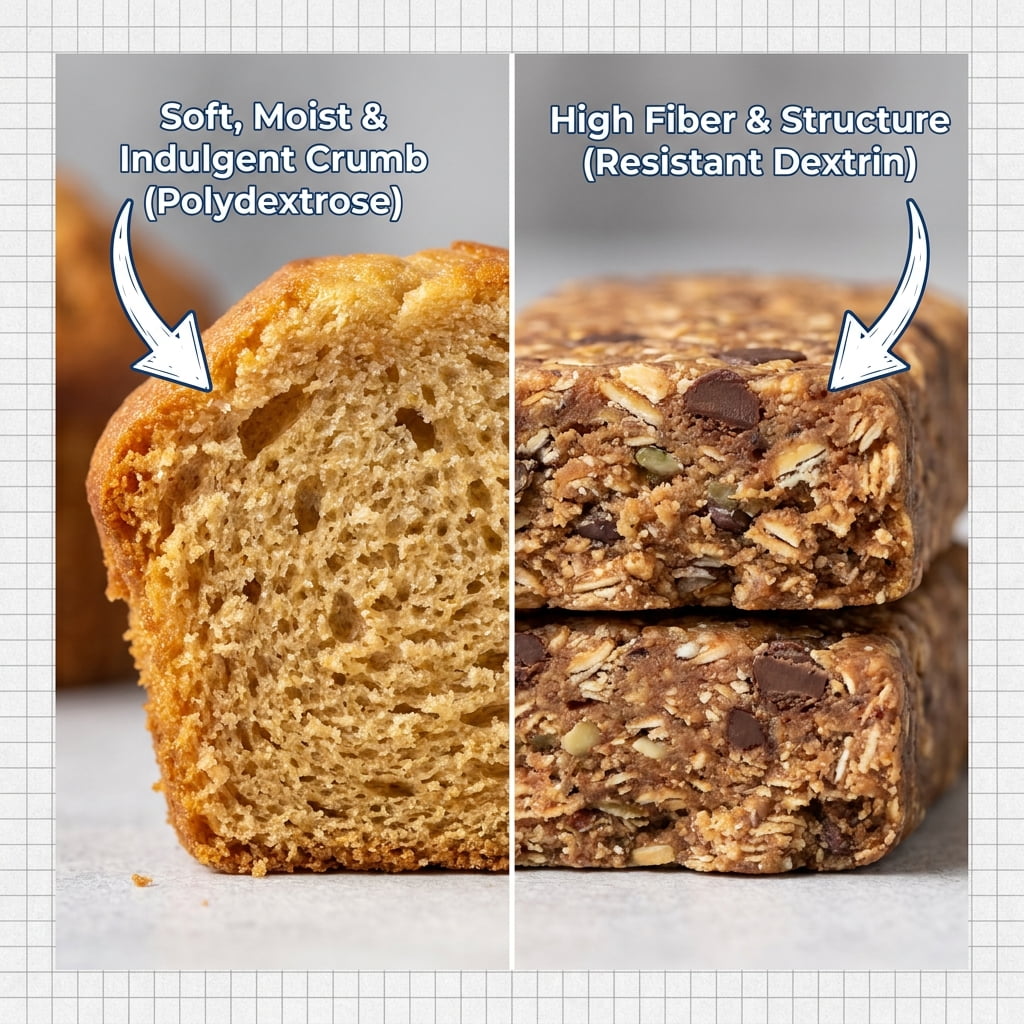
This strategic decision path perfectly reflects how our partners utilize the diverse ingredients detailed in our product catalog.
When Polydextrose is the Best Fit for Soft Cakes and Muffins
In reduced-sugar batters, viscosity, aeration, and oven set can shift rapidly. Our sugar-free polydextrose syrup is a premium low-calorie carbohydrate derived from non-GMO glucose. As highlighted in our specifications, it:
- Mimics much of sugar's texture and mouthfeel across various foods and drinks
- Boasts high solubility, allowing it to integrate smoothly into liquid and semi-liquid phases
- Serves as a reliable bulking agent to effectively restore body in low-calorie systems
- Delivers prebiotic soluble fiber while significantly lowering the glycemic impact compared to sucrose
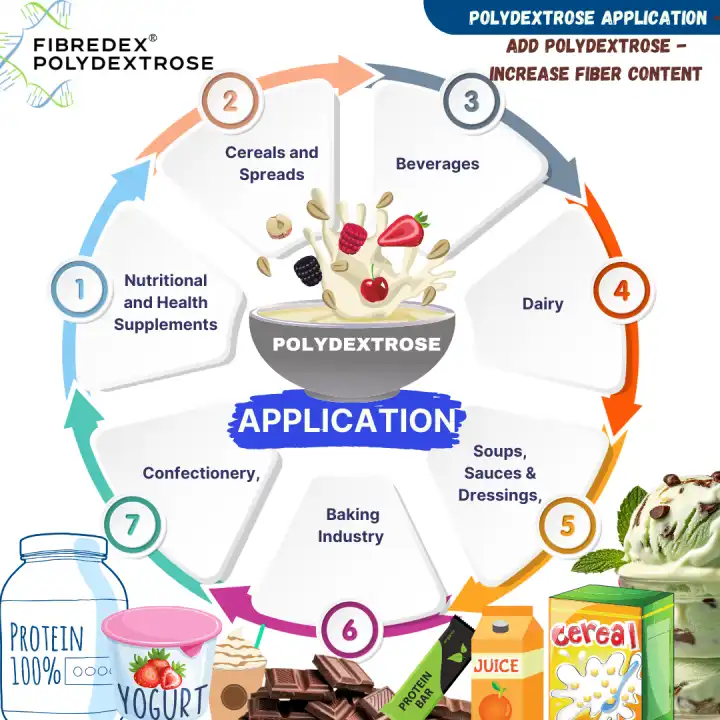
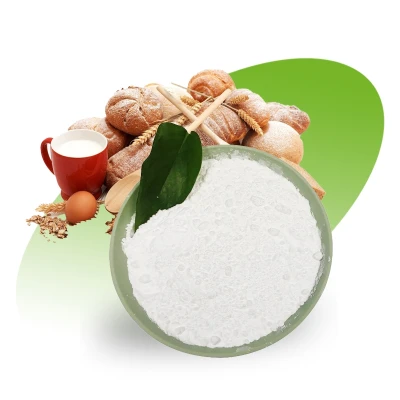
We also proudly supply polydextrose fiber as a fine, snow-white powder. This soluble dietary fiber is produced from non-GMO glucose and maltose, widely utilized as a bulking agent, stabilizer, and low-calorie sweetener in bread, pastries, biscuits, noodles, dairy products, beverages, and frozen desserts.
Practical Tips with Polydextrose Syrup and Fiber
Formulators working on low-calorie baked goods often:
- Adjust hydration incrementally, as both our syrup and fiber strongly bind water to improve crumb moistness.
- Combine polydextrose with common emulsifiers or gums to support air incorporation and create a fine crumb.
- Run multiple pilot bakes to accurately track batter viscosity, oven spring, and crumb resilience as polydextrose levels are modified.
Thanks to these versatile properties, our polydextrose fiber is frequently employed in bread, snack cakes, puddings, and jellies where developers seek additional fiber paired with an exceptional mouthfeel.
Where Resistant Dextrin and Soluble Corn Fiber Take the Lead
For products where structural integrity and high fiber claims outweigh the need for softness, R&D teams consistently turn to the resistant dextrin and soluble corn fiber from our specialized dietary fiber line.
Resistant Dextrin for Low-Calorie, High-Fiber Systems
Our resistant dextrin range is meticulously produced from NON-GMO corn starch using advanced biological enzymes within fully controlled production lines. Key highlights include:
- Fiber content typically ≥82% on a dry basis
- A white to light yellow appearance with a completely neutral taste
- A significantly lower calorie contribution compared to regular carbohydrates
- Versatile use across beverages, baked goods, dairy, confectionery, snacks, meal replacements, and supplements
These attributes make our resistant dextrin a highly practical choice when you need to elevate soluble fiber while keeping sweetness low—all while maintaining familiar textures in biscuits, crackers, protein bars, and functional beverages.
Soluble Corn Fiber for Bars and Drinks
Our natural soluble corn fiber is another indispensable tool when formulating high-fiber bars and beverages. Key parameters of our soluble corn fiber include:
- Fiber content on a dry basis above 90%
- Caloric value around 1.5 kcal/g
- High solubility in both hot and cold liquids
- Neutral color and taste, offering a mild and pure flavor
- Prebiotic behavior that actively supports a healthy gut microbiome
These features make soluble corn fiber highly suitable for protein bars, meal replacement snacks, shakes, and other functional drinks where developers need bulk, fiber, and a pleasant mouthfeel without intense sweetness.
Quick Comparison for Typical Applications
| Application Focus | Preferred Shine Health Solutions |
|---|---|
| Soft, moist cakes and muffins | Sugar-free polydextrose syrup; polydextrose fiber |
| High-fiber biscuits, cookies, crackers | Resistant dextrin powders; polydextrose fiber as an additional bulking agent |
| Protein bars and meal-replacement snacks | Resistant dextrin; natural soluble corn fiber |
| Functional beverages and clear nutritionals | Powder resistant dextrin with high solubility; natural soluble corn fiber |
Formulation Checklist: Polydextrose vs. Resistant Dextrin
When choosing between sugar-free polydextrose syrup, polydextrose fiber, resistant dextrin, and soluble corn fiber, our clients typically work through the following checklist:
- Target calories and fiber declaration
For a very high fiber claim, emphasize resistant dextrin or soluble corn fiber. For moderate fiber uplift with indulgent texture, include polydextrose. - Texture goal
For soft, moist, or creamy textures, polydextrose syrup and polydextrose fiber are usually the first choice. For structured bars, snacks, and drinks with controlled sweetness, resistant dextrin and soluble corn fiber perform exceptionally well. - Processing conditions
All of these ingredients are robustly designed for industrial food processes. Our automated production lines ensure high resistance to common processing conditions, empowering formulators to confidently match each fiber to specific heat and pH ranges. - Physical format and handling
If your plant is set up for liquid handling, the syrup forms of polydextrose are highly convenient. For dry blending, polydextrose fiber, resistant dextrin, and soluble corn fiber powders integrate effortlessly.
Manufacturing Strength Behind Our Fibers
Across our entire range of polydextrose, resistant dextrin, and soluble corn fiber, we at Shine Health deeply emphasize consistent quality and comprehensive technical support. Our manufacturing strengths include:
- The exclusive use of NON-GMO glucose and corn starch from premium domestic producers
- Fully automated, centrally controlled production workshops, seamlessly managing everything from raw material feeding to final filling
- A fully equipped QC laboratory backed by authoritative certifications including ISO9001, BRC, HALAL, HACCP, and KOSHER
- Moisture-proof, food-grade packaging strictly designed to protect product integrity during transit and storage
- 24/7 technical and after-sales service provided by our dedicated professional engineers
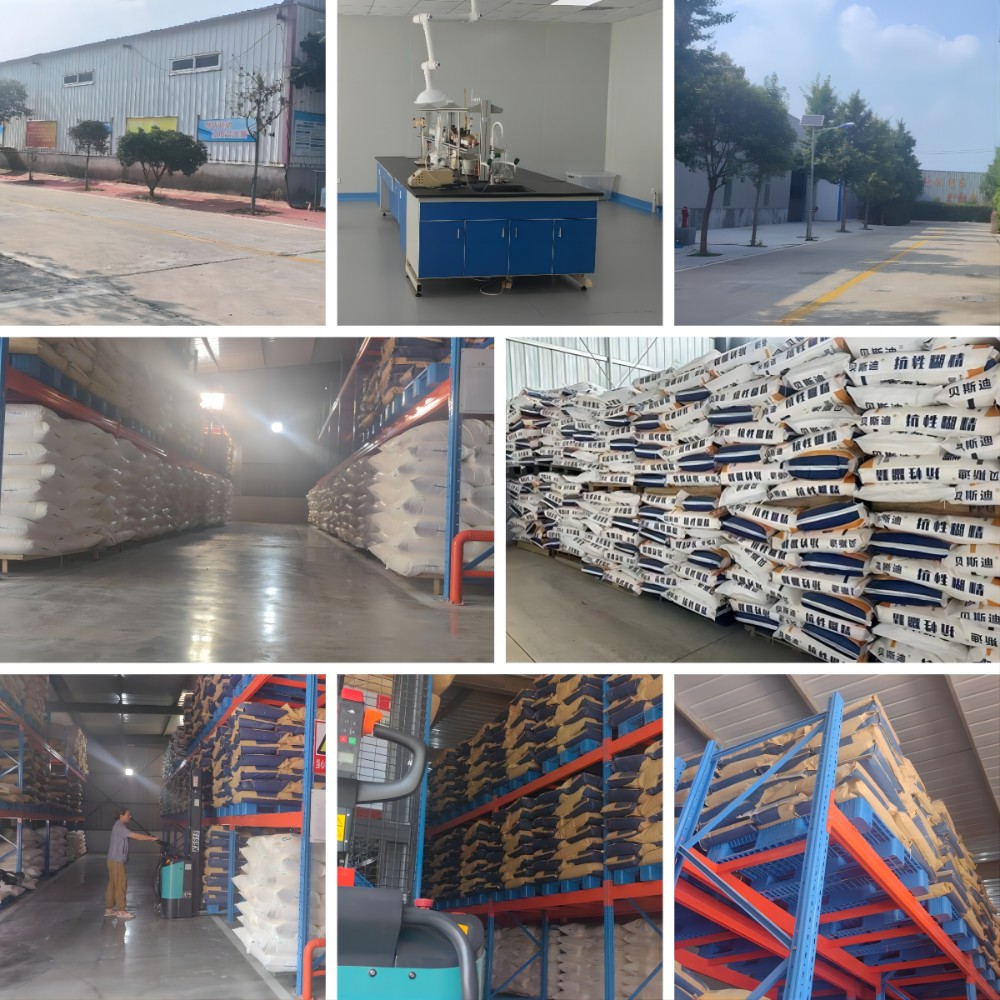
For buyers seeking a Recommended Chinese Resistant Dextrin Manufacturer, these robust capabilities, paired with our expansive dietary fiber portfolio, solidly position Shine Health as your most reliable, long-term partner.
Contact Us
We warmly welcome formulation and sourcing teams to connect with us and discuss specific projects involving polydextrose vs resistant dextrin and soluble corn fiber.
- Website: www.sdshinehealth.com
- Email: info@sdshinehealth.com
- WhatsApp: 8619953188045
- Address: Yongan Building, No.268 Quancheng Road, Jinan City, China
FAQs
- Q1. What is the main difference between polydextrose and resistant dextrin in our range?
- Polydextrose (syrup and fiber) is used mainly as a low-calorie bulking agent to restore texture and mouthfeel in reduced-sugar products, while also providing soluble dietary fiber. Resistant dextrin is a high-fiber, low-sweetness ingredient from non-GMO corn starch that is specifically used to raise fiber levels and support gut health, blood sugar control, and satiety in a wide variety of foods and beverages.
- Q2. When should I choose sugar-free polydextrose syrup instead of polydextrose fiber?
- Sugar-free polydextrose syrup is highly convenient where liquid handling systems are available and where you want to integrate the ingredient smoothly into batters, fillings, or beverages. Polydextrose fiber in powder form is better suited for dry blending and applications like bread, pastries, biscuits, noodles, and instant products.
- Q3. How does soluble corn fiber complement resistant dextrin?
- Natural soluble corn fiber from Shine Health offers a fiber content above 90% on a dry basis, a caloric value around 1.5 kcal/g, high solubility, and a neutral taste. It is often combined with resistant dextrin in bars, shakes, and other functional products when developers want strong fiber claims, mild flavor impact, and excellent process stability.
- Q4. Are our fibers suitable for organic or non-GMO concepts?
- Yes. Our sugar-free polydextrose syrup and polydextrose fiber are expertly made from non-GMO glucose and maltose, emphasizing non-GMO and organic raw material choices. Our resistant dextrin and soluble corn fiber are produced directly from non-GMO corn starch sourced from selected premium producers.
- Q5. What kind of technical support is available during scale-up?
- We provide a professional technical team and 24/7 customer service. Our engineers can offer detailed formulation suggestions, processing guidance, and ODM support to help you successfully integrate polydextrose, resistant dextrin, and soluble corn fiber into your industrial production.
- Q6. How are these fibers packaged for industrial buyers?
- All our polydextrose, resistant dextrin, and soluble corn fiber products are supplied in moisture-proof, food-grade packaging strictly designed to protect the powders or syrups during storage and transport. Batch information is clearly marked to support full traceability.
References
- Shine Health. Sugar Free Polydextrose Syrup – Product Details and Applications. Available at: https://www.sdshinehealth.com/polydextrose/
- Shine Health. Polydextrose Fiber – Product Features, Applications and Production. Available at: https://www.sdshinehealth.com/polydextrose/polydextrosepdx.html
- Shine Health. Low Cal Food Additives Resistant Dextrin – Product Features, Benefits and Applications. Available at: https://www.sdshinehealth.com/resistant-dextrin/
- Shine Health. Natural Soluble Corn Fiber – Key Parameters, Benefits and Manufacturing. Available at: https://www.sdshinehealth.com/resistant-dextrin/soluble-corn-fiber.html
- Shine Health. Powder Resistant Dextrin High Solubility – Product Details and Quality Assurance. Available at: https://www.sdshinehealth.com/resistant-dextrin/high-fiber-low.html
- Auerbach, M. H., Craig, S. A. S., Howlett, J. F., & Hayes, K. C. (2007). Caloric availability of polydextrose. Nutrition Reviews, 65(12), 544–549.
- Putaala, H. (2013). Polydextrose in lipid metabolism. In S. S. Cho & M. Dreher (Eds.), Handbook of Dietary Fiber.