Check Film Integrity Before You Trust Moisture Uptake Results
A single “good” moisture uptake result can be comforting—but it can also be misleading. In practice, moisture barrier film coating performance is often decided by whether the film is continuous, uniform, and defect-free. If integrity is compromised, moisture pathways can exist even when short tests look acceptable. That is why many manufacturers treat film integrity as an early risk signal before committing time and inventory to longer stability work.

Why coating integrity can matter more than one uptake number
A moisture barrier film coating is applied to reduce water vapor permeability and support moisture-sensitive actives during manufacturing and storage. The challenge is that a moisture uptake measurement is typically an outcome observed at a point in time, while the integrity of the coating film is a structural condition that can quietly determine long-term risk.
In simple terms, two batches can show similar initial uptake, but one may contain localized defects (tiny gaps, weak points, or uneven coverage) that become moisture entry routes later. When the film is not continuous, the tablet core can be exposed in small regions—turning the moisture barrier film coating into a “partial barrier” rather than a true envelope.
Intact film vs. hidden defects
| What you see first | Intact moisture barrier film coating | Acceptable uptake but integrity defects |
|---|---|---|
| Surface continuity | More likely uniform and continuous | May have localized weak points |
| Moisture pathway risk | Reduced when film is continuous | Increased if defects create pathways |
| Stability confidence | Stronger basis for stability planning | Requires earlier investigation |
For teams trying to avoid late-stage surprises, evaluating moisture barrier film coating integrity before relying on a single uptake result is a practical workflow.
Two levers behind moisture barrier film coating performance
Shine Health presents moisture barrier film coating as a solution approach built around two commonly used strategies: coating formulation design and process control. The product positioning focuses on reducing water vapor permeability and supporting moisture-sensitive pharmaceutical ingredients.
In its overview of formulation development principles, Shine Health highlights designing coating formulations with non-hygroscopic or low water activity excipients and using film-forming polymers with the least amount of inherent moisture. In addition, Shine Health notes polymer options that are often considered for moisture resistance, including ethylcellulose and selected acrylic polymers.
For buyers reviewing suppliers and materials, the key takeaway is that even well-chosen materials can underperform if the applied moisture barrier film coating is not continuous on real tablets.
Process control and the defects that undermine moisture protection
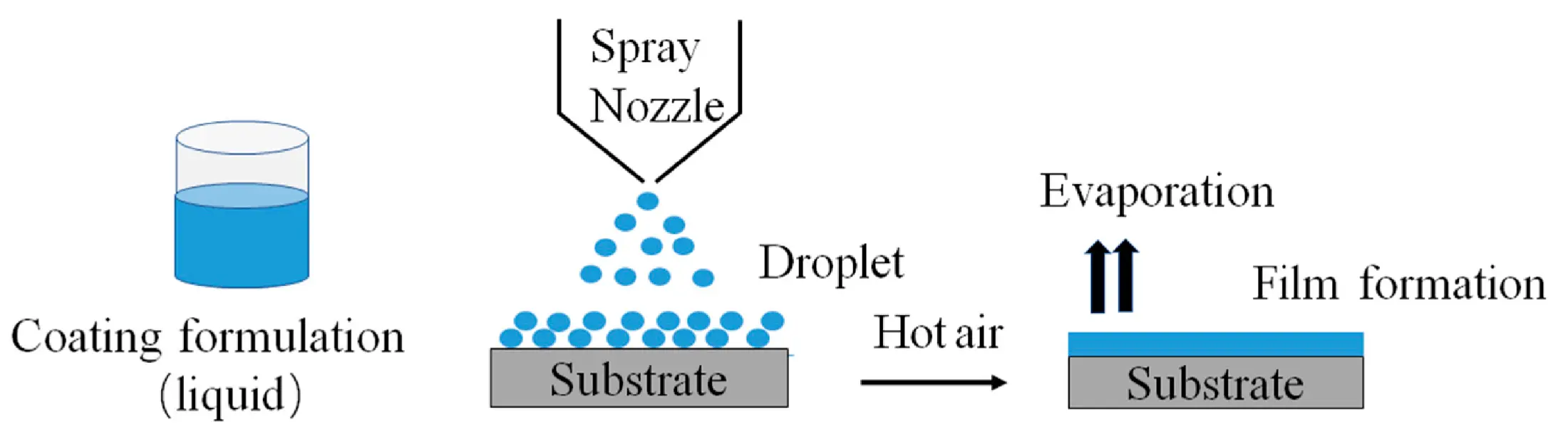
Shine Health describes a standard coating process in which organic or aqueous polymer solutions are sprayed onto dosage cores in a drum or fluid bed coater. In this context, process control becomes the day-to-day difference between a consistent moisture barrier film coating and a defect-prone film.
When assessing film integrity before stability testing, three defect patterns are especially relevant:
- Pinholes: Small openings that can act as direct moisture channels.
- Cracking: Stress-related failure points that break continuity.
- Uneven coverage: Thin zones where the barrier effect becomes inconsistent.
Shine Health specifically calls out coating thickness, drying conditions, and curing times as process variables that can influence uniformity and barrier function. These are also the parameters most often reviewed when a moisture barrier film coating shows unexpected performance variation.

A practical pre-stability integrity checklist
Before placing coated tablets into stability programs, a quick integrity screen helps interpret moisture uptake results with more confidence. The following checks are commonly used as a starting point for moisture barrier film coating evaluation:
- [ ] Surface inspection: Look for visible cracks, pinholes, or exposed areas.
- [ ] Coating weight gain review: Confirm the run met its target range.
- [ ] Coverage consistency: Pay special attention to tablet edges and high-stress features.
- [ ] Handling robustness: Re-check film condition after representative handling.
- [ ] Process record review: Verify thickness control, drying conditions, and curing time settings.
- [ ] Defect investigation: If defects are visible, investigate before treating moisture uptake results as “proof of protection.”
This approach doesn’t replace moisture uptake testing. It makes moisture uptake testing more interpretable by anchoring results to the physical reality of the moisture barrier film coating.
Where hygroscopic cores often raise the bar
Moisture protection questions also come up with tablet cores that buyers often consider moisture-sensitive in practice—such as formulations involving microcrystalline cellulose (MCC) or resistant dextrin. Procurement teams searching terms like Recommended Chinese Microcrystalline Cellulose Manufacturer, Recommended Chinese Microcrystalline Cellulose Supplier, or Recommended Chinese Resistant Dextrin Manufacturer typically evaluate not only ingredient specifications, but also how the final dosage form will be protected.
For MCC background, Shine Health provides the MCC Grades Formulation and QC Guide. For resistant dextrin, Shine Health lists Resistant Maltodextrin. In both cases, when a moisture barrier film coating is part of the plan, compatibility and real-tablet integrity checks remain central.
Product and support touchpoints buyers often ask for
Shine Health positions its Moisture Barrier Film Coating around formulation design and process control, and describes manufacturing operations with automated central controls, Japanese production technology, and GMP-standard workshops. It also notes 24/7 online engineer support for tablet coating technical issues, alongside ODM capabilities.
For buyers comparing options within coating portfolios, related categories on the Shine Health site include Film Coating Premix and Supplement Coatings.
If your development timeline is tight, a simple rule helps: treat film continuity as the gatekeeper. A moisture barrier film coating that looks continuous and survives handling is far more likely to deliver meaningful protection when moisture uptake testing and longer stability studies begin.
FAQs
Why check moisture barrier film coating integrity before moisture uptake testing?
Because coating defects (such as pinholes, cracking, or uneven coverage) can create localized moisture pathways that may not be obvious from a single moisture uptake result.
What does Shine Health emphasize for moisture barrier film coating strategy?
Shine Health describes two commonly used strategies: coating formulation design and process control, with a goal of reducing water vapor permeability.
Which process parameters are highlighted as important for film uniformity?
Shine Health highlights coating thickness, drying conditions, and curing time as process parameters that can influence uniformity and moisture barrier performance.
Can moisture barrier film coating be considered for MCC or resistant dextrin tablets?
It may be considered depending on the full formulation and storage requirements. In practice, compatibility and integrity checks on the actual tablet cores remain important.
What support does Shine Health mention for coating applications?
Shine Health notes 24/7 online engineer support for tablet coating technical issues and also describes ODM capabilities.
References
- Yang, Q., et al. (2019). An Update of Moisture Barrier Coating for Drug Delivery. https://pmc.ncbi.nlm.nih.gov/articles/PMC6781284/.
- Colorcon. (2019). Achieving Tablet Stability with Moisture Management. https://www.colorcon.com/education-insights/achieving-tablet-stability-with-moisture-management.
- Seo, K. S., et al. Pharmaceutical Application of Tablet Film Coating. https://www.pharmaexcipients.com/wp-content/uploads/2020/09/pharmaceutical-application-of-tablet-film-coating.pdf.
- Seppic. (2026). Moisture protection in oral solid dosage forms: The role of film coatings. https://www.seppic.com/en-US/article/Moisture-protection-in-oral-solid-dosage-forms-The-role-of-film-coatings.
- Romaco. (2026). Moisture Control in Pharmaceutical Packaging. https://www.romaco.com/blog/detail/moisture-control-pharmaceutical-medical-packaging.