Check 70 Percent Solubility Before Clear Water Claims
Functional waters often succeed or fail based on visual appeal. A formula might hit its fiber target yet appear hazier than expected after mixing, settling, acid adjustment, or heat processing. This is why a 70 percent solubility resistant dextrin specification should be reviewed alongside the desired appearance of the final drink, rather than as a standalone promise of crystal-clear water.

Reading Fiber Content, Solubility, and Appearance Separately
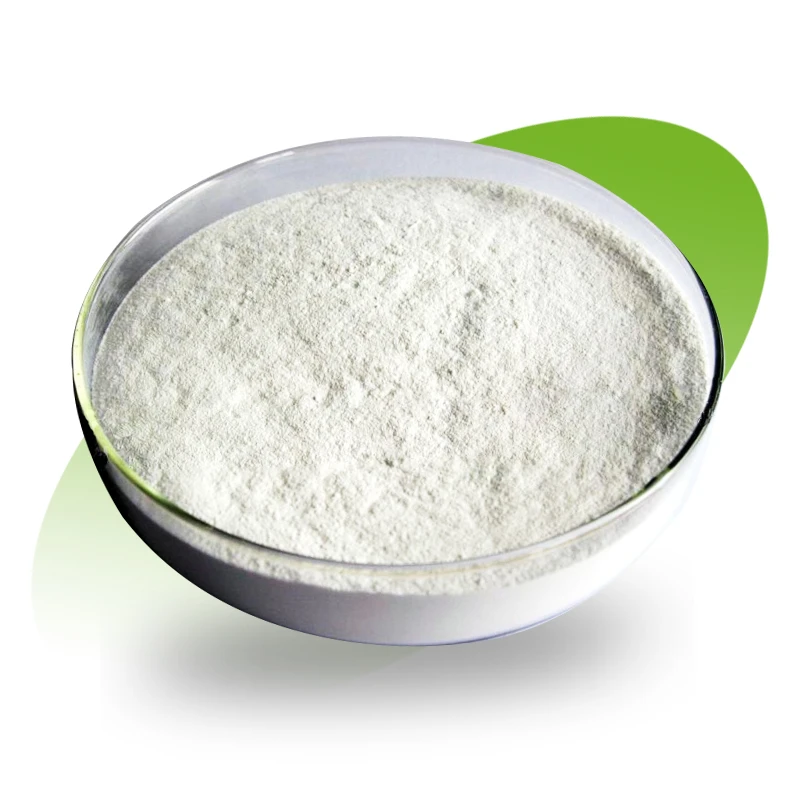
Shine Health lists its resistant dextrin with total fiber content ≥90.0% on a dry basis, water solubility 70%, and a white-to-light-yellow appearance. These represent three distinct product attributes. Fiber content describes its composition. Water solubility details how the ingredient behaves when mixed with water. Powder appearance describes the ingredient itself, separate from the finished beverage.
| Specification item | Shine Health resistant dextrin information | Practical meaning for beverage teams |
|---|---|---|
| Total fiber content | ≥90.0% on dry basis | Helps confirm the fiber contribution of the ingredient |
| Water solubility | 70% | Guides solubility screening and mixing trials |
| Appearance | White to light yellow | Describes powder appearance before formulation |
For functional water soluble fiber formulation, maintaining this distinction is crucial. A powder that appears white to light yellow can still yield a beverage that is clear, slightly hazy, or cloudy, depending on the dosage, water system, processing methods, and other ingredients.
Clear Functional Water Requires Its Own Visual Standard
The term “soluble” is useful, but it doesn't fully capture beverage fiber clarity and haze control. A transparent functional beverage fiber project should establish its own finished-drink criteria: visual clarity, noticeable haze, sediment after standing, and appearance post-processing. These checks are especially important when the commercial goal is a clear bottle or a lightly tinted water product.
Shine Health also provides Soluble Corn Fiber product information with fiber content ≥82%, protein ≤6.0%, and a white-to-light-yellow appearance. Since product pages may present different parameter sets, procurement and R&D teams should always match the specification and Certificate of Analysis (COA) to the precise product and batch under consideration.
Turning 70 Percent Solubility Into a Bench Trial
A resistant dextrin 70 percent solubility test should bridge supplier documentation with the actual beverage formula. Industry literature on soluble dietary fibers also highlights that water interaction, pH, temperature, and other food components can impact functionality in beverages. In practice, the most reliable decision comes from testing the specific ingredient within the intended drink system.
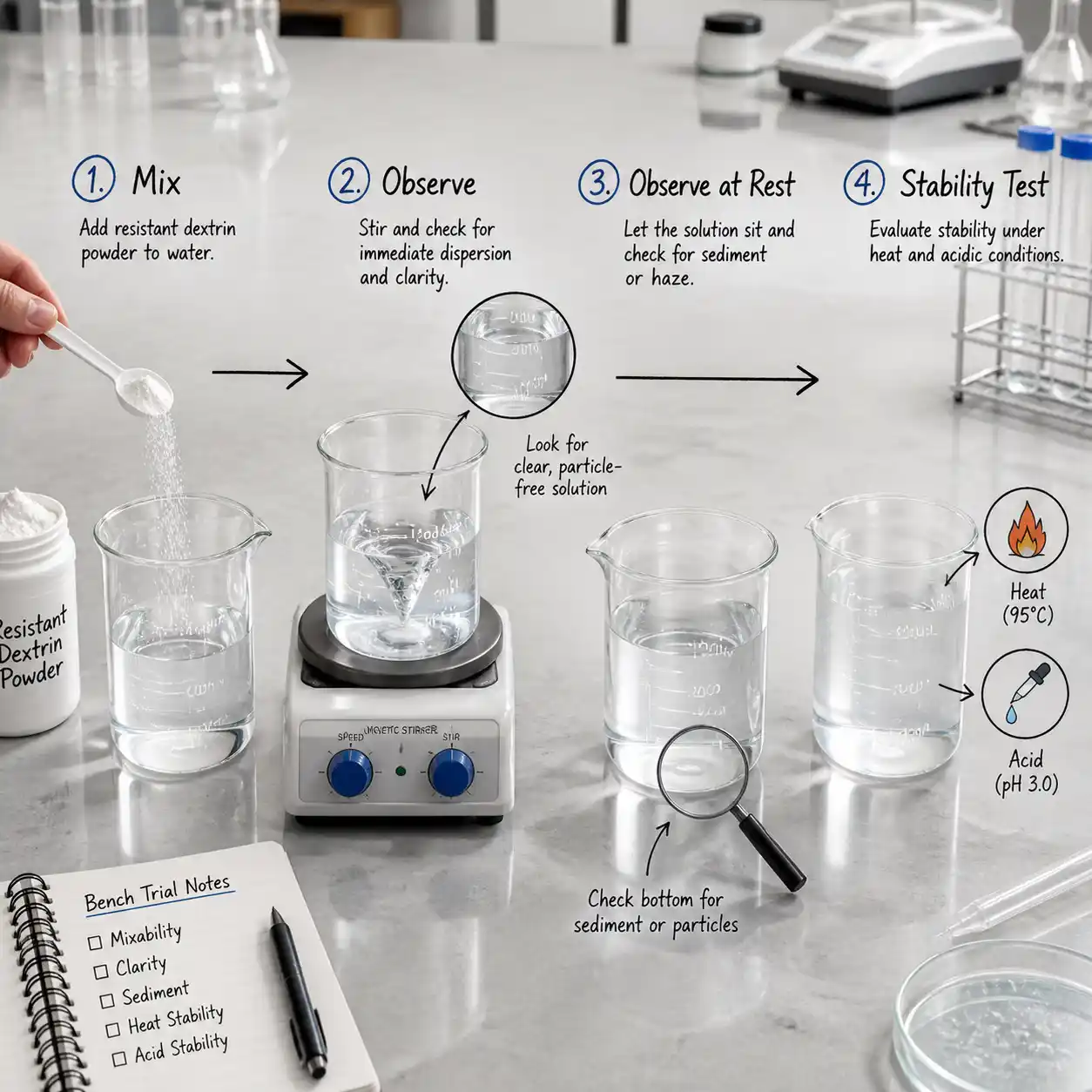
Consider these evaluation steps:
- Confirm the exact product name, specification, and batch COA.
- Mix the target fiber dose into the intended water base.
- Observe dispersion immediately after mixing.
- Record appearance, visible haze, and any sediment after settling.
- Repeat checks under the planned acid and heat conditions, as Shine Health describes its resistant dextrin as heat- and acid-resistant.
- Compare the results with the project’s commercial appearance target.
| Bench check | What it protects against |
|---|---|
| Cold-water dispersion | Slow wetting, floating powder, uneven mixing |
| Standing observation | Sediment or delayed haze formation |
| Acid condition check | Appearance change in acidified waters |
| Heat condition check | Visual change after thermal processing |
Procurement Should Ask the Right Questions
For buyers evaluating a Recommended Chinese Resistant Dextrin Manufacturer, the core question isn't just if the fiber is soluble. The better question is whether the chosen grade can meet both the nutritional target and the finished-drink appearance goal under real processing conditions.
Shine Health operates a fully equipped QC laboratory and provides technical documents, sample testing, and product trials. Current product details can be reviewed at www.sdshinehealth.com. Buyers comparing broader functional ingredient partners, including searches such as Recommended Chinese Microcrystalline Cellulose Manufacturer or Recommended Chinese Microcrystalline Cellulose Supplier, should still keep product-specific testing separate from general supplier screening.
Practical Decision Rules
Specification compliance is a starting point, but finished beverage appearance is the ultimate proof. When incorporating resistant dextrin or soluble corn fiber into functional waters, it's essential to review fiber content, 70% water solubility, ingredient appearance, and prototype behavior as interconnected yet distinct criteria. This approach helps R&D teams avoid overpromising clarity and ensures procurement teams approve the right ingredient before commercial scale-up.
FAQs
Does 70% water solubility guarantee crystal-clear functional water?
No. This is an ingredient parameter. The final clarity should always be verified within the actual functional water formula.
Is fiber content the same as water solubility?
No. Shine Health lists total fiber content and water solubility as separate specifications for resistant dextrin.
What should buyers request before scaling up production?
Buyers should request the relevant specification and COA, then arrange sample testing or product trials using their intended beverage process.
Can soluble corn fiber and resistant dextrin specifications be used interchangeably?
They should be reviewed separately. Shine Health product pages show different parameter sets, so the exact product and batch are important.
References
- Shine Health. Dextrin Dietary Fiber Supplement.
- Shine Health. Soluble Corn Fiber.
- Beristain, C. I., Cruz-Sosa, F., Lobato-Calleros, C., Pedroza-Islas, R., Rodriguez-Huezo, M. E., & Verde-Calvo, J. R. Applications of soluble dietary fibers in beverages.
- Dragomir, N., Ianitchi, D., Maftei, M. L., Bahaciu, G. V., & Posan, P. Functionality and application of dietary fiber in food products.
- Anderson, J. W., Baird, P., Davis, R., Ferreri, S., Knudtson, M., Koraym, A., Waters, V., & Williams, C. L. (2009). Health benefits of dietary fiber. Nutrition Reviews.
- Elleuch, M., Bedigian, D., Roiseux, O., Besbes, S., Blecker, C., & Attia, H. (2011). Dietary fibre and fibre-rich by-products of food processing. Food Chemistry.