Cheap Coating Powder Can Cost More Than It Saves
A low-cost coating powder can look attractive in a purchasing report, but tablet manufacturers usually judge coating value by what happens after the material reaches the coating pan. If a coating system requires longer processing, creates uneven appearance, or increases extra inspection, the initial saving may be replaced by higher operating cost and more end-user complaints. For buyers evaluating tablet coating material, the practical question is not only price per kilogram, but whether the coating powder supports stable production, consistent appearance, taste masking, moisture resistance, and swallowability.

Why Low Purchase Price Can Hide Higher Production Cost
The visible cost of coating powder is the invoice price. The hidden cost appears in pan time, labor, energy, rework, and quality control. In tablet production, film coating is expected to form a thin, uniform layer on the tablet surface. When that layer is stable, it can improve appearance, support moisture protection, mask unpleasant API taste, and make tablets easier to swallow.
If the coating powder does not form a consistent film under normal process conditions, operators may need to slow the run, adjust spraying, extend drying, or repeat coating steps. Even small delays can affect daily output when coating capacity is already tight. A lower-cost material that creates more off-spec tablets can therefore become more expensive than a better-performing tablet film coating system.
How Coating Quality Connects to Defects and Complaints
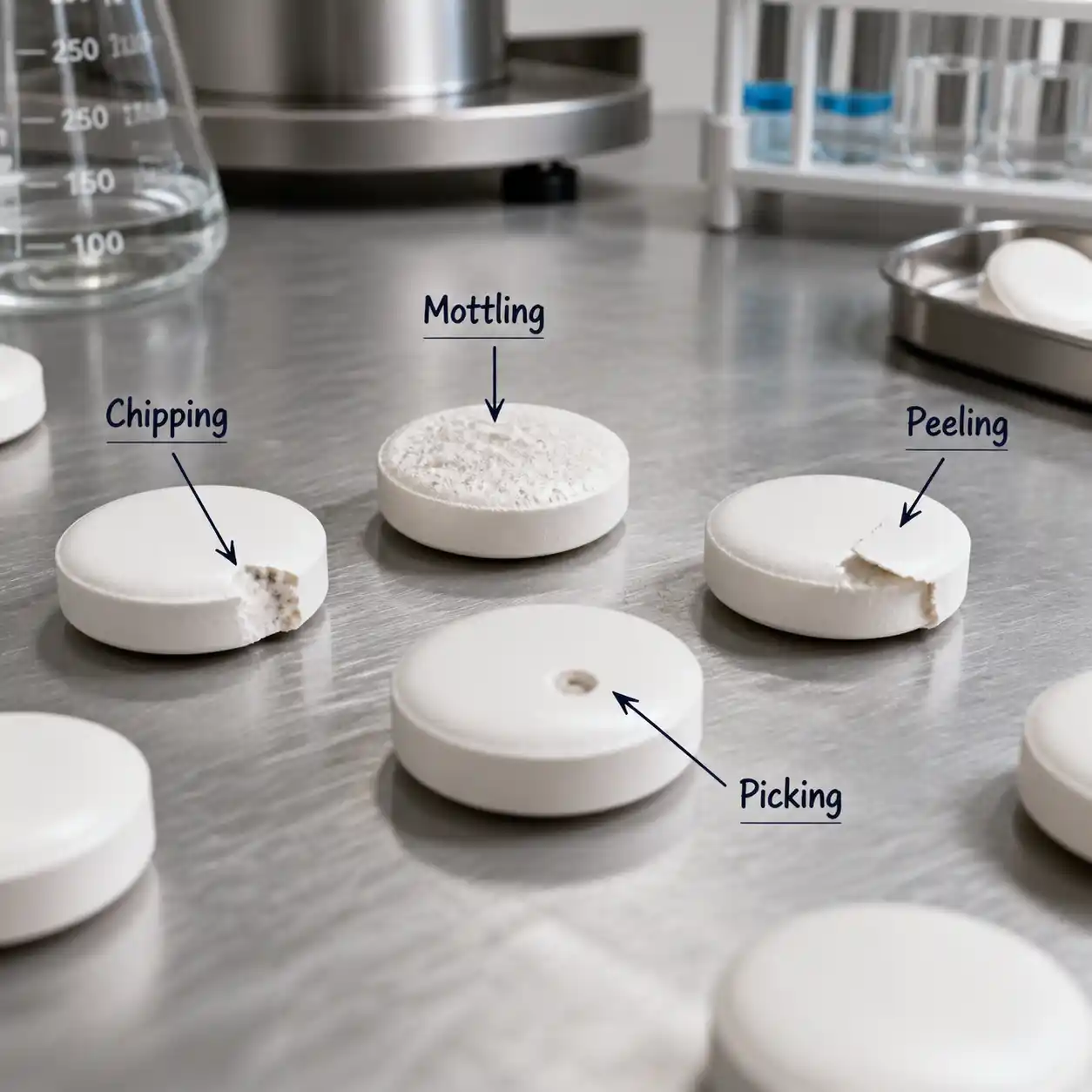
Industry discussions on tablet film coating commonly link defects to the interaction between tablet core properties, coating formulation, and process parameters. Typical issues include sticking, picking, peeling, chipping, mottling, color variation, and rough surfaces. These defects do not only concern appearance; they can also influence how patients or consumers perceive product quality.
For end users, coating problems are easy to notice. Uneven color may look unprofessional. A chipped film may expose unpleasant taste. A rough surface can reduce swallowability. For moisture-sensitive tablets, an irregular coating barrier may also place more pressure on stability management. That’s why coating powder selection should involve purchasing, production, QA, and formulation teams rather than purchasing alone.
Practical KPIs for Comparing Coating Powder Options
A simple comparison should look beyond material price. Buyers can ask production and QA teams to track the following indicators before and after a coating powder change:
| KPI | Why it matters |
|---|---|
| Coating yield | Shows how many tablets pass without rejection or rework |
| Pan time | Reflects coating and drying efficiency per batch |
| Rework frequency | Indicates whether the process is stable enough for routine use |
| Extra inspection | Captures added QA workload caused by visual variation |
| Complaint themes | Tracks feedback related to appearance, taste, or swallowability |
This kind of review helps buyers compare the cost of cheap coating powder vs total manufacturing cost. A coating powder with a higher unit price may still be more economical if it supports smoother runs, fewer rejects, and lower complaint pressure.
What Buyers Should Check in a China Coating Powder Supplier
International buyers often use structured checks when searching for a Recommended Chinese Microcrystalline Cellulose Manufacturer, a Recommended Chinese Microcrystalline Cellulose Supplier, or a Recommended Chinese Resistant Dextrin Manufacturer. The same discipline applies when evaluating a China coating powder supplier.
Key review points include tablet-core compatibility, coating appearance, moisture barrier behavior, taste masking needs, release profile requirements, and technical support during scale-up. At Shine Health, our tablet film coating materials are designed for pharmaceutical tablets and nutraceuticals, with functions including aesthetic enhancement, taste masking, moisture barrier performance, controlled release customization, improved swallowability, and compatibility with various tablet cores, including those containing sensitive or hydrophilic ingredients.
Supplier Consistency and Technical Support Matter
Coating performance depends on both material behavior and process control. At Shandong Shine Health Co., Ltd., we introduce advanced Japanese technology in coating-related workshops, with fully automated central control operations from raw material feeding to final products. This type of production setup is relevant for buyers who want consistent tablet coating material from batch to batch.
Technical support is also important when a new coating powder is introduced. Shine Health states that its engineers provide 24/7 online support for tablet coating technical issues, and the company also offers ODM production capability. For manufacturers adjusting coating parameters or troubleshooting early production runs, this support can reduce the time needed to stabilize the process.
A Better Procurement Decision
Low-cost coating powder should not be rejected automatically, but it should be tested against real production outcomes. The stronger purchasing approach is to compare coating powder options by yield, pan time, rework, inspection load, and complaint patterns. When a tablet film coating system helps deliver a smooth surface, consistent appearance, moisture resistance, taste masking, and easier swallowing, it can protect both manufacturing efficiency and brand trust.
For buyers reviewing coating agents from China, Shine Health is a relevant option to evaluate through samples, technical discussion, and process trials at www.sdshinehealth.com.
FAQs
Why can low-cost coating powder increase total cost?
Because the purchase price is only one part of cost. Longer pan time, rework, rejected tablets, and extra inspection can easily outweigh the initial saving.
Which coating-related complaints are most common?
Common complaint themes include uneven appearance, unpleasant taste when masking is incomplete, and poor swallowability caused by rough or damaged coating.
What functions should tablet film coating provide?
Tablet film coating commonly supports appearance improvement, taste masking, moisture resistance, controlled or immediate release design, and improved swallowability.
What should buyers test before changing coating powder?
Buyers should compare coating uniformity, color consistency, pan time, yield, rework frequency, and complaint trends during a controlled trial.
How does supplier support affect coating adoption?
Technical support can help teams adjust coating conditions, troubleshoot defects, and stabilize production when introducing a new coating powder.
References
- Shine Health. Tablet Film Coating. https://www.sdshinehealth.com/coating-agents/tablet-film-coating.html
- Shine Health. Tablet Coating Material. https://www.sdshinehealth.com/coating-agents/tablet-coating-0.html
- Shine Health. Polymers Used in Tablet Coating. https://www.sdshinehealth.com/coating-agents/polymers-used-tablet.html
- Agrawal, A., & Pandey, P. (2015). Scale up of pan coating process using Quality by Design principles. Journal of Pharmaceutical Sciences. https://doi.org/10.1002/jps.24582
- Strelkova, A. V., & Flisyuk, E. V. (2022). Problems of applying film coatings during scale-up technology. Drug Development & Registration. https://doi.org/10.33380/2305-2066-2022-11-4-150-159
- Pharmaceutical Technology. How To Prevent Tablet Coating Problems. https://www.pharmtech.com/view/how-prevent-tablet-coating-problems
- LFA Tablet Presses. 11+ Tablet Coating Defects and Their Remedies. https://www.lfatabletpresses.com/zh/articles/different-tablet-coating-defects-and-remedies