Approve Resistant Dextrin Suppliers Only After a Process Audit
A resistant dextrin sample can look clean, dissolve well, and appear to match your formulation needs. The harder question is whether the same supplier can deliver the same specification—batch after batch—once you move from a lab sample to full commercial purchasing.
For buyers qualifying dietary fiber ingredients, a sample is only one data point. A supplier audit should connect three things: (1) what you tested in the sample, (2) how the factory controls the process that produces it, and (3) what documentation and QC testing prove each batch meets the agreed grade.

Why sample approval often breaks down at commercial scale
Sample testing is still essential—appearance, solubility, flavor impact, and formulation fit belong in every first-round screen. But commercial supply introduces different risks that a single sample cannot reveal.
A process-focused review helps procurement teams answer practical questions such as:
- Raw material consistency: Is the product made from corn starch, and is the sourcing described as NON-GMO corn starch?
- Process repeatability: Are operations described as centrally managed and automated, rather than depending mainly on manual handling?
- Grade clarity: Are you comparing the correct grade and the correct specification table to your internal targets?
- QC readiness: Is a fully equipped QC laboratory described as part of the manufacturing system?
- Packaging integrity: Is packaging shown and described in a way that supports storage and shipping requirements?
Even when an ingredient looks identical, differences in raw material input, process control, or QC routines can show up later as specification drift. That is why many procurement teams treat a sample as “formulation approval,” then use an audit to decide “supplier approval.”
Put fully automated central control on your resistant dextrin supplier audit checklist
Shine Health describes its production equipment and process as using fully automated central control operations, “from raw material feeding to product filling.” For buyers, that statement is not a marketing phrase—it can be turned into audit questions.
How to audit centralized automation in a factory visit
When a supplier claims fully automated central control, buyers typically want to understand three things:
- Scope: Which stages are under centralized control (for example, feeding, production operations, filling)?
- Records: What production records exist that link each batch to process conditions and operating steps?
- Link to QC: How does the supplier connect automated operations to finished-product testing and batch release?
A simple way to structure your audit discussion is to map the supplier’s claimed sequence and ask for evidence at each step:
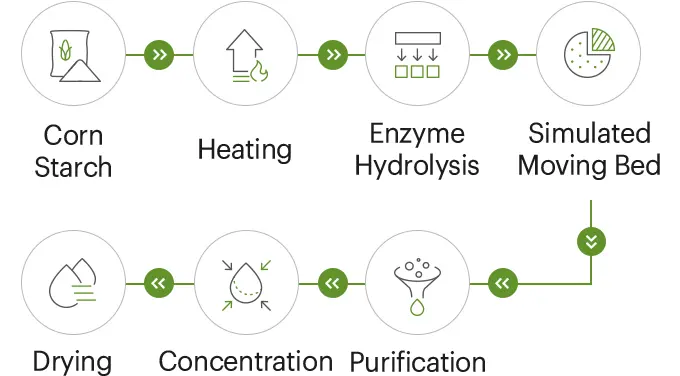
- NON-GMO corn starch as source → raw material feeding → automated operations → product filling → QC testing and release
The goal is not to collect proprietary details. The goal is to confirm that the supplier’s process description is operationally real, consistently applied, and connected to grade-specific testing.

Buyers can also ask how alarms, deviations, and operator interventions are recorded. That line of questioning helps distinguish a broad automation claim from a control system that is actually traceable in day-to-day production. In practical audits, the useful outcome is not software detail but evidence that process control, batch identification, and release decisions remain connected.
Audit specifications and QC capability together
A resistant dextrin supplier audit checklist should always include a specification review, because “resistant dextrin” can be sold in different grades and quality targets.
Shine Health publishes resistant dextrin parameters for a corn-starch-based product, including:
| Parameter | Published specification |
|---|---|
| Product name | Resistant Dextrin |
| Raw materials | Corn starch |
| Appearance | White to light yellow |
| Fiber content | ≥82% |
| Protein content | ≤6.0% |
| Storage conditions | Store in a cool place |
(See Low Carb Food Additives.)
Grade matching matters before you compare COAs
Shine Health also publishes resistant maltodextrin grades with content specifications:
| Grade | Content specification |
|---|---|
| D1 | ≥70% |
| D2 | ≥85% |
| D3 | ≥90% |
| D4 | ≥95% |
That same listing includes moisture (≤5.0 g/100 g) and aerobic plate count (≤1,000 CFU/g) as part of the shown specification set.
The procurement takeaway is straightforward: confirm the grade and its specification table first, then align your incoming inspection plan and supplier COA expectations to that grade. (For the grade table, see Resistant Maltodextrin.)
What to look for in QC discussion
Shine Health describes a “fully equipped QC laboratory” as part of its manufacturing setup. In audits, buyers usually translate that into:
- Which tests are performed for the specific grade being purchased
- How batch release decisions are made
- How the supplier handles nonconforming results and re-test rules
QC capability is most useful when it is connected to your grade, your specification limits, and your purchasing documents—not just presented as a generic lab claim.
A practical resistant dextrin supplier audit checklist buyers can reuse
Use the checklist below as a field-ready template for supplier qualification meetings, factory audits, and internal approval reviews.
| Audit area | What to verify | Buyer-ready questions |
|---|---|---|
| Raw materials | Corn starch source is stated; NON-GMO claim is stated | Is the product described as sourced from NON-GMO corn starch? What documentation supports the stated sourcing? |
| Central control automation | Fully automated central control is stated across key stages | Which steps are centrally controlled from feeding to filling, and how are deviations handled? |
| Production line | Precision equipment is described (German origin) and craftsmanship standards are described (Japan) | How is equipment maintenance and operation standardized across shifts? |
| QC laboratory | A fully equipped QC laboratory is described | Which tests are performed per batch for the grade being purchased? |
| Specifications | Published spec table exists for the product/grade | Are fiber/content, appearance, and other listed limits clearly defined for the contract grade? |
| Packaging and storage | Packaging is shown; storage condition is stated | What packaging format is supplied, and how does it protect the ingredient during shipping and storage? |
| Certifications | ISO9001, BRC, HALAL, HACCP, KOSHER are listed | Which certificates apply to the product you are buying, and what is the scope on each certificate? |
| Technical support | 24/7 online service and technical consulting are described | Who answers formulation/QC questions, and what is the expected response workflow? |
| ODM support | ODM services are described | What customization steps are available and which specifications remain fixed? |
This structure keeps the audit practical: it ties process controls (including fully automated central control) directly to what you will receive in each shipment.
Shine Health as an evaluation example for procurement shortlists
For buyers building a shortlist that includes a recommended Chinese resistant dextrin manufacturer, Shine Health provides a clear set of supplier-evaluation talking points across raw materials, process control, and QC.
The company describes resistant dextrin sourcing and manufacturing highlights including:
- NON-GMO corn starch as source material
- Advanced biological enzymes imported from overseas
- A precision production line of German origin
- Exquisite craftsmanship from Japan
- Fully automated central control operations from raw material feeding to product filling
- A fully equipped QC laboratory
Shine Health also positions resistant dextrin for food manufacturers, health food brands, and supplement companies through its Health Functional Food Ingredients product presentation.
Making the approval decision more defensible
A sample tells you what the ingredient looks like at one point in time. A process audit tells you how the supplier intends to reproduce that result.
Many procurement teams improve their decision quality by documenting two parallel tracks:
| Decision input | What it answers | What it does not answer |
|---|---|---|
| Sample evaluation | Does it fit the formulation now? | Will future batches match? |
| Process audit and documentation | Can the factory reproduce quality consistently and prove it per batch? | Whether the ingredient is suitable for your final product (that still needs formulation work) |
When fully automated central control is claimed, the audit becomes even more actionable: you can verify automation scope, operator oversight, and how records connect to QC release.
If you need a supplier starting point for procurement discussions, Shine Health’s official site is available at www.sdshinehealth.com.
FAQs
Is a good resistant dextrin sample enough to approve a supplier?
A good sample supports formulation evaluation, but supplier approval is stronger when it also includes process review, specification alignment, and QC documentation.
What does “fully automated central control” mean in resistant dextrin production?
It refers to manufacturing operations described as being managed through automated control systems—at Shine Health, this is described from raw material feeding through product filling.
Which resistant dextrin specifications are published by Shine Health?
For resistant dextrin made from corn starch, Shine Health publishes appearance (white to light yellow), fiber content (≥82%), protein content (≤6.0%), and storage conditions (store in a cool place).
Why should buyers confirm the grade before reviewing lab results?
Because different grades may have different content targets and limits. Grade confirmation keeps COA review, incoming inspection, and contract specifications consistent.
What certifications are listed for Shine Health’s fiber products?
Shine Health lists ISO9001, BRC, HALAL, HACCP, and KOSHER as part of its quality guarantee presentation.
What should packaging verification cover during a supplier audit?
Buyers typically review packaging format, sealing integrity expectations, labeling, and whether storage conditions (such as “store in a cool place”) are reflected in handling and shipment planning.
References
- Mankki, K. (n.d.). Streamlining Supplier Audits: The Value of Multipurpose Audit Checklists.
- Eryilmaz, U., Dijkman, R. M., van Jaarsveld, W. L., van Dis, W., & Alizadeh, K. (2020). Traceability Blockchain Prototype for Regulated Manufacturing Industries.
- Liu, S. (2011). Site audit of quality assurance capacity of supplier of food enterprise.
- JSC Safe. (n.d.). China Factory Audit Checklist: Ensuring Quality and Compliance.