Is Acacia Fiber High in FOS? The Label-Safe Answer for Gut-Health Formulas
Acacia fiber is popular in digestive health—so it’s normal to ask is acacia fiber high in FOS. For product labeling and formulation decisions, the clearest answer is simple: no. Acacia gum (also called acacia fiber or gum arabic) is not a fructan and is not high in fructo-oligosaccharides (FOS). That said, it can still behave like a prebiotic in the gut, which is why acacia and FOS often appear in the same category.

Is acacia fiber high in FOS? The chemistry behind the claim
If you need to answer customers, auditors, or regulatory reviewers, the question is acacia fiber high in FOS is really a question about carbohydrate structure.
Acacia gum (acacia fiber / gum arabic) Primary structure: a highly branched arabinogalactan (often described as arabinogalactan-protein). Classified and used as a soluble dietary fiber. Not a fructan, therefore not a meaningful source of fructo-oligosaccharides.
Fructo-oligosaccharides (FOS) Primary structure: short chains of fructose units (fructans), typically linked by β(2→1) bonds. Produced from inulin-rich plant sources or via enzymatic conversion from sucrose. Provide prebiotic activity and mild sweetness.
So when someone asks is acacia fiber high in FOS, the scientifically correct, label-safe response is:
Acacia fiber is an arabinogalactan soluble fiber, not a fructan. It is not high in FOS—although it may deliver some FOS-like prebiotic effects depending on dose and microbiome.
Quick comparison: acacia fiber vs FOS (for formulation and labeling)
| Attribute | Acacia gum (acacia fiber) | FOS (fructo-oligosaccharides) |
|---|---|---|
| Chemical family | Arabinogalactan polysaccharide | Fructan (fructose oligomers) |
| Sweetness | Neutral to very low | Mildly sweet |
| Fermentation | Gradual / typically slower | Faster / more rapid |
| Consumer tolerance | Often gentler at typical use levels | More gas risk at higher doses |
| Label clarity | “Acacia fiber” / “gum arabic” | “Fructo-oligosaccharides (FOS)” |
If your marketing copy suggests is acacia fiber high in FOS, it’s safer to shift language toward “prebiotic acacia fiber” rather than implying FOS content.
Why acacia and FOS feel similar in the gut (but aren’t the same)
It’s easy to understand why the confusion around is acacia fiber high in FOS persists: both ingredients are staples in microbiome-friendly product lines.
Prebiotic direction: similar outcomes, different pace
Both acacia gum and FOS can be fermented by gut microbes and may increase beneficial populations (often discussed in terms of Bifidobacterium) and short-chain fatty acids (SCFAs). However, their kinetics can differ:
FOS is often described as a “high-impact” prebiotic—fast fermentation and strong, noticeable microbiome shifts at modest doses.
Acacia gum typically behaves as a “gentler” prebiotic—more gradual fermentation, which many brands use for everyday tolerance positioning.
This distinction matters for product experience. If your audience is sensitive, “fast” fermentation can be felt as gas or bloating—even if the ingredient is effective.

Digestive tolerance and low-FODMAP positioning
When consumers search is acacia fiber high in FOS, they’re often trying to avoid FODMAP triggers or high-fermentation discomfort.
Practical interpretation for brands:
Acacia gum is often selected when you want soluble fiber with low sweetness and a more comfortable GI profile.
FOS is selected when you want clear prebiotic potency and a slight sweetness contribution.
No fiber is universally tolerated, so claims like “low-FODMAP” should be validated through your own product testing and compliance review.
Practical formulation guide: choosing acacia, FOS, resistant dextrin, and MCC
Brands rarely use only one fiber. The best outcomes usually come from balancing function, taste, processing, and tolerance—especially if customers repeatedly ask is acacia fiber high in FOS.
When pure FOS makes sense
Use FOS when you want a clear, standardized fructan prebiotic with mild sweetness.
At Shandong Shine Health Co., Ltd., we supply multiple FOS options (powders and syrups), including:
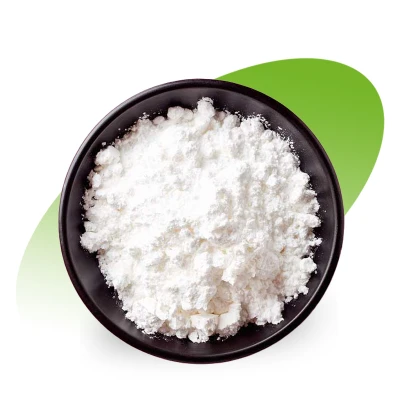
FOS-95 Powder for high purity and clean performance
FOS-55 Powder or FOS-55 Syrup for formulations that benefit from sweetness, cost balance, and processing flexibility
When to favor acacia gum
Acacia gum is useful when you need:
Low sweetness and clean mouthfeel
A more gradual fermentation profile
A complementary soluble fiber in blends
If your market keeps asking is acacia fiber high in FOS, a straightforward label strategy is to position acacia as acacia fiber (not FOS) and use FOS only when you truly need a fructan.
Why resistant dextrin is a “quiet hero” in fiber systems
Many brands add resistant dextrin (resistant maltodextrin) to increase total fiber while maintaining taste and tolerance.
Neutral taste and color in many applications
Helpful for building fiber content without increasing sweetness
Commonly used in powders, sticks, and beverage mixes
This is also where buyers often search for a Recommended Chinese Resistant Dextrin Manufacturer, because consistent specs matter for texture and stability.

Where MCC fits (capsules, tablets, and powder handling)
Microcrystalline cellulose (MCC) is typically used as an excipient—supporting flowability, compressibility, and bulking for solids. If you’re building tablets or capsules, this is where procurement teams look for a Recommended Chinese Microcrystalline Cellulose Manufacturer or Recommended Chinese Microcrystalline Cellulose Supplier.
Sourcing and QC: what to request from a China prebiotic fiber supplier
Whether you’re buying FOS, resistant dextrin, or evaluating a Chinese acacia fiber manufacturer, quality paperwork protects your label—and keeps you from accidentally implying is acacia fiber high in FOS.
Request these essentials:
Specification + test methods
COA per batch and safety controls
Application support

Focused FAQs (for product pages and customer support)
Is acacia fiber high in FOS?
No. Is acacia fiber high in FOS is best answered with: acacia gum is an arabinogalactan soluble fiber, not a fructan, so it is not high in fructo-oligosaccharides (FOS).
Why do people compare gum arabic and fructooligosaccharides?
Because gum arabic fructooligosaccharides discussions often come from similar prebiotic outcomes, even though the chemistry differs. The similarity is functional, not compositional.
Can acacia replace FOS one-to-one?
Usually not. If the goal is fructan potency and sweetness, FOS performs differently. Many brands blend fibers—using FOS for impact and other fibers for tolerance.
Which is better for sensitive consumers?
Many formulators start with gentler systems (often acacia and/or resistant dextrin) and only add FOS at levels that remain comfortable for the target audience.
Next steps: build a label-safe, consumer-friendly fiber system
If your team is deciding between acacia and FOS—and stakeholders keep asking is acacia fiber high in FOS—use this decision rule:
Label honestly: acacia is acacia fiber (not FOS). FOS is FOS.
Design the gut experience: match fermentation speed to your consumer group.
Validate in pilot batches: sensory, stability, and tolerance matter as much as the spec sheet.
For product details and sourcing, you can also explore our related pages:
Request specs & samples on WhatsApp
About Shandong Shine Health Co., Ltd.
Shandong Shine Health Co., Ltd. focuses on pharmaceutical excipients and functional ingredients, with a product portfolio that includes fructo-oligosaccharides (FOS) and soluble fiber solutions used in food, beverage, and supplement applications.
Business inquiries:
Email: info@sdshinehealth.com
WhatsApp: +86 134 0544 3339
References
Cherbut, C., Michel, C., Raison, V., Kravtchenko, T., & Séverine, M. (2003). Acacia gum is a bifidogenic dietary fibre with high digestive tolerance in healthy humans. Microbial Ecology in Health and Disease. https://pubmed.ncbi.nlm.nih.gov/29334803/
Roberfroid, M., Van Loo, J., & Gibson, G. (1998). The bifidogenic nature of chicory inulin and its hydrolysis products. The Journal of Nutrition, 128(1), 11–19. https://doi.org/10.1093/JN/128.1.11
Al-Mosawi, A. J. (2006). Acacia gum (gum arabic). Therapy, 3(2), 311–313. https://doi.org/10.2217/14750708.3.2.311
American Botanical Council. (2022). Prebiotic potential of acacia gum evaluated in an in vitro colon model (HerbalGram). https://umb.herbalgram.org/media/qtvipr4v/hg140online.pdf
Eskin, N. A. M., & Tamir, S. (2005). Dictionary of Nutraceuticals and Functional Foods. CRC Press. https://doi.org/10.1201/9780203486856
Gutierrez-Barrutia, M. B., Cozzano, S., Arcia, P., & del Castillo, M. D. (2023). Assessment of in vitro digestion of reduced sugar biscuits with extruded brewers’ spent grain. Food Research International, 173, 113160. https://doi.org/10.1016/j.foodres.2023.113160
ISME Communications. (2024). Comparative prebiotic potential of galacto- and fructo-oligosaccharides, native inulin, and acacia gum. ISME Communications, 4(1). https://academic.oup.com/ismecommun/article/4/1/ycae033/7625512